
1-805-484-2992
Quotes - Engineering - SalesKey Certifications and Design Requirements
Properly certified CIP heat exchangers guarantee full drainability, clean-in-place capability, and prevention of contamination — meeting global hygienic standards and enabling validated cleaning in regulated industries.
- 3-A Sanitary Standards: Mandatory for dairy and food-contact applications in the U.S.
- ASME BPE: Required for biopharmaceutical and high-purity applications.
- FDA Compliance: Materials and design must be FDA 21 CFR 177 approved.
- EHEDG Certification: European standard for hygienic design and cleanability.
- CRN Registration: Required for pressure vessels in Canada.
- Material Traceability: MTRs and certificates of compliance for all wetted parts.
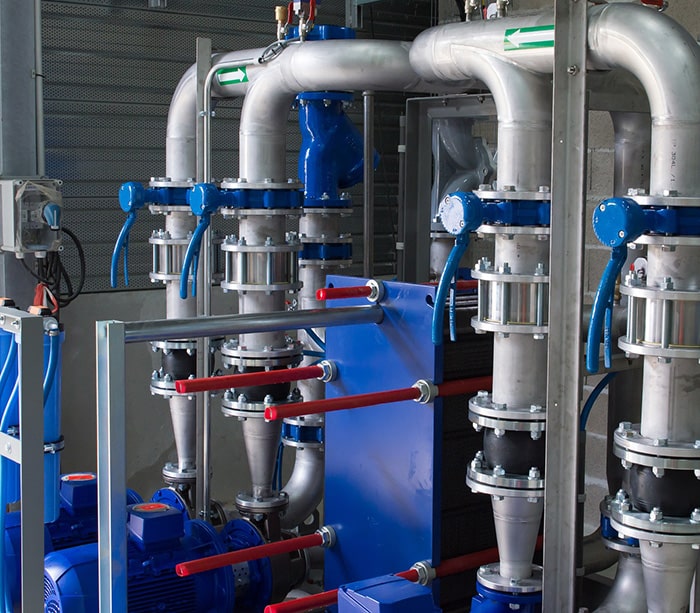
Industrial CIP Heat Exchanger Standards
Ensuring Hygienic Design & Regulatory Compliance
Certified CIP heat exchangers feature polished product-contact surfaces, full drainability, no dead legs, and validated cleanability — critical for preventing microbial growth and ensuring effective automated cleaning cycles.
- 3-A SSI certified designs with TPV documentation
- Surface finish Ra less than or equal to 32 microinch (0.8 micrometer) on product side
- 316L stainless steel wetted parts with full material traceability
- Fully drainable geometry and sloped tubing
- ASME Section VIII pressure vessel code compliance
- EHEDG, USDA, and FDA accepted construction
Mandatory Certifications for CIP Heat Exchangers
Compliance with recognized standards is not optional in regulated industries. 3-A, ASME BPE, EHEDG, and FDA requirements ensure equipment can be effectively cleaned, sterilized, and validated — protecting product integrity and consumer safety.
Full documentation packages including 3-A TPV, material certificates, weld logs, and passivation reports are standard for industrial installations.
3-A Sanitary Standards (USA)
The gold standard for dairy and food processing. Requires third-party verification (TPV), Ra less than or equal to 32 microinch finish, self-draining design, and cleanable seals. Symbol authorization only granted after inspection.
ASME BPE (Biopharmaceutical)
Defines requirements for high-purity systems: Ra less than or equal to 20 microinch electropolished, slope greater than or equal to 1/4 inch/ft, dead-leg less than 2D, and full traceability of materials and welding.
EHEDG & European Hygienic Design
Focuses on cleanability testing (EHEDG test methods). Certified units prove cleanability in place using riboflavin or bacterial challenge tests.
Material & Documentation Requirements
All wetted parts must be 316L SS with sulfur 0.005-0.017%. Mill certificates (MTR), weld procedure specifications (WPS/PQR), boroscope inspection reports, and passivation certificates required.
Pressure & Safety Certifications
ASME Section VIII Div. 1 U-stamp, National Board registration, PED 2014/68/EU (Europe), and CRN for Canadian provinces. All pressure vessels include nameplate and documentation.
Why Certification Matters
Certified CIP heat exchangers ensure regulatory acceptance, reduce audit risk, enable validated cleaning, and protect brand reputation in hygienic processing.
Common FAQs
3-A certification confirms the exchanger meets strict sanitary design criteria and has been third-party verified (TPV) for cleanability, drainability, and inspectability in dairy/food applications.
Not mandatory for most food applications (3-A is standard), but often specified for infant formula, nutraceuticals, or when higher purity than 3-A is desired.
3-A requires Ra less than or equal to 32 microinch (0.8 micrometer) mechanical polish. ASME BPE typically requires 20 microinch or better with electropolish.
In Canada, any pressure vessel greater than 1.5 cubic feet or operating above 15 psig requires CRN registration per province.
MTRs, weld logs, WPS/PQR, boroscope videos, passivation certificate, surface finish reports, pressure test certificate, and 3-A TPV or certificate of conformance.
Possible in non-regulated industries, but not recommended. Non-certified units often have dead legs, poor drainability, or rough surfaces that cannot be reliably cleaned.