
1-805-484-2992
Quotes - Engineering - SalesThe CIP Cleaning Process Step-by-Step
CIP achieves thorough cleaning through controlled mechanical action (turbulent flow), chemical action (detergents), temperature, and time the Sinner's Circle principle. Modern systems automate every parameter for repeatable, validated results.
- Pre-Rinse: Removes gross soil with recovered or fresh water at greater than or equal to 5 ft/s velocity.
- Caustic Wash: Circulates 1-3% NaOH at 140-180 degrees Fahrenheit to dissolve proteins and fats.
- Intermediate Rinse: Flushes away detergent until conductivity returns to baseline.
- Acid Wash: Uses phosphoric or nitric acid to remove mineral scale and brightens stainless steel.
- Final Rinse: Pure water or RO water rinse until neutral pH and low conductivity.
- Sanitization (optional): Hot water (greater than 185 degrees Fahrenheit) or chemical sanitizer for microbial kill.
How Clean-in-Place Works
Automated Circulation Cleaning Technology
CIP pumps cleaning solutions through the exact same path the product travels pipes, tanks, fillers, heat exchangers using spray balls, bursting devices, and turbulent flow to scrub interior surfaces mechanically while chemicals dissolve soil.
- High-velocity flow (greater than 5 ft/s) creates turbulence for physical removal
- Precise temperature and concentration control maximizes chemical action
- Conductivity sensors detect phase changes for perfect separation
- Recovery tanks reuse caustic and acid, reducing water/chemical use
- Full automation ensures consistency and audit-ready records
- Closed system enhances safety and prevents recontamination
Key Stages of a CIP Cycle
A complete CIP cycle typically lasts 45-90 minutes and follows a programmed sequence controlled by PLC. Each step is monitored in real time for time, temperature, flow, and conductivity to guarantee effectiveness and allow validation.
Systems range from simple single-use to advanced multi-tank recovery designs that reuse solutions dozens of times while maintaining strength through automatic dosing.
Flow Rates and Turbulence
CIP requires turbulent flow (Reynolds number greater than 4,000) achieved with velocities greater than or equal to 5 ft/s (1.5 m/s) in pipes. Return pumps are sized to maintain this even in the largest lines; higher velocity improves cleaning but increases pressure drop and energy use.
Temperature and Chemical Action
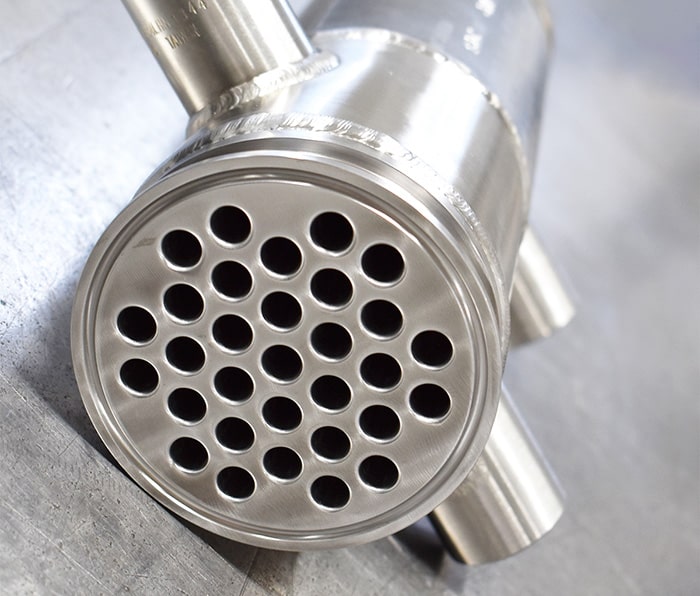
Caustic performs best at 140-180 degrees Fahrenheit (60-82 degrees Celsius); acid at 130-160 degrees Fahrenheit. Heat is supplied via plate or shell-and-tube exchangers in the CIP unit. Temperature is held constant throughout the circuit for uniform results.
Spray Devices and Coverage
Tanks are cleaned with rotating spray balls or jetters sized to deliver full 360 degrees wetting within 6-8 minutes (riboflavin test). Burst or pulsed cleaning reduces water use while maintaining impact.
Monitoring and Control
Conductivity, temperature, flow, and pressure sensors provide real-time feedback. Deviations trigger alarms or cycle extension. Data is logged for regulatory compliance and optimization.
Recovery and Sustainability
Smart systems recover final rinse as next pre-rinse, caustic for weeks, and acid for days cutting water and chemical consumption by 30-70% versus single-use CIP.
Why CIP is Essential
CIP delivers faster, safer, more consistent cleaning than manual methods while minimizing downtime and ensuring product safety in hygienic processes.
Common FAQs
CIP combines four factors: turbulent flow (mechanical scrubbing), hot detergent (chemical breakdown), elevated temperature (faster reaction), and sufficient contact time. These remove soil the same way manual scrubbing does, but automatically inside closed equipment.
Time, Temperature, Chemical concentration, and Mechanical action (T-T-C-M). All four must be correct and monitored. Modern systems automatically adjust dosing and extend cycles if parameters drift.
- Pre-rinse to Caustic wash to Intermediate rinse
- Acid wash to Final rinse to (Optional) Sanitization
45-90 minutes depending on circuit size, soil load, and whether acid step is included. Optimized programs can run as fast as 30 minutes for light soil.
Minimum 5 ft/s (1.5 m/s) in all pipes during detergent and rinse steps to create turbulent flow and mechanical cleaning action.
Recovery tanks store and reuse final rinse as next pre-rinse, caustic for weeks, and acid for days. Automatic dosing maintains strength, reducing consumption by 30-70% vs single-use systems.