
1-805-484-2992
Quotes - Engineering - Sales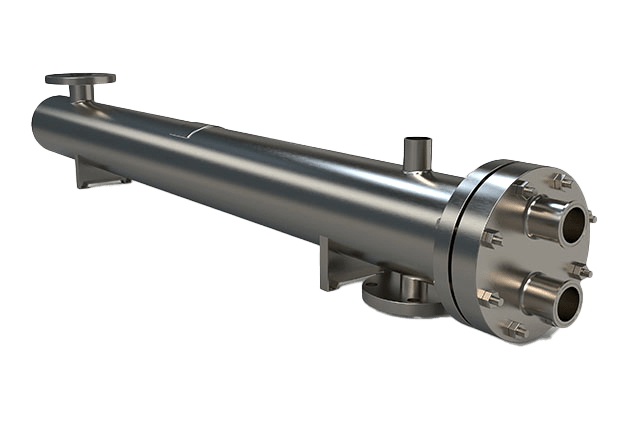
A Heater for the Wash, Not the Product
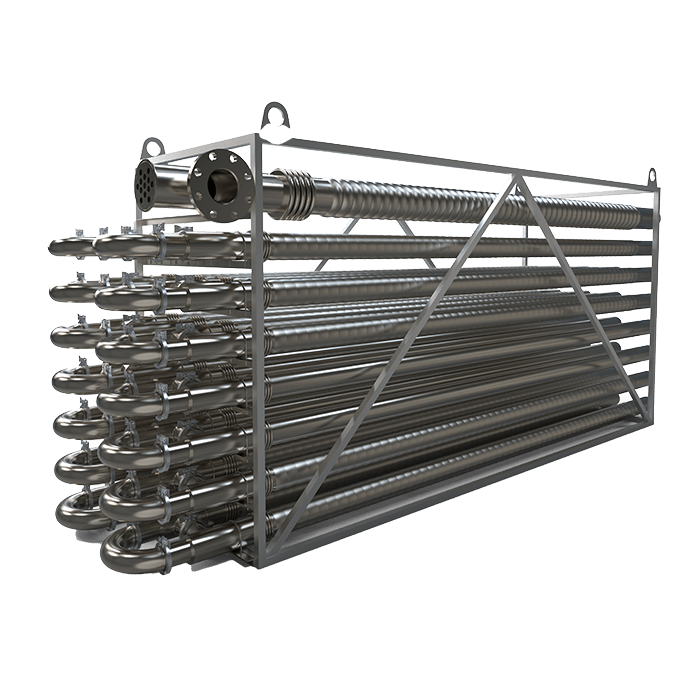
Every clean-in-place system has a wash that must be hot before it does any work. Caustic lifts protein and fat only when the tank sits at 140–175°F, an acid step runs cooler at 120–150°F, and a hot-water sanitize has to hold 180°F at the return. The heater that gets the solution there is the subject of this site: steam on one side, 1–2% sodium hydroxide, dilute nitric or phosphoric acid, or rinse water on the other. The product the plant is cleaning off never enters it.
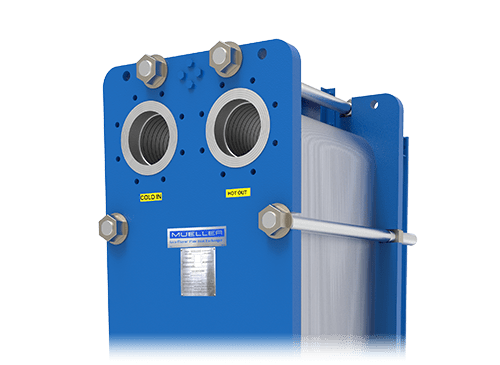
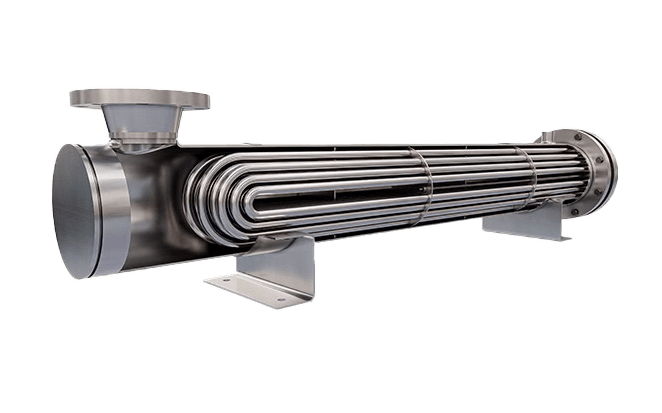
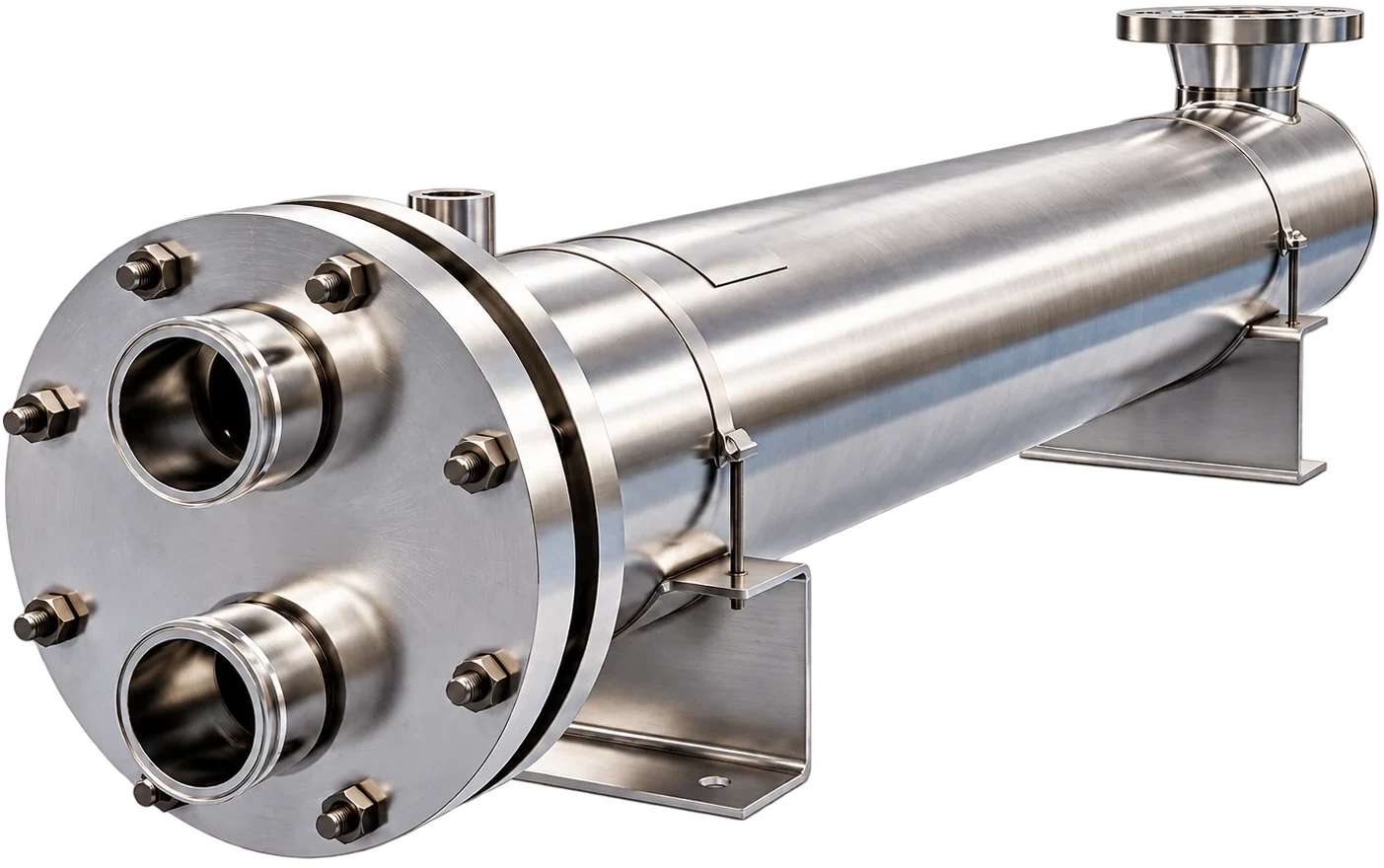
The usual build is a U-tube shell-and-tube with steam inside the tubes and the solution in the shell. The U-bundle expands freely as the steam comes on, the 316L shell side takes the chemistry, and the bundle slides out when milkstone or a protein film has to be removed. Where recovery or hot water at modest pressure is the duty, a gasketed plate exchanger does the job with a gasket chosen for the chemical.
We also supply new replacement bundles and plate packs for heaters already in the plant, so a worn core can be swapped without touching the shell, frame or piping.
Four Circuits We Heat




Steam to Solution, Sized for the Cycle
A CIP heater is sized by the clock as much as by the gpm. A 2,000-gallon caustic tank that must go from 70 to 165°F in 20 minutes needs about 4.75 MBtu/h; give the same tank an hour and about 1.6 MBtu/h will do. An inline heater on a 3-inch line sees roughly 70 gpm and has to make its whole rise in one pass. Those two cases call for different shells, and the first question we ask is which one you have.
Steam pressure at the heater inlet sets the approach. Plant steam of 15–125 psig condenses between 250 and 353°F, so even low-pressure steam leaves 50°F or more above a 175°F caustic target. We add a fouling allowance of 0.001–0.002 on the solution side because that is the side that scales; the steam side stays clean.
Tri-clamp ends and a drainable layout come in when the plant treats the loop as sanitary; a utility heater gets mill-finish 316L with flanged or threaded connections. Either way the solution-side rating is commonly 150 psig at 250°F.
Start Here
Start Here
Pick the Circuit
Caustic, acid, hot-water rinse or recovery: each circuit has a usual construction and a reason for it. Start with the one you are heating.
+ Learn More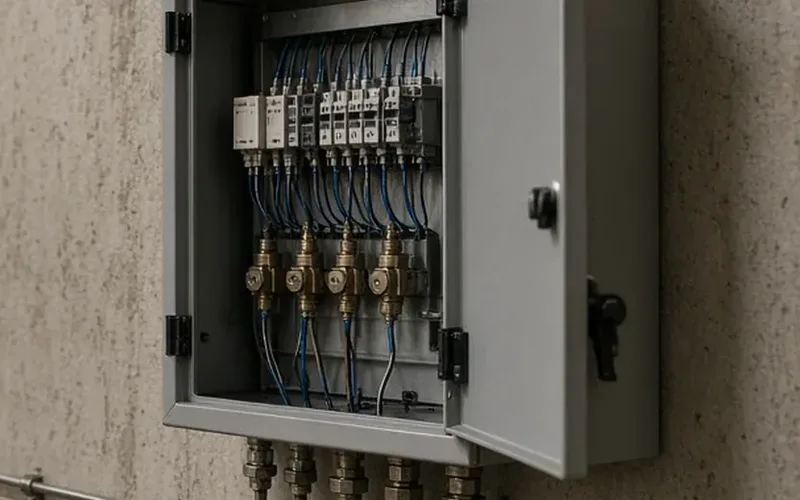
Start Here
Define the Duty
Tank or once-through, gpm, inlet and target temperature, steam pressure at the heater. Work through the figures a quote needs, one at a time.
+ Learn More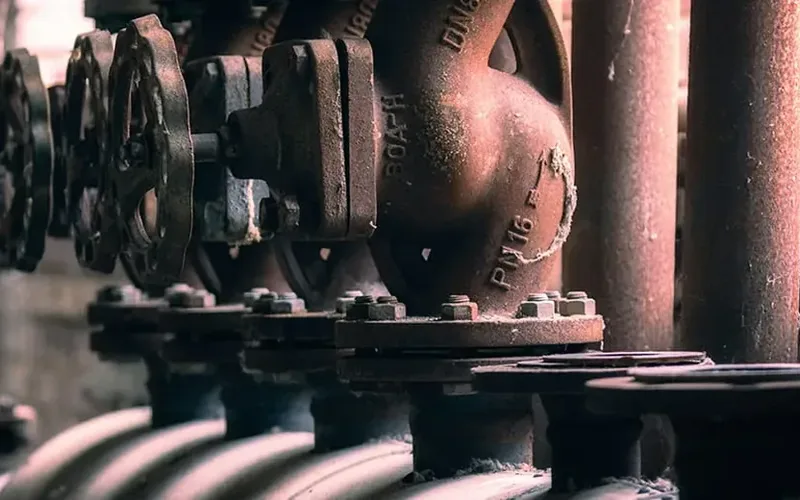
Start Here
Replace a Heater
Match a nameplate or an old hot-water generator to an equivalent unit, or to a new bundle or plate pack that fits the shell or frame you have.
+ Learn More