
1-805-484-2992
Quotes - Engineering - SalesWhat a plant gets from CIP, and what the heater gives back
The case for clean-in-place is usually made on labor and downtime: nobody dismantles a filler or climbs into a silo, and the line is back in production in 45–90 minutes instead of a shift. Those are real, but the engineering case is repeatability. A CIP cycle delivers the same chemical at the same concentration and the same temperature for the same minutes every time, and the temperature half of that promise is kept by the heater.
Counted in minutes and pounds
A manual wash is as hot as a hand can stand, about 110°F, and as strong as the operator mixes it. A CIP caustic wash runs at 160–175°F in a dairy and 140–160°F in a brewery, at 1–2% sodium hydroxide, because those are the conditions where fat saponifies and protein lifts in 20–45 minutes rather than in hours. The acid step at 120–150°F dissolves the mineral left behind. None of that is available by hand, and all of it depends on a heater that reaches the target before the step begins.
The savings that follow are specific. A tank that is at 165°F when the pump starts finishes the caustic step in its scheduled time; one that starts at 130°F is extended by the operator and often dosed with more caustic to compensate. Steam is used either way; the plant that reaches temperature on time simply uses it once. Recovery on the return line, a plate exchanger warming makeup water with 150–160°F spent solution, returns 60–70% of that heat and makes the steam heater smaller still.
What a correctly sized heater adds
- Caustic step runs its scheduled 20–45 minutes instead of an extended one
- No compensating dose: 1–2% caustic at temperature does the work 3% does cold
- Line back in production inside the 45–90 minute cycle the schedule promises
- Sanitize water at 180°F or more at the far end of the loop, so the check passes first time
- Milkstone held in check because the caustic and acid both ran at their design temperatures
- Steam used once, during the heat-up the timer started, rather than through a stalled wash
of return heat recoveredA plate exchanger between the 150–160°F return and 60°F makeup gives most of the spent heat back to the next fill and shrinks the steam heater that finishes the job.
Advantages a plant can measure
Each of these shows up in a log the plant already keeps: the CIP controller's cycle report, the chemical inventory, and the boiler's steam meter. A heater that is undersized shows up in all three.
- Cycle time: scheduled versus actual minutes on the caustic step, read from the controller
- Caustic consumption: pounds of 50% sodium hydroxide per cycle, falling as temperature is met
- Steam: lb/h during heat-up, about 3,100 lb/h for every 3 MBtu/h at 15 psig
- Rinse-water temperature at the farthest return, logged on the sanitize step
- Swab results: milkstone and protein film found, or not found, at the inspection points
Call and talk it through with an engineer: 1-805-484-2992
The advantages, and where the heater sits in each
Repeatability is the advantage that pays for the others. A filler cleaned by hand is cleaned differently on every shift; a filler cleaned in place sees the same 165°F caustic for the same 30 minutes whether it is Monday or the night before a holiday. For that to be true, the heater must reach the target in the time the program allows and hold it while the return comes back cool. An undersized heater turns a repeatable program into a variable one, because the operator starts intervening.
Downtime is the advantage management notices. A full cycle of 45–90 minutes is what the sanitation schedule is built around, and a line that is still washing when production is due costs more than any heater. The caustic heat-up is the only part of the cycle the heater can shorten, which is why a tank heater is sized to the minutes the schedule gives it, 20 or 60, and not to a catalog figure.
Chemical use is the advantage sanitation notices. Caustic works by temperature as much as by concentration: a 1–2% solution at 165°F does what a 3% solution does at 130°F, and the stronger solution still has to be rinsed out and neutralized. A plant whose tank reaches temperature on schedule runs the lower concentration, buys less 50% caustic, and sends less to the drain. The same logic holds on the acid step at 120–150°F.
Steam use is the advantage the boiler house notices, and here recovery joins the heater. The spent caustic return at 150–160°F carries heat the plant has already paid for. A gasketed plate exchanger set between that return and the 60°F makeup water gives 60–70% of it back, so the next tank fill starts warm. The steam heater still finishes the job; it simply has less lifting to do and condenses less steam doing it.
Equipment life is the advantage nobody logs. Milkstone forms on hot surfaces above about 160°F in hard water, and it forms fastest where the caustic step ran weak and the acid step ran cool, because neither chemistry fully did its work. A heater that holds both steps at temperature keeps the vessels, lines and its own bundle cleaner between pulls, and a U-tube bundle that pulls on schedule rather than in a panic is one that lasts.
Temperature is the half of the CIP promise the heater keeps.
The savings are in the controller log, the chemical inventory and the steam meter, and all three move together.
Request a QuoteAdvantage questions
On any line that is cleaned daily, yes, and the heater is a small part of the installed cost next to the tanks, pump and controls. The running cost is chemical, water and steam, and a correctly sized heater lowers all three by letting the written step do its work at temperature. The cost that dominates is still downtime, and that is the one CIP attacks first.
Only up to the heat-up. Once the tank is at target the caustic step runs its set minutes irregardless of heater size, and the acid, rinse and sanitize steps are set by chemistry and by the line flow. A heater sized for a 20-minute heat-up against a schedule that allows an hour buys nothing. Size to the minutes you have; oversizing past that costs steam-side control, not time.
Through temperature. Caustic at 165°F saponifies fat and lifts protein at a rate the same solution at 130°F cannot match, so a wash that starts cold is either extended or strengthened, and both use more chemical. Plants that fix an undersized tank heater usually see their 50% caustic draw fall without changing the program, because the program finally runs as written.
Recovery is a second exchanger, a gasketed plate unit on the return line, and it works alongside the steam heater rather than instead of it. It warms the makeup water from 60°F toward the return temperature and gives back 60–70% of the heat the last wash carried out. The steam heater then starts from a warmer tank. It is an addition for plants that fill from cold water several times a day.
Related
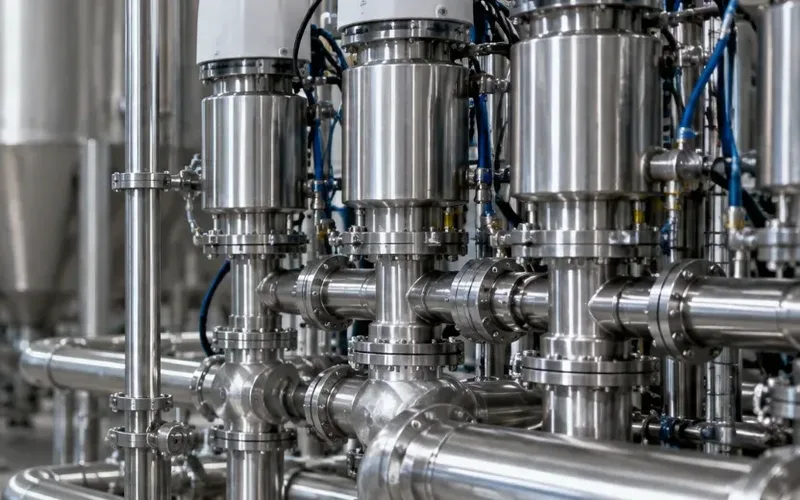
Sizing & Selection
How It Works
The six steps of a CIP cycle in order, with the temperature each one holds and which of them actually draw steam through the heater.
+ Learn More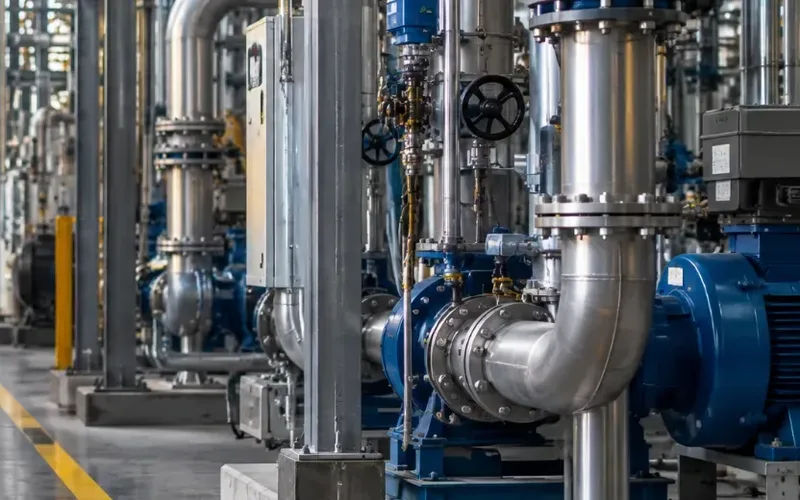
Sizing & Selection
What is CIP?
Clean-in-place washes process equipment in position by pumping heated solution through it. This section covers the heating that makes the chemistry work.
+ Learn More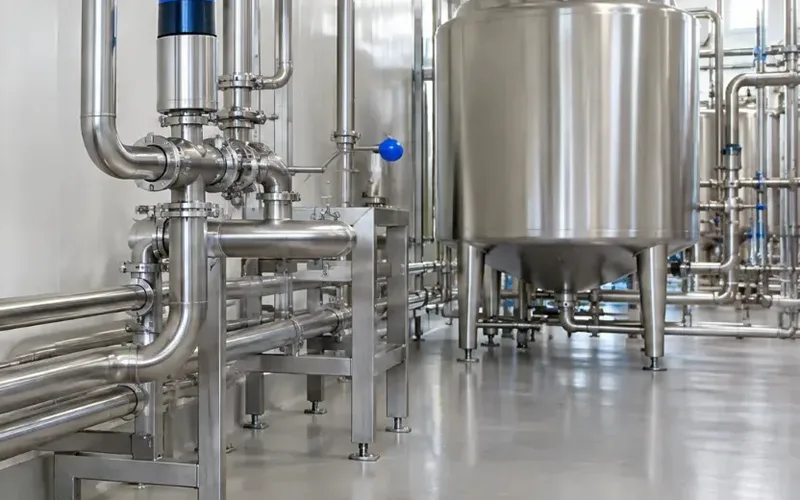
Sizing & Selection
Certifications & Design
Three build levels for the same duty, from mill-finish utility stainless to a 3-A marked drainable unit. Which one the loop needs, and what each adds to the cost.
+ Learn More