
1-805-484-2992
Quotes - Engineering - SalesWhat a gasketed plate pack is made of
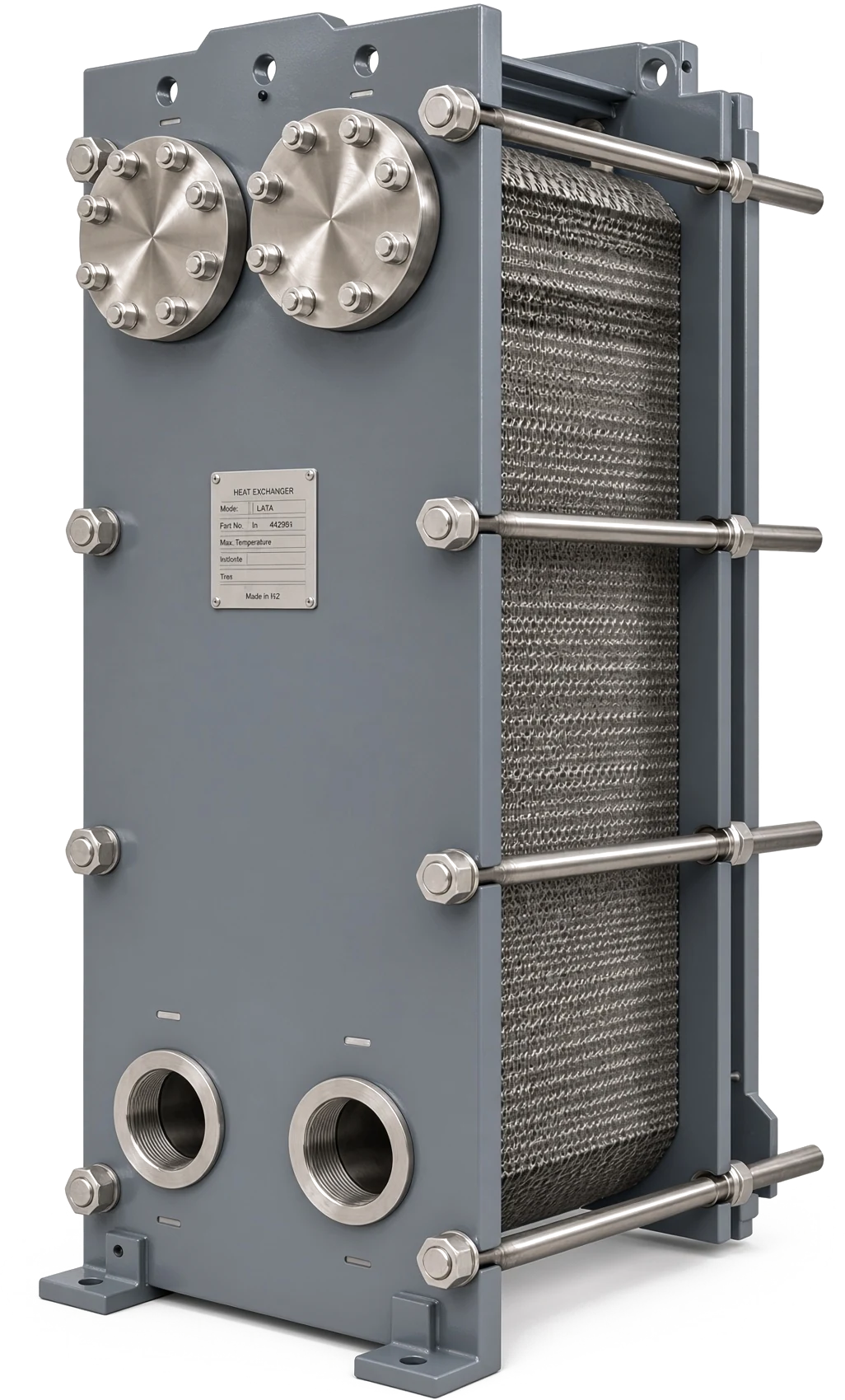
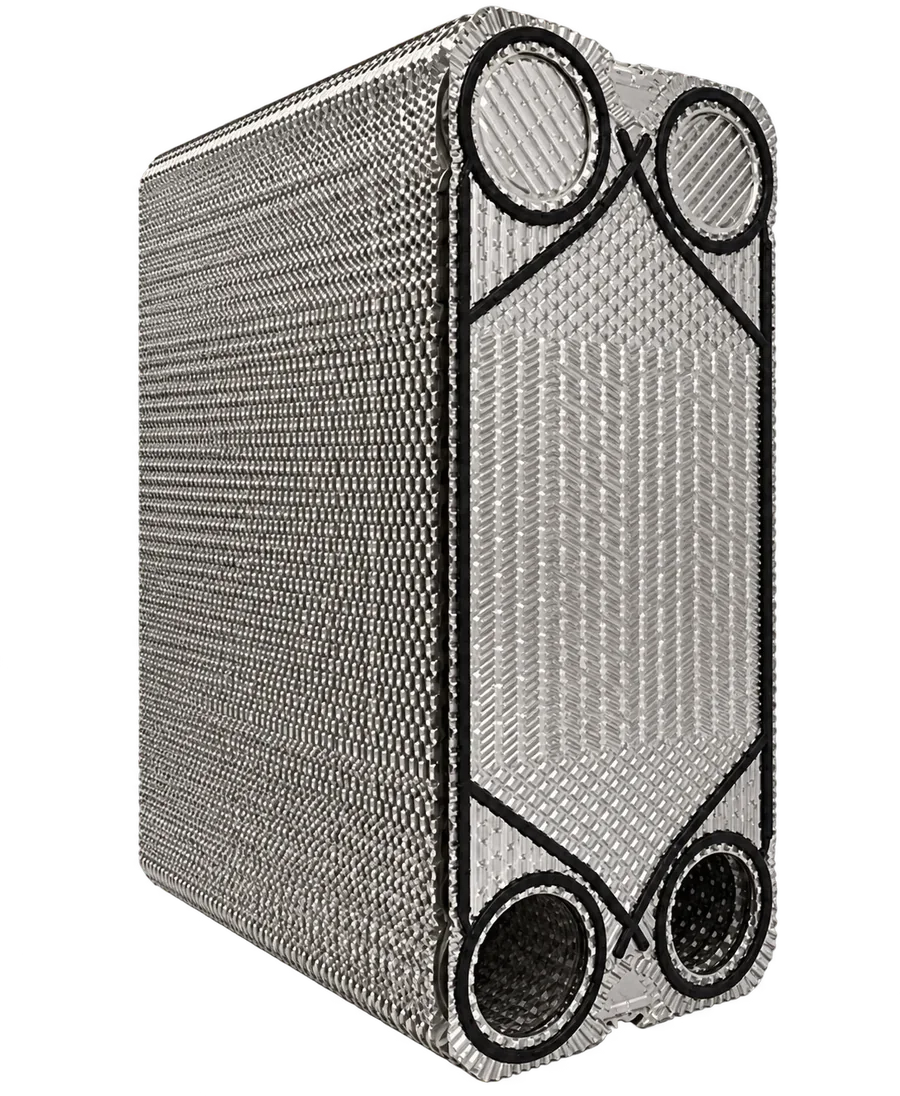
A gasketed plate exchanger is a stack of pressed 316L plates, each 0.5–0.6 mm thick with a corrugated pattern, hung on a carrying bar between a fixed plate and a moving pressure plate and squeezed together with tightening bolts. The gasket on each plate seals the edge and directs the two liquids into alternate 3–5 mm channels, so the hot stream and the cold stream pass each other in counterflow with a thin plate between them.
On a CIP system it appears wherever one liquid heats another: the caustic return warming makeup water, the final rinse preheating the next cold fill, and rinse water heated from a plant hot-water loop. It never appears on the main steam-to-caustic duty, which stays on the shell-and-tube.
Plates
- 316L, 0.5–0.6 mm, pressed herringbone pattern
- 3–5 mm channel gap, counterflow
- Hung on a carrying bar; any plate lifts out
- Mill finish standard; 32 Ra where the loop is sanitary
Gaskets
- EPDM for caustic, rinse water and hot water to about 300°F
- FKM when nitric runs hot or often through the pack
- NBR is not used on CIP duty
- Double gasket with a vent gap at every port
- Clip-on, supplied as a complete set
Frame
- 150 psig design on both sides
- Fixed and pressure plates, carbon steel painted or clad
- Tightening bolts and a stamped closed dimension
- Room on the bar for added plates later
Talk to an Application SpecialistA plate pack lives on the approach a bundle cannot reach, five to ten degrees between two liquids, and pays for it by never seeing steam.
Recovery and water-heated rinse are its duties on a CIP system.
Designing the plate pack around the chemistry
The approach is the whole argument
Two liquids 10°F apart cannot exchange much heat through a round tube without a very long bundle. A plate channel 3–5 mm wide with a corrugated wall runs turbulent at low velocity, and the plate is 0.5–0.6 mm thick, so the heat gets through with a 5–10°F approach in a frame a few feet long. That is what lets a 155°F caustic return put makeup water at 120°F, and why recovery is always a plate on this site.
Gaskets, and the acid step that gets forgotten
EPDM is the standard gasket: good on 1–2% sodium hydroxide, on rinse water and on hot water to about 300°F. The question we ask every time is whether the acid step passes through the pack. Phosphoric at 0.5–1.5% and 120–150°F is mild; nitric at the same strength is an oxidizer and hardens EPDM over months. A pack whose gaskets went stiff and began weeping a year after the plant added a nitric step is the classic failure, and FKM on the acid duty is the answer.
Why not steam
A plate on steam is a different exchanger. The steam-side gasket sees 250–353°F and a pressure that swings every time the valve moves, and even EPDM rated to about 300°F is working near its limit on every cycle. For the steam-heated caustic, acid and rinse duties we build the U-tube shell-and-tube, which has no elastomer in the steam path. Plate takes the liquid-to-liquid work and does it better than anything else.
Opening, inspecting, and adding plates
Back off the tightening bolts, slide the pressure plate along the bar, and every channel is exposed. Soil from the caustic return shows on the return-side plates near the inlet; scale on hard makeup water shows near the hot end. The frame should be ordered with 10–20% spare bar length, because adding plates to meet a new duty is a morning's work and a new frame is not.
Plate pack questions
Every port on every plate carries a double gasket with a vented gap between the two seals. A failure on either seal leaks to atmosphere through that gap and shows as a drip on the frame, not as caustic in the makeup water. It is the standard construction and the reason a plate pack is acceptible between a chemical return and a clean water supply.
The plates themselves are 316L and do not care about CIP temperatures. The gasket sets the limit: EPDM to about 300°F, which covers any liquid-to-liquid CIP duty with margin, since the hottest stream a recovery pack sees is a 160°F return or a 200°F plant hot-water loop. The pressure limit is the frame, 150 psig on either side.
Each frame takes one plate size and pattern, defined by the port layout, the plate length and width and the corrugation. A new pack has to match that pattern exactly or the gaskets do not seal. We work from the frame nameplate, a sample plate or measurements, and supply the complete set of plates and gaskets ready to hang. Replacement plate packs covers what to measure.
Yes, where the plant treats the stream as product-contact. Tri-clamp ports to 4 inches, a frame that drains, 32 Ra plate surfaces and food-grade EPDM gaskets are all available. On a recovery pack between a caustic return and makeup water that is rarely asked for; on a final-rinse heater it sometimes is. Say which, and the quote follows the loop's status rather than a default.
Related
Heat Exchangers
Plate Pack & Frame
Thin 316L plates, a pressed gasket on each, and a frame that squeezes them into a counterflow exchanger: the construction for recovery and warm rinse water.
+ Learn More
Heat Exchangers
EPDM & Acid Elastomers
Which rubber goes on the plate: EPDM for sodium hydroxide and hot water, FKM where nitric runs through the same pack, and the temperatures where each gives up.
+ Learn More
Heat Exchangers
Replacement Plate Packs
The frame has years left; the plates do not. A complete new pack of 316L plates and gaskets, matched to the hanger and port pattern, restores the exchanger fast.
+ Learn More