
1-805-484-2992
Quotes - Engineering - SalesTwo heat loads on the same caustic tank
A brewery washes two very different kinds of vessel from one caustic tank. On the brewhouse side the kettle, whirlpool and mash tun carry hop resin and coagulated wort protein that went on hot, and they clean best at the top of the brewery range, 160°F and up. In the cellar the fermenters and bright tanks are washed with the glycol jacket still cold, because nobody wants to cycle a 300-barrel vessel through a hundred degrees of swing every week. Brewers run that side at 140°F or a little less, and some run it cold on purpose.
What that does to the caustic is the sizing problem. Send 100 gpm out to a fermenter whose steel is sitting at 34°F and the first pass comes back at 120°F or lower while the shell soaks up the heat. The heater on the tank loop has to put that heat back before the next vessel starts, and in a cellar with a dozen tanks on the schedule the next vessel is never far off. CO2 is the second drain: caustic absorbs it, the hydroxide converts to carbonate, strength falls, and the plant tops up with cold water that also has to be heated.
We size the heater for the cold-vessel recovery and the CO2 makeup, not for holding a tank that is already hot. That is usually a U-tube steam heater on the tank loop with 316L on the caustic side and a bundle that comes out.
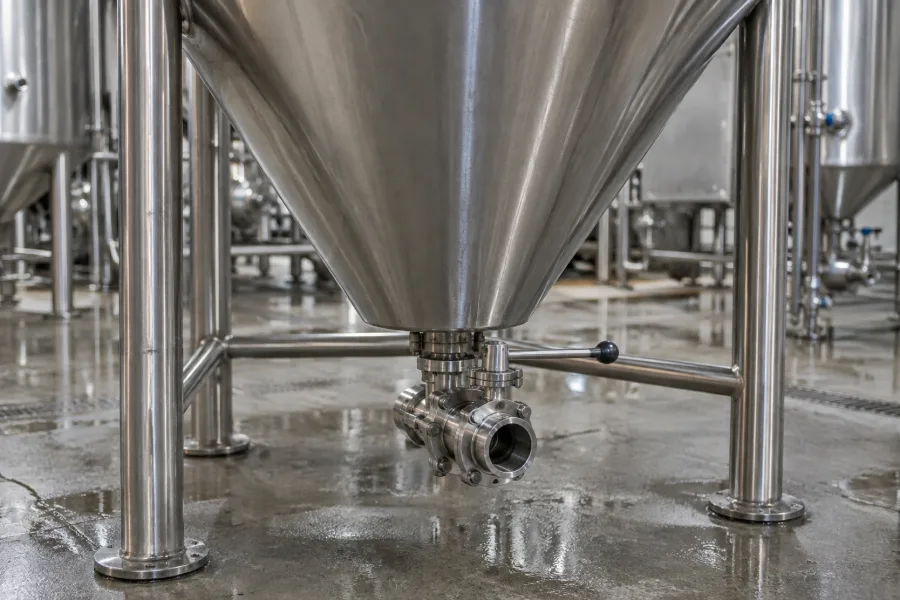
Size the brewery caustic heater for the coldest fermenter, not the kettle
- Caustic returning from a glycol-cold vessel can dip to 120°F
- CO2 pickup turns hydroxide to carbonate and wastes heat on makeup
- Brewhouse vessels clean at 160°F and up, the cellar runs nearer 140°F
The brewery circuit and the heater we put on it
The left column is how a typical regional brewery runs its caustic loop. The right column is the heater that handles it. Where your numbers differ, send yours; the construction rarely changes but the surface area does.
Caustic as the brewery runs it
- Chemical: Sodium hydroxide 1–2%, pushed toward 3% on burnt-on kettle soil
- Temperature: 140°F in the cellar; kettle and whirlpool at 160–175°F
- Flow: 100–300 gpm on a fermenter spray device; 30–70 gpm on brewhouse lines
- Cycle: Caustic 20–45 minutes; acid two or three times a week on bright tanks
- Soil: Hop resin, yeast, denatured protein, beerstone (calcium oxalate)
- Return condition: Carbonated caustic, 120°F or less on the first pass from a cold tank
The heater we recommend
- Construction: U-tube shell-and-tube, steam in the tubes, caustic on the shell side
- Materials: 316L shell, bundle and heads; EPDM head gasket; carbon steel steam head
- Rating: 150 psig at 250°F on the caustic side, 150 psig at 400°F on steam
- Connections: Tri-clamp to 4 inches or 150-pound flanges; mill finish is enough
- Steam and duty: 15–50 psig at the heater; 1.6–4.75 MBtu/h on a 2,000-gallon tank
- Send us: Tank gallons, heat-up minutes, largest vessel and its glycol setpoint, steam psig
Where brewery caustic heaters go wrong
Heat-up before the first vessel
The cellar schedule sets the duty. A 2,000-gallon caustic tank that drifted to 70°F overnight and has to be at 165°F when the first brewhouse wash starts in 20 minutes needs about 4.75 MBtu/h. Give the same tank 60 minutes and 1.6 MBtu/h does it. Breweries that run the cellar at 140°F often think they can take the smaller heater, then find the kettle wash waiting on temperature every brew day. Tell us the real start time, not the hoped-for one.
The tank loop pump is sized for the heater, not for the spray device. 50–150 gpm through the shell keeps caustic moving across the tubes fast enough to limit carbonate scale and gives the surface a chance to work.
The CO2 problem
A fermenter that was just emptied is full of CO2. Spray caustic into it and the gas dissolves on contact, so a tank of 2% hydroxide can lose a quarter of its strength in a single cellar wash. Plants top up with concentrate and with water, and every gallon of makeup arrives cold. The carbonate also matters to the heater: with hard makeup water it pairs with calcium and comes out as calcium carbonate on the hottest surface in the system, which is the outside of the steam tubes.
- Vent or purge the vessel before caustic where the plant can; less CO2 means less makeup
- Expect carbonate scale on the tube surface and order the bundle removable
- Carry a fouling allowance of 0.001–0.002 on the caustic side
- Recover heat from the return with a plate exchanger before adding makeup water
Beerstone belongs to the acid step
Calcium oxalate from the wort binds with protein on fermenter walls and on the heater tubes alike. Caustic lifts the protein but leaves the oxalate, so a brewery that skips the acid wash sees a gray, rough deposit build on the caustic-side surfaces and the heater slowly loses capacity. Nitric or phosphoric at 0.5–1.5% and 120–150°F dissolves it. Because the acid runs through the same heater, the head gasket is EPDM on a caustic-only loop and FKM where nitric runs hot or often.
Brushing instead of pulling
Some brewhouse crews would rather brush tubes than pull a bundle. A straight-tube heater with removable heads lets them do that, at the cost of fixed tubes that see the full thermal swing between a 298°F steam side at 50 psig and a 140°F caustic side. For brewery duty with plenty of carbonate and oxalate we still lean to the U-tube with a removable bundle, and we ask for the pull clearance on the drawing before anything is ordered.
Questions from the cellar
Some breweries do run a cold caustic on fermenters, with a longer contact time and a stronger solution. The heater still earns its place on the brewhouse side, where hop resin and baked protein do not move at 70°F, and on the hot-water sanitize. Size the heater for the brewhouse duty and let the cellar borrow it when the schedule allows.
The vessel steel is a heat sink. A 300-barrel bright tank at 34°F has several tons of stainless to warm, and the first minutes of spray carry that heat out of the caustic and leave it in the tank wall. The return comes back 30–40°F cooler than it left. A tank-loop heater sized for the hold cannot recover that; one sized for the cold-vessel dip can.
Not the metal; 316L is indifferent to sodium carbonate. What it hurts is capacity. Calcium carbonate from the water hardness drops out on the hot tube surface as a white to gray scale that acts as insulation, and the heater needs more steam pressure to hit the same outlet temperature. A removable bundle lets you take the scale off; the acid step dissolves most of it in place if the plant runs acid regularly.
Most breweries have 15–50 psig available near the CIP tank, and that is plenty. At 15 psig the steam condenses at 250°F, which is still 75°F above a 175°F caustic target, so the surface area stays reasonable. Higher pressure shrinks the heater but raises the tube-wall temperature and speeds the carbonate scale. Tell us the pressure at the heater inlet after the control valve, not the boiler setting.
Related
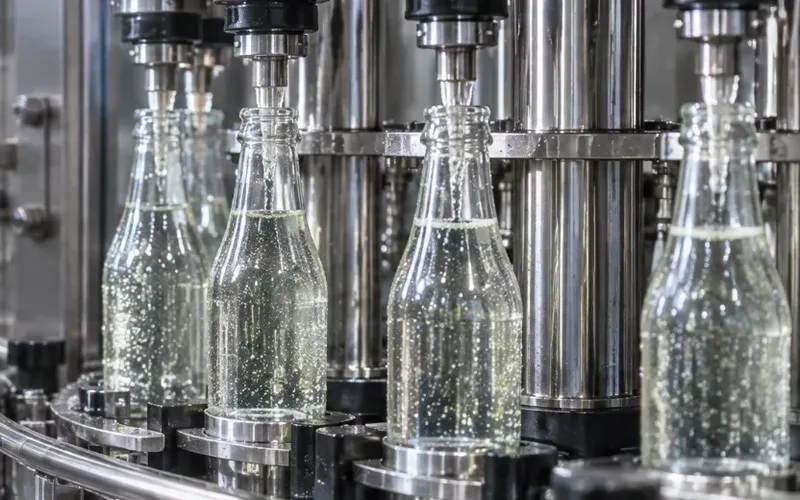
Applications
Filler & Bottling Rinse
A filler sanitize is a time-at-temperature test at the coldest valve, not at the heater. Why bottling lines get a once-through heater sized for the full rise.
+ Learn More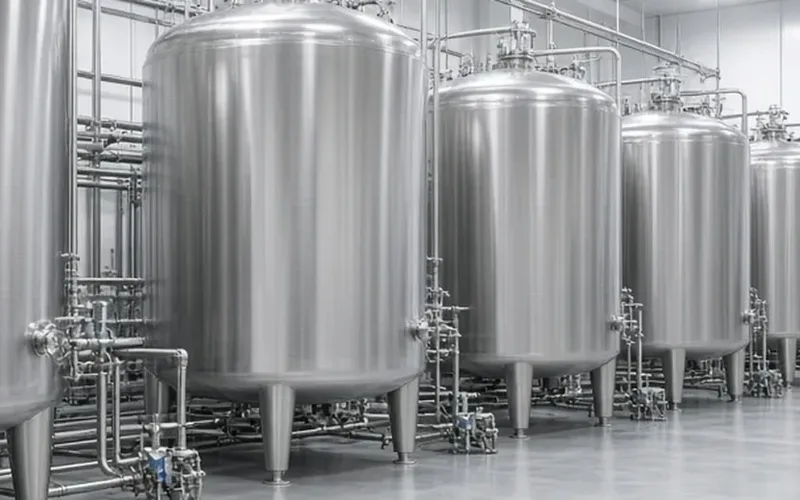
Applications
Juice & Soft Drink Lines
Juice and soft drink lines clean often, run acid most days and dump a lot of warm return. The caustic heater, the gasket for the acid, and where recovery pays.
+ Learn More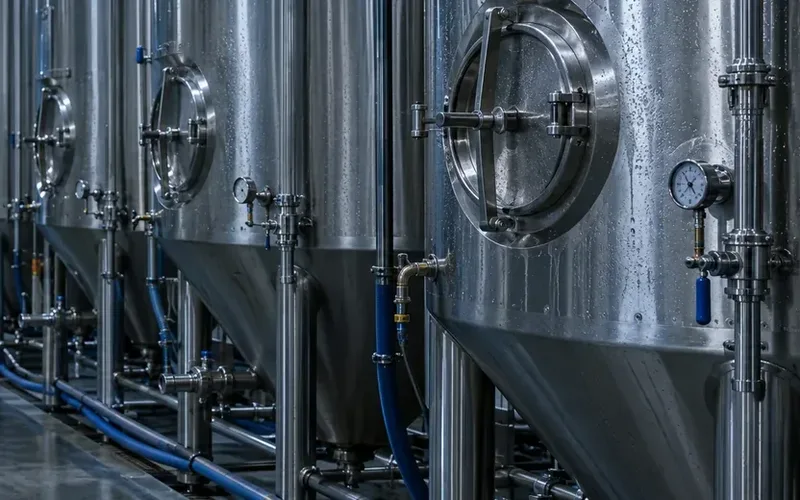
Applications
Brewery & Beverage
Breweries heat caustic against cold vessels and carbonate scale; beverage lines run the rinse heater hardest. Circuits, temperatures and the heater for each.
+ Learn More
