
1-805-484-2992
Quotes - Engineering - SalesThe sizing path
A CIP heater is sized from five answers, in this order
Every heat exchanger is sized from a duty: how much liquid, from what temperature to what temperature, heated by what. On a CIP heater those plain questions hide two traps. The first is that the same caustic tank can be heated by a 1.6 MBtu/h exchanger or a 4.75 MBtu/h exchanger depending only on whether the schedule allows 60 minutes or 20 for the heat-up, so the circuit type, tank recirculation or once-through inline, has to be settled before any flow figure means anything. The second is that the steam pressure written on the boiler is not the pressure at the heater. A control valve, a header and a long run sit between them, and 100 psig at the boiler can be 30 psig at the tube inlet.
The pages in this section take the questions in the order they depend on each other. Circuit and chemical first, because the chemical fixes the material and the gasket. Tank or once-through second, because it changes what the gpm figure means. Then the duty point: flow, inlet, target, steam at the heater. The off-menu fouling page covers which side fouls and whether the bundle must come out, and the last page is the checklist that turns all of it into a quote nobody has to phone back about.
The first three answers
Circuit, Chemical & Concentration
- Caustic, acid, hot-water rinse or recovery, and what runs in it
- 1–2% sodium hydroxide or 0.5–1.5% nitric or phosphoric acid
- Why the acid step is called out on the quote and never assumed
Tank Recirculation or Once-Through
- A tank heater lifts the whole volume; an inline heater lifts a flow
- Heat-up time can triple the exchanger on the same tank
- How to tell which you have from the way the loop is piped
Duty Point & Steam Pressure
- gpm, inlet and target temperature, written as the plant runs them
- Steam pressure after the control valve, at the heater inlet
- About 500 Btu/h per gpm per degree, and what that says about the bundle
Name the circuit
caustic, acid, rinse or recovery
Fix the flow
gpm in the line or gallons in the tank
Set the temperatures
inlet, target and steam at the heater
Note the fouling
solution side fouls, bundle pulls
The chemical fixes the metal and the gasket
Sodium hydroxide at 1–2%, nitric or phosphoric acid at 0.5–1.5%, or plain rinse water: all three run in 316L on the solution side, so the alloy is not the decision. The elastomer is. EPDM in the head gasket, or in a plate pack, handles caustic and hot water to about 300°F; nitric acid, used hot or several times a week, hardens it within a season and calls for FKM. A quote that says caustic and omits the acid step gets EPDM, which is why we ask for the acid circuit by name.
Tank or once-through changes what gpm means
On a once-through inline heater the gpm is the line flow, roughly 30 gpm in a 2-inch line and 120 gpm in a 4-inch at 5 ft/s, and the heater lifts it from inlet to target in one pass. On a tank heater the gpm is only the loop flow through the shell; the duty is the tank volume divided by the heat-up time. Heating 2,000 gallons from 70 to 165°F takes about 4.75 MBtu/h over 20 minutes and about 1.6 MBtu/h over 60.
Steam at the heater, not at the boiler
Plant steam runs 15–125 psig and the saturation temperature runs with it: 250°F at 15 psig, 298°F at 50, 338°F at 100. The heater sees whatever is left after the control valve, and a valve sized to throttle 100 psig down may leave 30 psig at full load. State the pressure you can hold at the heater inlet. Low-pressure steam still works, 15 psig sits 75°F above a 175°F target, but it needs more surface, and we would rather know.
Fouling side and the pull
On a caustic or acid heater the solution side fouls with milkstone, protein film and carbonate scale; the steam side stays clean. We carry a fouling allowance of 0.001–0.002 on the shell side, which adds roughly 10–20% surface, and we build the bundle to pull. Tell us the clearance in front of the unit, because a bundle that cannot come out is a heater that gets replaced instead of cleaned.
Call and talk it through with an engineer: 1-805-484-2992
Selection questions
Because the setpoint lives on a controller and the target lives at the soil. A dairy tank set at 165°F whose return comes back at 150°F is a 165°F duty with heat loss included, and the heater has to carry the loss. We size to the temperature the solution must have where it leaves the heater, and we need to know how much of the circuit sits between the heater and the equipment being cleaned.
Size for the largest flow and the shortest heat-up, and tell us the others. A tank that feeds a 70 gpm line circuit on Monday and a 250 gpm silo circuit on Tuesday needs a heater that keeps up with the silo, and a shell that does not starve for velocity on the line. Both are solvable, but only if both duties are on the quote.
A single steam heater can be valved to either tank, and plants do it, but the gasket then has to survive the acid step, so it is FKM, and the shell carries whichever chemistry ran last into the other tank unless it drains between steps. Two smaller heaters, EPDM on caustic and FKM on acid, are the usual recommendation and cost little more than one large unit.
Within about 10 psig is fine; what matters is the range. A heater sized for 50 psig and fed 15 psig on a winter morning when the boiler is loaded will fall short by a third. Tell us the lowest pressure you can guarantee at the heater inlet during a wash, and we size to that. Higher pressure on a good day simply makes the control valve work less.
We assume the solution side fouls, because it always does on caustic and acid, and we build the bundle to pull. What we cannot assume is the clearance. A 10-foot bundle needs 10 feet in front of the shell, and a unit installed against a wall with the wrong head facing out has to be unbolted and turned before the bundle comes out. Mark the pull side on the quote.
Related
Sizing & Selection
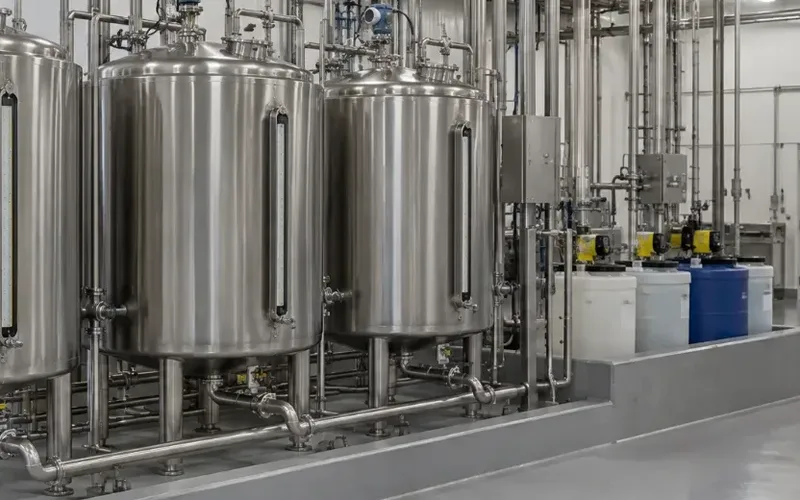
Circuit, Chemical & Concentration
Caustic, acid, rinse or recovery, which chemical and at what strength. Why those three answers decide the metal and the gasket before a single Btu is counted.
+ Learn More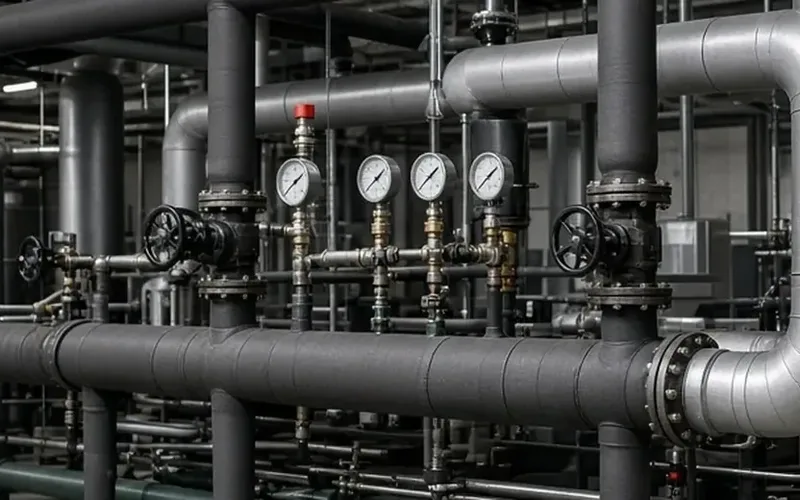
Sizing & Selection
Tank Recirculation or Once-Through
A tank loop is sized in gallons and minutes, an inline heater in gpm and degrees. How to tell which circuit you are heating and why the answer can triple the duty.
+ Learn More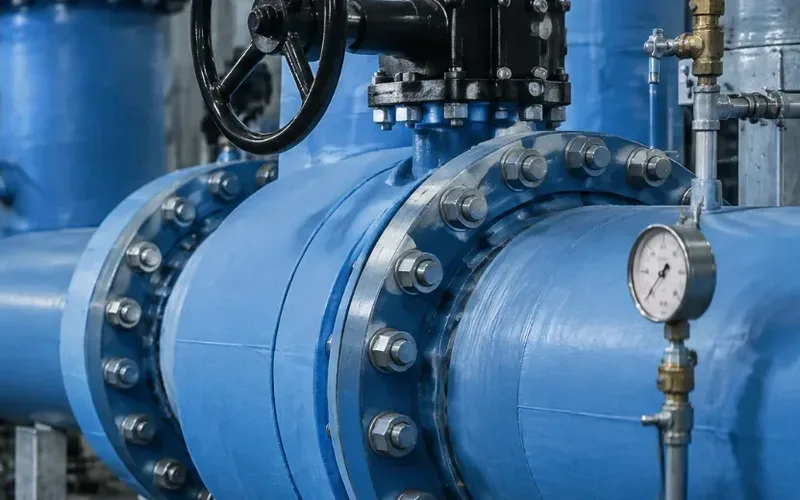
Sizing & Selection
Duty Point & Steam Pressure
Flow, inlet, target and steam pressure at the heater make the duty point. How Btu/h and steam lb/h fall out of them, and why the boiler guage is the wrong figure.
+ Learn More
