
1-805-484-2992
Quotes - Engineering - SalesA CIP cycle is six steps, and the heater pays for four of them
A CIP cycle pushes a sequence of liquids through the equipment the product just left: a pre-rinse to knock off loose soil, a caustic wash to lift fat and protein, an intermediate rinse, an acid wash to dissolve mineral, a final rinse, and a sanitize step. The sequence is set by the chemistry. The timing is set by how fast each liquid reaches the temperature where its chemistry works, and that is set by the heater.
Where the steam goes
The pre-rinse runs ambient to warm, 100–120°F, and at most plants it uses water recovered from the previous final rinse, so it draws little or no steam. The caustic step is the heavy lift: 1–2% sodium hydroxide held at 140–175°F for 20–45 minutes, with the whole tank brought to temperature before the pump starts and the return reheated as it comes back cooler. The acid step follows an intermediate rinse and runs cooler, 0.5–1.5% nitric or phosphoric at 120–150°F for 10–20 minutes, usually only a few times a week.
The final rinse is often 120–140°F, and the sanitize step, where the plant uses hot water for it, holds 180–190°F at the return for 5 minutes or more. Those last two are the duty of a steam-to-water heater, sized for the rinse gpm rather than for a tank. Add the steps up and a full cycle runs 45–90 minutes, of which the heater is working hard for the caustic heat-up and the sanitize hold and coasting for the rest.
Step by step, what the heater does
- Pre-rinse, 5–10 min at 100–120°F: recovered water, little or no steam
- Caustic wash, 20–45 min at 140–175°F: the tank heat-up and the return reheat, most of the cycle's steam
- Intermediate rinse, 5–10 min: fresh or recovered water, usually unheated
- Acid wash, 10–20 min at 120–150°F: a smaller lift, a few times a week, FKM gaskets if nitric
- Final rinse, 5–10 min at 120–140°F: steam-to-water heater sized for the line gpm
- Sanitize, 5–15 min at 180–190°F at the return: the hottest water in the plant, held at the coldest point
caustic before the pump startsA dairy caustic tank that reaches 165°F before the first circuit starts runs the wash on schedule; one that starts near 100°F runs it weak and long.
What each step asks of the heater
The steps draw heat in very different ways, and the heater that serves them is sized by the one that asks most. On a tank system that is the caustic heat-up; on a once-through line it is the hottest step at the line flow.
- Caustic heat-up: tank volume and the minutes allowed, not the loop gpm, set the duty
- Caustic hold: the heater only replaces loss through walls and pipe, a fraction of the heat-up
- Acid: same tank size, lower target, so the caustic heater is never the limit here
- Final rinse and sanitize: line gpm from makeup temperature to 140 or 190°F in one pass
- Recovery: a plate exchanger on the return warms makeup and trims the caustic heater duty without replacing it
Call and talk it through with an engineer: 1-805-484-2992
What a cycle looks like with the heater sized right, and wrong
Take a dairy running a 2,000-gallon caustic tank on 50 psig steam. Sanitation wants the first wash at 6 a.m. and the tank sat overnight at 70°F. With the heater sized for a 20-minute heat-up, about 4.75 MBtu/h, the timer starts the steam at 5:40 and the tank is at 165°F when the pump starts. The caustic step runs its 30 minutes at strength, the return comes back at 150°F and is reheated in one pass through the shell, and the acid and rinse steps follow on time.
Size the same heater for a 60-minute heat-up, about 1.6 MBtu/h, start it at the same 5:40, and the tank is barely past 100°F when the operator is ready. The choices are to wait, which stalls the line, or to start cold. Starting cold, the caustic works slowly, protein lifts incompletely, the operator extends the step and often adds caustic, and the sanitize step at the end still needs its 180°F, so the whole cycle runs long. The heater cost less; the plant pays the difference every morning.
The steam side of this story is simpler. 50 psig steam condenses at 298°F inside the tubes whether the caustic is at 70 or 165°F; what changes is the rate, and the control valve throttles it as the tank approaches target. A U-tube bundle takes the swing from cold start to full temperature without strain because the tubes are free to grow. The trap behind the heater handles the condensate, which at 4.75 MBtu/h is roughly 5,200 lb/h at the start of the heat-up.
The acid step changes the chemistry but not the heater. A 0.5–1.5% nitric or phosphoric solution at 120–150°F needs less heat than the caustic because the target is lower and the tank is usually already warm from the day. What it changes is the gasket in the solution-side head, which must be FKM if nitric runs hot or several times a week, and the drain-down between steps so acid is not carried into the caustic tank. Where a plant runs acid every cycle rather than weekly, say so; it affects the gasket, not the surface.
The sanitize step is a diffrent heater. Hot water at 180–190°F must be made at the line flow, 70 gpm on a 3-inch circuit, 120 gpm on 4-inch, and arrive at the far end of the circuit still above 180°F for the 5 minutes the plant writes down. A steam-to-water shell-and-tube sized for that gpm and lift, with no tank, does it on demand. Where the plant already recovers heat from the return line in a plate exchanger, the sanitize water starts warmer and the steam heater is smaller.
The caustic heat-up sets the heater; every other step rides on it.
A heater sized for the schedule, not for the nameplate of the one before it, is what keeps the cycle on time.
Request a QuoteCycle questions
Because the pre-rinse is doing mechanical work, flushing loose soil, and warm water does that about as well as hot. Caustic is doing chemical work, saponifying fat and swelling protein, and its rate roughly doubles for every 18°F of temperature. Spending steam on the pre-rinse buys little; spending it on the caustic buys a shorter wash. Most plants pre-rinse with recovered final-rinse water for exactly that reason.
Yes, on every tank system. The solution leaves the tank at 165°F, gives heat to a cold fermenter or a long line, and comes back at 150°F or lower. The heater on the loop lifts it back as it passes through the shell. That is a far smaller duty than the heat-up, which is why a heater sized for the heat-up has no trouble holding the wash, and a heater sized only to hold cannot start the day.
It does not need to. The temperature controller on each tank or line sets the target for that step, and the steam valve ahead of the heater follows it. What the heater must be able to do is meet the highest target at the highest flow, which on most plants is the sanitize water at 180°F or more. Everything else is the same metal running cooler.
One steam heater often serves the caustic and acid tanks through valving, with an FKM gasket so the acid step does not shorten its life. The rinse and sanitize water usually get their own steam-to-water unit, because they are once-through at the line flow and a tank heater is the wrong shape for that duty. Two heaters, each sized to its own job, cost little more than one oversized compromise.
Related
Sizing & Selection
Advantages of CIP
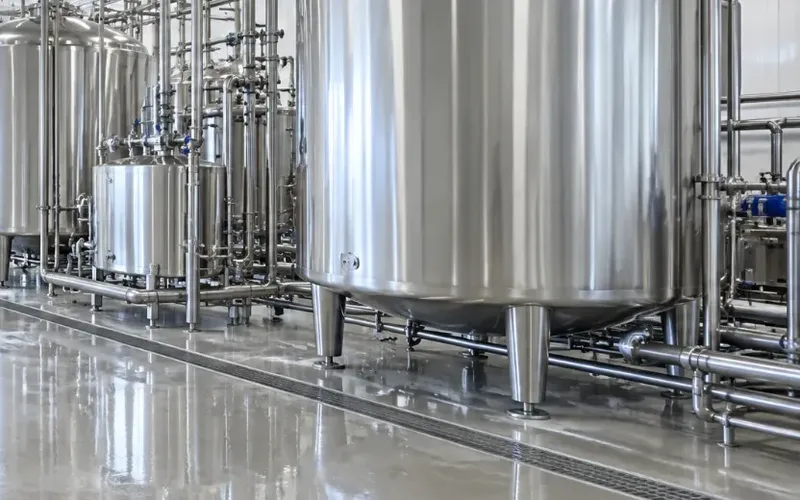
Why plants clean in place instead of by hand, counted in minutes, pounds of caustic and pounds of steam, and how much of each a correctly sized heater returns.
+ Learn More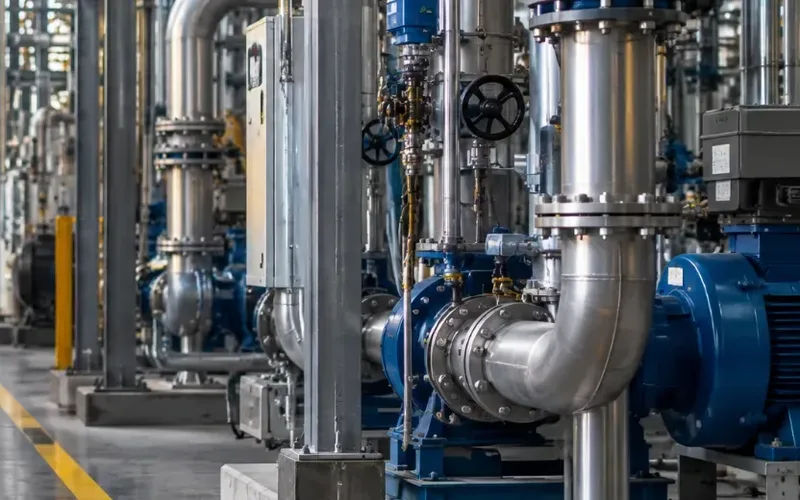
Sizing & Selection
What is CIP?
Clean-in-place washes process equipment in position by pumping heated solution through it. This section covers the heating that makes the chemistry work.
+ Learn More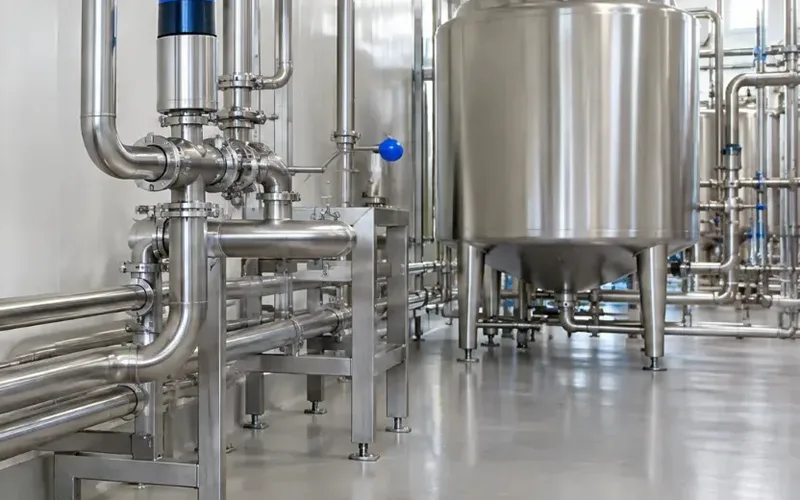
Sizing & Selection
Certifications & Design
Three build levels for the same duty, from mill-finish utility stainless to a 3-A marked drainable unit. Which one the loop needs, and what each adds to the cost.
+ Learn More
