
1-805-484-2992
Quotes - Engineering - SalesHeating the water that goes down the drain
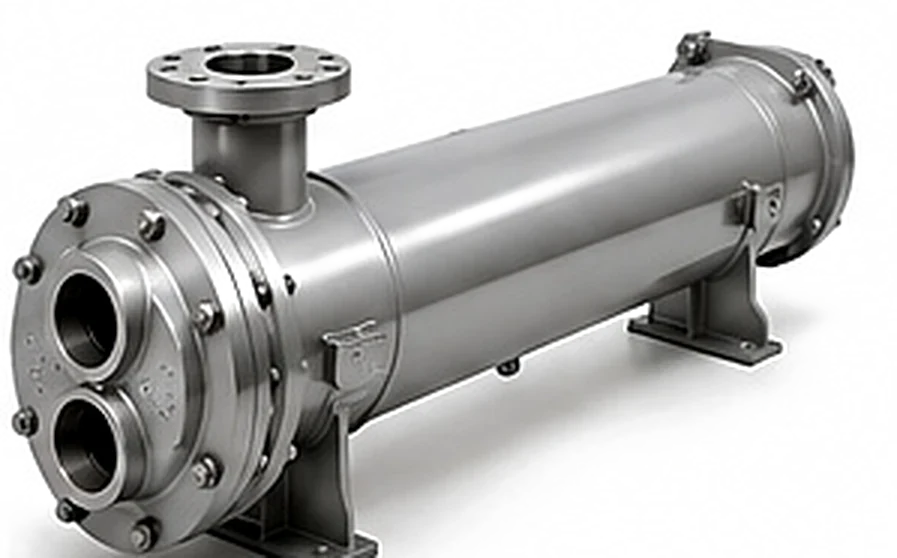
Plant steam condensing inside a U-tube bundle heats rinse water flowing through a 316L shell. The approach is large: 15 psig steam condenses at 250°F, which is 65°F above a 185°F sanitize target, so the bundle stays compact even at low pressure and the steam valve has room to modulate.
A 70 gpm circuit lifted 65°F needs about 2.3 MBtu/h, roughly 2,400 lb/h of steam. The shell-and-tube rinse page covers the valve, the trap and the outlet sensor that make a once-through heater hold temperature.
Where the plant already runs a hot-water loop at 180–200°F, a gasketed plate pack heats the rinse water from it without touching steam. 316L plates with EPDM gaskets, frames to 150 psig, and a 5–10°F approach that a shell-and-tube cannot match on a liquid-to-liquid duty.
It is the right heater for warm pre-rinse and final rinse water, and the wrong one when steam is the only heat source. The plate rinse heater page draws that line.
The caustic step recirculates, so its heater can catch up between cycles. Rinse water does not come back. A final rinse at 120–140°F and a sanitize hold at 180–190°F are both once-through duties: every gallon leaves the heater at temperature on its first pass or it fails the step. That changes the sizing, the steam control and the construction, and it is why this section holds two very different heaters.
Three things a rinse heater has to do on the first pass
- Hold 180°F at the return for the whole sanitize step
- Follow a flow change from 30 to 120 gpm within seconds
- Drain dry between cycles so standing water does not cool the line
Rinse and sanitize cases, matched to a heater
Five rinse-water duties and the construction we would put on each. Note how often the answer turns on the heat source rather than on the water.
| RINSE CASE | CONSTRUCTION | WHY |
| Sanitize loop, 70 gpm on a 3-inch line, 185°F at the heater | Steam-to-water U-tube, 15 psig or higher | Only steam gives the approach for 185°F; the U-bundle takes the thermal cycling |
| Final rinse, 120 gpm on a 4-inch line, 60 to 130°F | Steam-to-water U-tube with modulating valve | Full flow in one pass; 4.2 MBtu/h at a 70°F rise needs a valve that tracks flow |
| Warm pre-rinse to 100–120°F from a plant hot-water loop | Gasketed plate pack, EPDM | Liquid to liquid at a 5–10°F approach; no steam valve in the CIP room |
| Small-line rinse, 30 gpm on a 2-inch circuit, unsoftened water | Straight-tube steam heater, removable heads | Small shell, brushable tubes; hard rinse water scales the hot surface |
| Packaged hot-water heater that no longer keeps up | Steam-to-water U-tube sized to the rinse gpm | Sized for the circuit flow rather than a storage tank; see Replace a Heater |
What the sanitize hold does to the sizing
A sanitize step is the one place in the cycle where the heater outlet is not the number that matters. Plants specify 180°F for 5 minutes at the coldest point of the circuit, and that point is the return, after the water has lost heat to every cold valve and tank wall along the return run.
Outlet above return
Expect to set the heater outlet 5–10°F above the return specification on a short, insulated circuit and more on a long bare one. A 190°F outlet for a 180°F return is common; it also keeps the water comfortably below boiling so nothing flashes at an open return.
Time to temperature
The clock starts when the return reads 180°F, not when the pump starts. A once-through heater that is at temperature within 30 seconds buys the plant minutes on every cycle compared with one that creeps up, and over a 45–90 minute cycle those minutes are production time.
Steam pressure at the heater
- 15 psig condenses at 250°F, a 65°F approach to 185°F
- 50 psig at 298°F shrinks the bundle but makes the valve work harder
- State the pressure at the heater inlet, not at the boiler
- A control valve and trap belong on every steam heater
Water quality
- Hard water scales above about 160°F on the hot surface
- Softened rinse water keeps the water side clean for years
- Chlorides in the water, not heat, are the 316L risk
- A drainable layout stops water stagnating between cycles
Rinse water questions
Because the sanitize water runs hotter and does not come back. A caustic tank loop can take 20 minutes to climb and then only hold temperature, so it's heater is sized on gallons and minutes. A sanitize heater must deliver 185°F at the full circuit flow on the first pass with 60°F water coming in, which is a larger instantaneous duty even though the step lasts only 5–15 minutes.
Yes, and most do. The sanitize case sets the surface, because it has the higher outlet at the same flow. The final rinse at 120–140°F is then a turndown case for the steam valve, which must throttle to about half of its sanitize load without hunting. Size the valve for both ends of the range, not just the design point.
Only if the plant treats the CIP loop itself as sanitary. Many do for the final rinse, because that water is the last thing to touch product surfaces. In that case we build tri-clamp to 4 inches, self-draining, with a 32 Ra water side. A heater that only feeds pre-rinse water is utility equipment, and mill-finish 316L is enough for it.
The return never reaches 180°F, or reaches it late, and the sanitize timer either waits or the operator extends the step by hand. Either way the cycle grows and the line is late back to production. The fix is almost never more steam pressure; it is more surface, and a valve sized for the flow the circuit actually runs.
Related
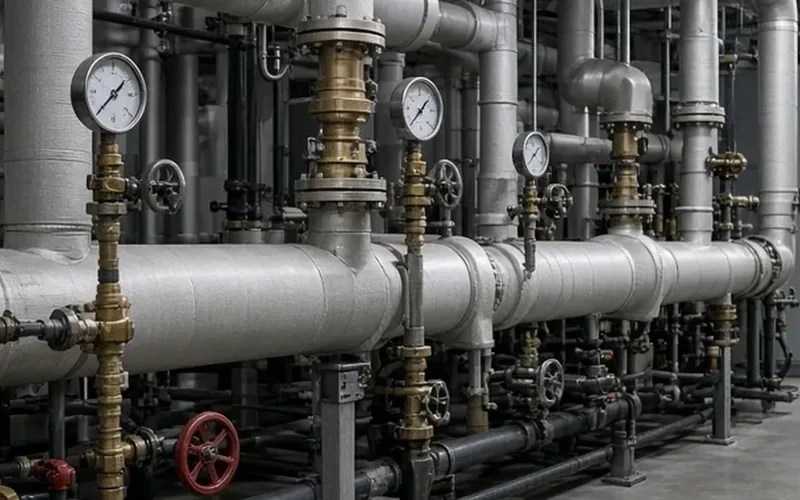
CIP Heaters
Steam-to-Water Shell & Tube
Steam inside the U-tubes, rinse water in the shell: how a once-through heater holds 185°F at 70 gpm on 15 psig steam, and what the control valve has to do.
+ Learn More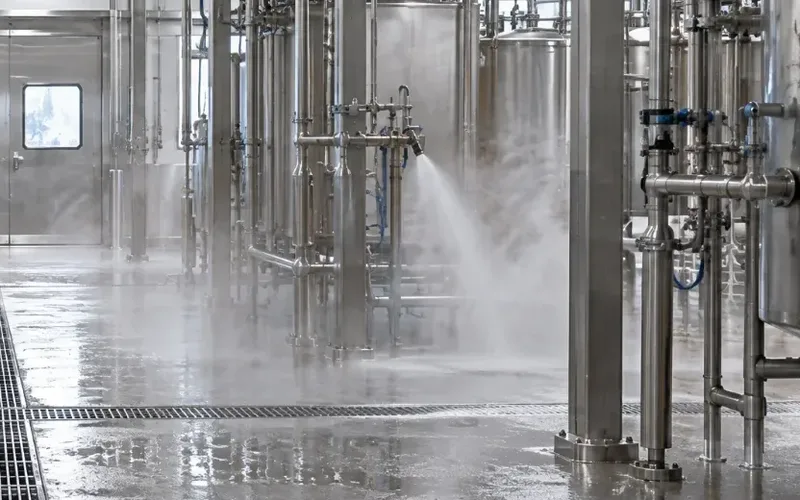
CIP Heaters
Plate Type
When the plant has a hot-water loop, a gasketed plate pack heats rinse water to within a few degrees of it. Where that works, where it does not, and what decides.
+ Learn More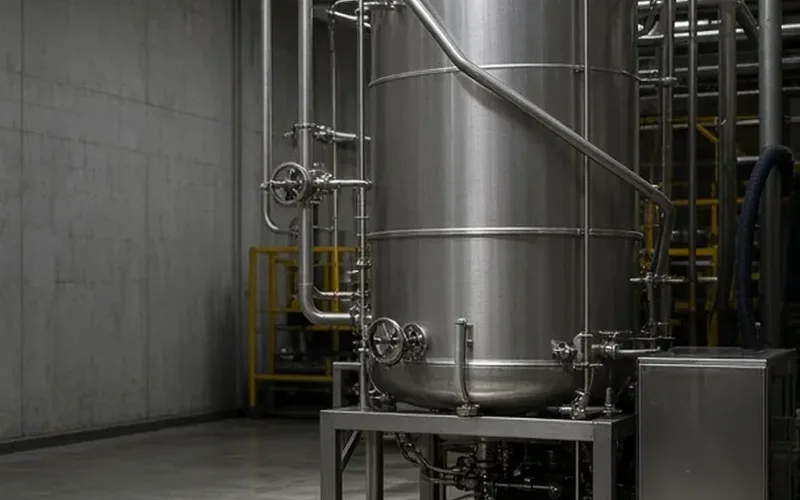
CIP Heaters
Caustic Heaters
Steam into a sodium hydroxide loop at 140–175°F: how the U-tube heater is built, and whether the tank loop or the supply line is the right place to put it.
+ Learn More
