
1-805-484-2992
Quotes - Engineering - SalesThe hottest stream in the room is going to drain
Return-to-makeup on a 100 gpm circuit
During the caustic wash, solution leaves the tank at 165–175°F and comes back through the return line at 150–160°F after warming every tank wall and pipe on the circuit. On a single-use or partially dumped system that return is headed for the drain, and even on a recirculating system part of it is dumped at the end of the step. Meanwhile makeup water at 60°F is being drawn to refill the tank, and the steam heater is about to lift it more than 100°F.
A gasketed plate pack between those two streams is the recovery exchanger. Return on one side, makeup on the other, 316L plates and EPDM gaskets, counterflow, sized to the economical point rather than the closest approach a plate can reach. At equal flows of 100 gpm, a 155°F return puts the makeup at about 120°F and goes to drain itself at about 95°F. That is 60–70% of the heat it carried, handed to water the plant was going to heat anyway.
The steam heater behind it keeps its job but loses most of its load. Lifting 100 gpm from 120 to 165°F is 45°F of rise and about 2.25 MBtu/h, against 5.25 MBtu/h from 60°F. Across a 20-minute fill that is close to 1,000 lb of steam per cycle that is never condensed. Recovery does not change the steam heater's construction, which stays a U-tube shell-and-tube; it changes its size.
See the Plate Pack & Frame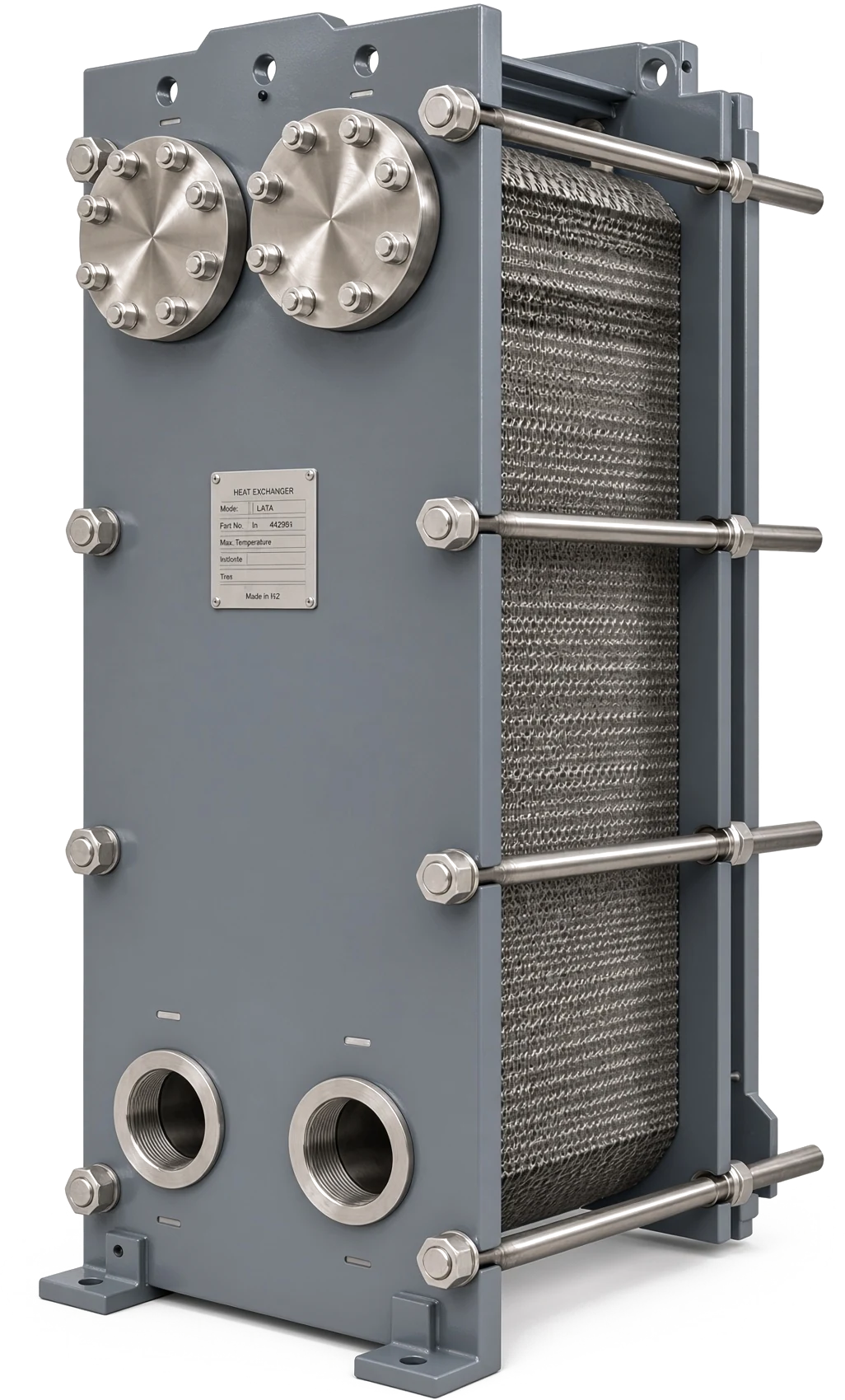
Return-to-makeup recovery, typical conditions
Design basis for a plate recovery exchanger on a caustic return. The numbers assume equal flows; tell us if yours differ.
| Condition | Typical value |
| Hot side in | Caustic return, 150–160°F, 1–2% sodium hydroxide |
| Hot side out | To drain or neutralization at about 95°F |
| Cold side in | Makeup water, 55–65°F, softened where available |
| Cold side out | About 120°F to the tank or to the steam heater |
| Flow | Matched, 50–300 gpm per side depending on the circuit |
| Approach | About 35°F at the design point above, counterflow; closer with more plates |
| Plates and gaskets | 316L, 0.5–0.6 mm; EPDM; FKM if the acid return passes through |
| Frame | 150 psig, pressure plate with room for added plates |
| Fouling | Allowance of 0.001–0.002 on the return side; pack opens to clean |
Getting the return and the makeup to meet
Timing on a tank system
The return flows while the wash runs; the makeup flows while the tank refills. On a system that recirculates and tops up continuously the two overlap and the pack runs steady. On a dump-and-refill system they do not, and the recovery only works if the return is held long enough for the makeup to draw against it, or if the makeup is drawn during the wash into a holding tank. We ask for the sequence of operations before we quote plates, because the exchanger cannot fix a schedule.
The acid step passes through too
A common return line carries the acid solution a few times a week at 120–150°F and about pH 2. Phosphoric is gentle on EPDM; nitric, hot or often, is not, and a pack that went hard after a year of acid returns is a replacement job, not a mystery. Say which acid and how often, and the gaskets become FKM where they need to be.
What happens to the steam heater
Nothing to its construction, and a lot to its duty. The U-tube steam heater on the makeup or the tank loop now sees a 120°F inlet instead of 60°F, so an existing heater has spare capacity and a new one can be roughly half the surface it would otherwise need. The control valve turns down further, which on an oversized existing valve may mean hunting; check it on the first cycles.
Fouling on the return side
The return carries what the caustic lifted: protein, fat, and carbonate where the water is hard or CO2 is in the loop. It lands on the return-side plates and shows up as a growing approach over months. Design with a fouling allowance of 0.001–0.002 on that side, and set the frame so the pressure plate can slide back and the pack be opened without moving a pipe.
Questions about return-line heat
Usually. A 140°F return against 60°F makeup still gives about 50°F of lift to the makeup at the same 60–70% recovery, which is roughly half the steam duty on the fill. The pack grows a little because the overall temperature difference is smaller, but the economics still hold at several cycles a day. Below about 120°F return it gets marginal and we will tell you so.
Yes, by heating the makeup on its way to the tank, which is the usual arrangement. The pack warms the water, the water enters the tank, and the steam heater on the tank loop finishes the lift to 165°F. Putting the recovery pack in the tank recirculation loop itself is less useful, because that loop is already at temperature and has nothing cold to give its heat to.
A gasketed plate pack has double gaskets with a vent gap between the two fluids at every port, so a failed gasket leaks to atmosphere and shows itself on the frame rather than mixing the streams. That is the standard construction and the reason plate is accepted on duties where the two fluids must not meet. A drip on the floor is the warning sign, and it is a visible one.
Both are worth doing and they are diffrent pages. The caustic return is hotter and runs longer, so it carries more heat per cycle, and on a tank system it has a natural partner in the makeup fill. Rinse water is cleaner but cooler and more intermittent. Where budget allows one pack, the return-to-makeup usually pays back first; rinse recovery comes second.
The smaller of the two streams sets how much heat can move, and the design point is the flow each side actually runs during the overlap. Give us the return gpm during the wash, the makeup gpm during the fill, and how many minutes they coincide. If the makeup fills at 200 gpm for 5 minutes against a 100 gpm return, we size differently than for a matched pair.
Related
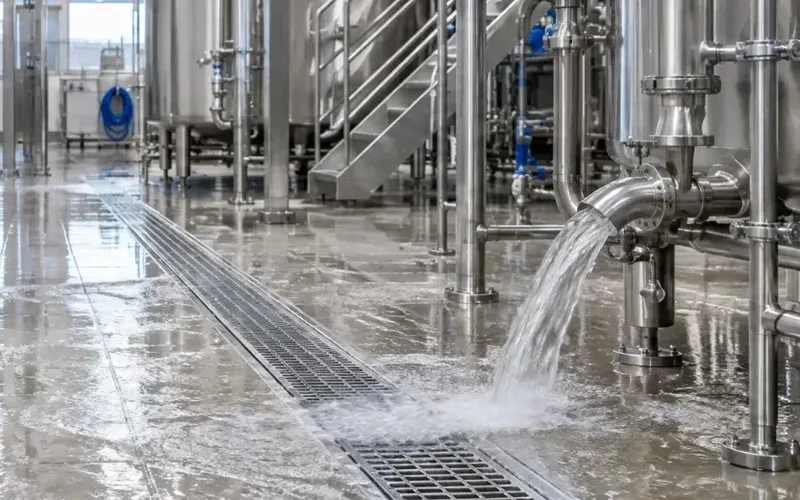
CIP Heaters
Rinse Water Recovery
The final rinse is clean water at 120–140°F, and most plants pour it away. A plate pack and a holding tank turn it into the warm pre-rinse for the next cycle.
+ Learn More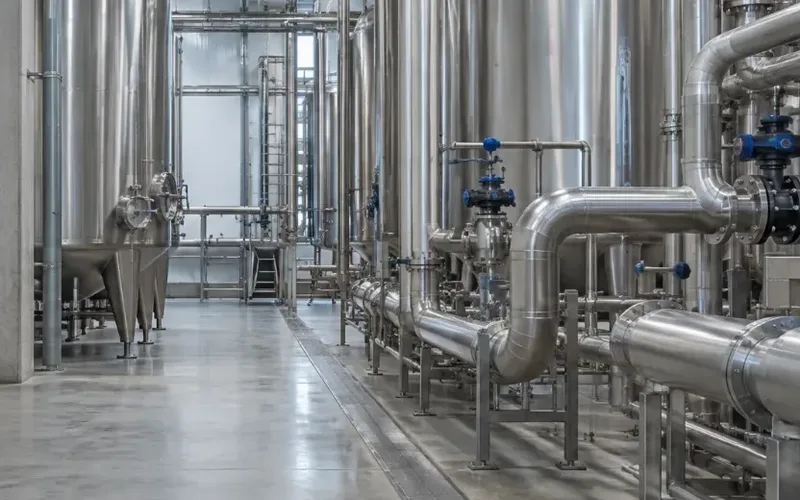
CIP Heaters
Recovery Exchangers
A plate exchanger between the return line and the makeup water hands back 60–70% of the heat the cycle would send to drain, and shrinks the steam heater behind it.
+ Learn More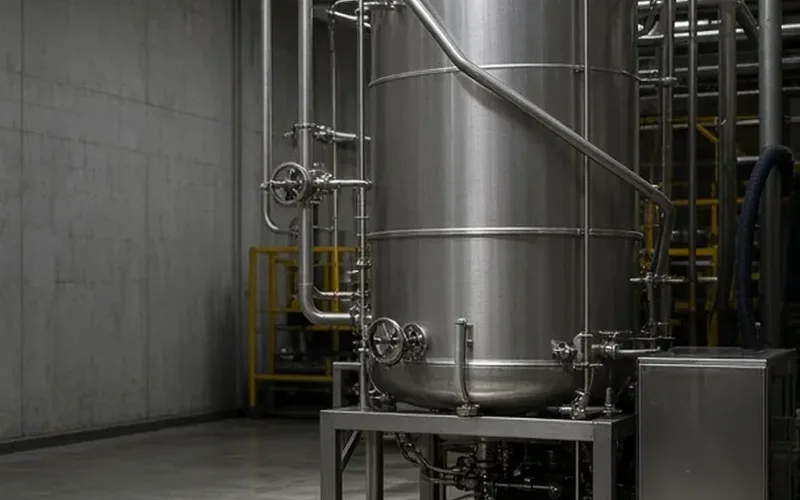
CIP Heaters
Caustic Heaters
Steam into a sodium hydroxide loop at 140–175°F: how the U-tube heater is built, and whether the tank loop or the supply line is the right place to put it.
+ Learn More
