
1-805-484-2992
Quotes - Engineering - SalesThe gasket is the weakest material in a plate pack
The plates are 316L and will outlast the building. The frame is heavy steel. The gaskets are a few hundred feet of molded rubber, each strip 3–5 mm thick, pressed between plates and asked to hold 150 psig while the liquid on their inner edge swings from 60°F to 160°F and back a dozen times a day. Whatever that liquid is, the gasket is soaking in it. Pick the compound for the chemistry and a pack runs for years between gasket changes; pick it for the price list and the plant finds a wet floor under the frame after the first acid wash.
For the two liquids most CIP packs see, 1–2% sodium hydroxide and hot water, the compound is EPDM. Ethylene propylene rubber is unaffected by caustic at any CIP concentration, handles hot water and dilute phosphoric acid, and keeps its elasticity to about 300°F, far above anything a recovery or rinse duty produces. It is the standard gasket on every pack we quote unless the circuit tells us otherwise.
The circuit tells us otherwise when nitric acid is in it. Nitric is an oxidizer, and EPDM exposed to it at 120–150°F a few times a week hardens, cracks at the corners and stops recovering after each compression. There FKM, a fluoroelastomer, takes over. It costs more, it is stiffer, and it is the right answer on a pack the acid step passes through.
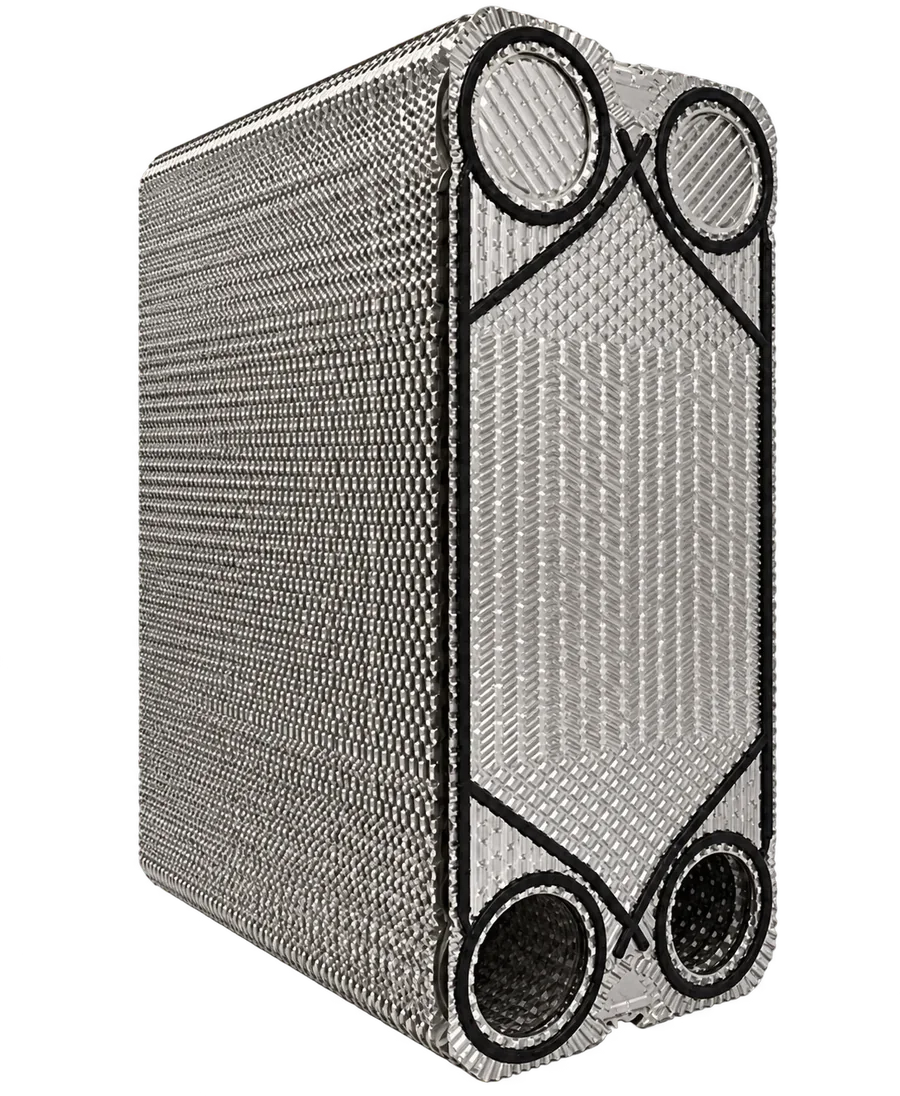
EPDM wherever the pack sees caustic or hot water; FKM wherever nitric acid runs through it hot or often. We ask which before we quote, every time.
NBR is not offered for CIP duty in any circuit.
EPDM, the standard
- Sodium hydroxide at 1–2%, up to 3% on heavy soils
- Hot and sanitize water to 180–190°F without concern
- Dilute phosphoric acid at 120–150°F in normal service
- Rated to about 300°F; stays elastic through thermal cycling
- Lowest cost and shortest delivery of the compounds we fit

FKM, for the acid step
- Nitric acid at 0.5–1.5% run hot or several times a week
- Mixed-duty packs that see both the caustic and the acid tank
- Higher stiffness; the tightening dimension is set for it
- Not for steam service; the pack still stays liquid-to-liquid
- Spare set recommended at order so a swap does not wait
What you specify




Compound selection by circuit
The table is how we read a CIP circuit when the gasket question comes up. Where two rows apply to one pack, the more demanding row wins.
| Feature | Standard build |
| Caustic recovery or caustic heating | EPDM; 1–2% sodium hydroxide at 140–175°F is comfortably inside its range |
| Hot-water rinse and sanitize | EPDM; water to 190°F, well under the compound's limit |
| Phosphoric acid step through the pack | EPDM in most plants; FKM where the acid runs daily or above 150°F |
| Nitric acid step through the pack | FKM; EPDM is not offered where nitric is hot or frequent |
| Mixed caustic and acid on one pack | FKM throughout, since every plate sees both liquids over a cycle |
| Chloride-bearing water (brine plants) | Gasket unaffected; the concern is the 316L plate, raised at quotation |
| Steam on either side | Not recommended for any compound; duty goes to the shell-and-tube |
| Gasket attachment | Clip-on standard; glued where the plant asks for it |
| Spares | One full gasket set per pack recommended at purchase, compound marked on the hanger drawing |
Elastomer failure, and what it looks like
Hardening after the acid step
The telltale is a pack that held perfectly on caustic for a year, then started weeping at the frame edge within a month of the plant adding a nitric wash. Open it and the EPDM has gone glossy and stiff, with fine cracks at the corners where the gasket turns. It no longer springs back when the pack is closed, so the next thermal cycle opens a path. The fix is not a tighter frame; it is FKM gaskets and, usually, a note in the sanitation procedure that the pack is now on the acid loop.
Temperature, not chemistry, on a steam duty
Any rubber gasket on a plate that sees 250–353°F steam is being asked to live at or past its rating while the valve cycles it hot and cold every batch. EPDM at about 300°F has no margin against 50 psig steam at 298°F, and FKM gains a little temperature but loses it again to the pressure cycling. This is why the main caustic heater on this site is a shell-and-tube with metal-to-metal joints, and why a plate pack is kept to liquid-to-liquid duties where neither stream is above about 200°F.
- Recovery: return at 150–160°F against makeup at 60°F
- Rinse heating from a hot-water or glycol loop
- Never steam, on either side of the plate
Compression set from over-tightening
A pack closed past its stamped dimension crushes the gaskets flat. They seal for a while, then as the plates cycle the rubber has no recovery left and the pack leaks at the lowest temperature of the day. It looks like a chemical problem and is a wrench problem. The tightening dimension on the frame is specific to the compound: FKM is stiffer and seats at a slightly different figure than EPDM, so when the compound changes the dimension changes with it, and we restamp it.
Reading your circuit for us
When you ask for a plate pack, tell us the liquid on each side, its concentration, the hottest it will ever be, and how often the acid step passes through. If the pack sits on the return line of a system that alternates caustic and acid, say so; both liquids will pass through and the gasket must suit the harder one. The acid-duty gasket page goes further into the chemistry; this page is about which compound ends up on the plate.
Elastomer questions
It is safe chemically, and some plants specify it for that reason. The costs are a higher gasket price, a longer delivery on spare sets, and a stiffer gasket that is less tolerant of a frame closed unevenly. If the pack will certainly never see nitric acid, EPDM is the better gasket for the money. If there is any chance it will, FKM saves you the first set.
Several years is normal where the pack runs liquid against liquid below 190°F and is opened only for inspection. What shortens it is heat above the duty, an acid wash nobody mentioned, or repeated opening and closing with the gaskets dirty. Keep a log of the tightening dimension at every closing; when the pack needs more compression to seal than it did last year, the gaskets are telling you something.
Yes, and it is EPDM for both. Caustic at 1–2% and rinse water at 120–140°F are both inside its range, so a plant with two packs carries one spare set. The exception is a rinse pack on a shared return that the nitric solution itself passes through; that pack is treated as acid duty and gets FKM.
Nitrile is an oil-resistant compound and that is not the problem a CIP circuit presents. It swells in hot caustic, loses strength quickly above about 200°F, and has poor resistance to nitric acid, so it fails on every count that matters here. EPDM and FKM between them cover every CIP duty we quote, and limiting the choice to two compounds keeps the spares shelf simple.
Not the thermal sizing; the plates do the heat transfer and the gasket only seals the channel. It does change the pressure and temperature limits stamped on the unit, the tightening dimension, and the price. We size the plate count to your flows and temperatures first, then fit the compound your circuit demands, and the quote states both.
Related
Heat Exchangers
Plate Pack & Frame
Thin 316L plates, a pressed gasket on each, and a frame that squeezes them into a counterflow exchanger: the construction for recovery and warm rinse water.
+ Learn More
Heat Exchangers
Replacement Plate Packs
The frame has years left; the plates do not. A complete new pack of 316L plates and gaskets, matched to the hanger and port pattern, restores the exchanger fast.
+ Learn More
Heat Exchangers
Gasketed Plate
Pressed 316L plates in a frame, with the elastomer picked for caustic or acid: the construction for recovery and water-heated rinse, and the three ways to buy it.
+ Learn More