
1-805-484-2992
Quotes - Engineering - SalesFrom the heating side
Clean-in-place is a heating problem with chemistry attached
Clean-in-place, CIP, is the practice of cleaning tanks, lines, fillers and heat exchangers without taking them apart: a pump pushes rinse water, then dilute caustic, then dilute acid, then rinse and sanitize water through the same path the product took. Each solution has to arrive at the soil at a temperature where it works. Sodium hydroxide at 1–2% lifts fat and protein at 140–175°F and does little at 100°F; nitric or phosphoric acid at 0.5–1.5% dissolves mineral at 120–150°F; a sanitize step holds 180°F or more at the return. Every one of those temperatures is made by a heat exchanger, and nearly always by steam condensing inside a tube bundle with the solution moving across the shell.
That makes the heater the pacing item of the whole system. A full cycle runs 45–90 minutes, and the caustic step, 20–45 minutes of it, cannot start until the tank is at temperature. If the heater is sized for a 60-minute heat-up and the sanitation schedule gives it 20, the wash begins barely above 100°F, the chemistry runs weak, and the operator compensates with more caustic and a longer step. The pages in this section describe CIP from that side: where the heat goes, how much of it, and what a correctly sized heater adds to the cycle.
Three things to read next
How It Works
- Six steps from pre-rinse to sanitize, with the temperature each one needs
- Which steps draw steam and which coast on heat already in the tank
- Why the caustic step sets the heater size and the acid step sets the gasket
Advantages of CIP
- Repeatable chemistry at a known temperature instead of a brush and a hope
- What a heater that reaches target on schedule saves in caustic and steam
- Cycle time recovered when the tank is hot before the pump starts
Certifications & Design
- Utility stainless, sanitary drainable or 3-A: how to tell which loop you have
- Pressure and temperature ratings for the shell and the steam side
- Tri-clamp to 4 inches, flanged above it, and when mill finish is enough
Fill the tank
500–5,000 gallons of makeup at 60°F
Heat to target
165°F caustic before the first pump start
Hold the wash
20–45 minutes with the return reheated
Rinse and sanitize
180°F at the coldest return point
Where the heat goes in a cycle
The pre-rinse is ambient or warm, 100–120°F, and often uses recovered water, so it draws little or no steam. The caustic step takes most of the heat: a 2,000-gallon tank brought from 70 to 165°F in 20 minutes is about 4.75 MBtu/h, and once the circuit is running the heater only replaces what the cold tank walls and the pipe run pull out. The acid step runs cooler, 120–150°F, and the final rinse and sanitize want 120–140°F and then 180–190°F at the return.
Why the tank size matters more than the line size
CIP tanks hold 500–5,000 gallons and most plants top them up with makeup water at about 60°F. A once-through line heater sees only the gpm in the pipe; a tank heater sees the whole volume and has to lift it in whatever time the schedule leaves. The same 2,000 gallons over 60 minutes needs about 1.6 MBtu/h, a third of the 20-minute figure, which is why the heat-up time is the first number we ask for on a tank circuit.
What the steam side is doing
Plant steam reaches the heater at 15–125 psig and condenses at 250°F even at the low end. Against a 165°F caustic target that leaves an approach of 85°F, which is why steam-to-solution duty stays shell-and-tube: a U-tube bundle takes the pressure and the thermal cycling without a gasket in the hot zone. A control valve ahead of the heater and a trap behind it are the only moving parts.
What the chemistry asks of the metal
Everything the solution touches is 316L: shell, bundle, solution-side heads. The caustic does not attack it and neither does nitric or phosphoric acid at CIP strength; chlorides from a brine plant are the only real risk. The gasket in the solution-side head is EPDM as standard and FKM when the acid step uses nitric hot or often, because nitric is oxidizing and hardens the wrong elastomer within a season.
Call and talk it through with an engineer: 1-805-484-2992
Questions about CIP itself
The solution side does, because the same caustic and acid that clean the plant pass through the shell on every cycle. What the heater does not get is a cleaning of the steam side, which stays clean on its own. What accumulates on the shell side over months is milkstone and carbonate scale on the hottest tubes, and that is why the bundle is built to pull rather than to be cleaned in position.
Dairies invented the discipline and still run the hottest caustic, 160–175°F, but breweries, soft-drink plants, juice packers, sauce and dressing lines and personal-care fillers all run it. The chemistry shifts with the soil: a brewery runs cooler caustic because fermenters are cold and CO2 eats the strength, a dressing plant pushes to 3% on fat. The heater duty changes with it; the construction rarely does.
Most plants write 180°F for 5 minutes at the coldest point of the return, and some hold 190°F. The heater has to make that at the return, not at its own outlet, so the pipe run and the vessel walls between them are part of the duty. On a long circuit that difference can be 10°F or more and is the usual reason a rinse heater that meets its own nameplate still fails the check.
Two reasons that both come back to the heater. Soil consumes it: fat saponifies and protein is lifted and held in solution, so a heavy load uses caustic. And carbon dioxide absorbs into it, converting hydroxide to carbonate, which is severe in a brewery fermenter. A wash that runs at the right temperature finishes faster and gives both processes less time, which is one of the quieter savings of a correctly sized heater.
Related
Sizing & Selection
How It Works
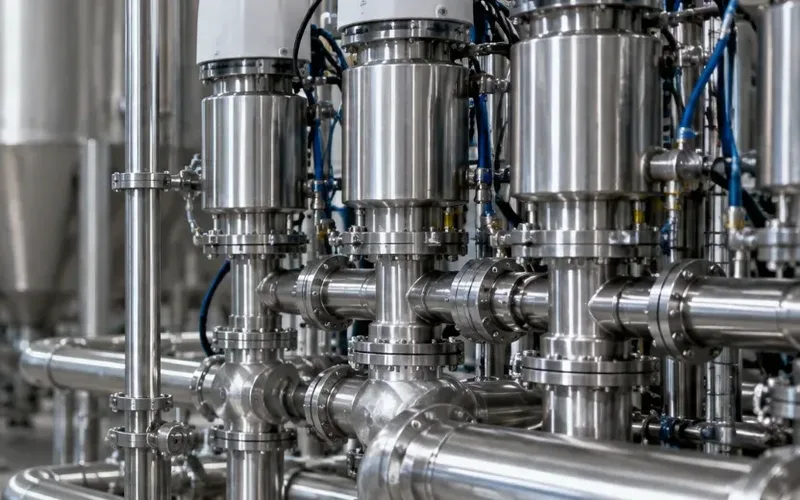
The six steps of a CIP cycle in order, with the temperature each one holds and which of them actually draw steam through the heater.
+ Learn More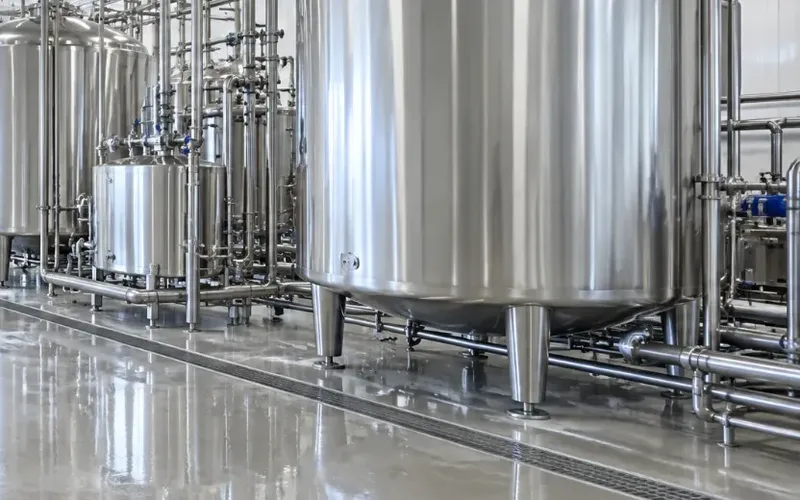
Sizing & Selection
Advantages of CIP
Why plants clean in place instead of by hand, counted in minutes, pounds of caustic and pounds of steam, and how much of each a correctly sized heater returns.
+ Learn More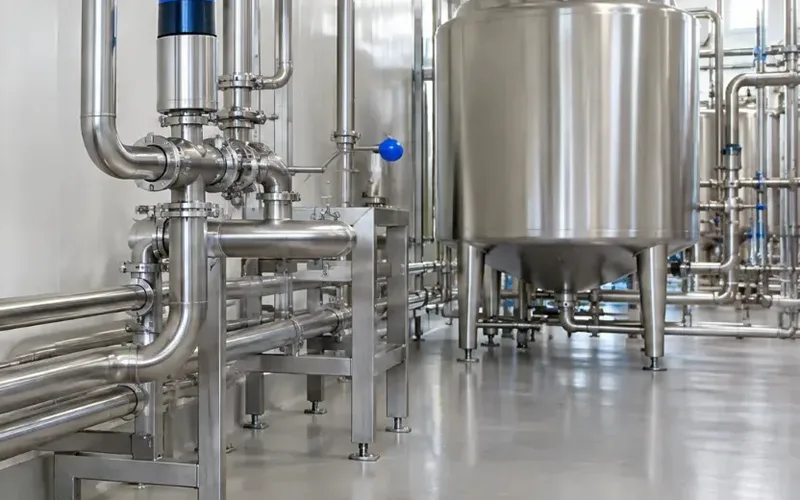
Sizing & Selection
Certifications & Design
Three build levels for the same duty, from mill-finish utility stainless to a 3-A marked drainable unit. Which one the loop needs, and what each adds to the cost.
+ Learn More
