
1-805-484-2992
Quotes - Engineering - SalesThe shell outlives the bundle, so replace only the bundle
A 316L shell on a caustic heater sees warm solution at modest pressure and has an easy life. The bundle inside it does not. Its tubes take the steam-side thermal cycling, the solution-side milkstone, the acid soaks that take the milkstone off, and the occasional wire brush that someone used when the soak took too long. After enough years a tube wall thins or a roll joint weeps, the plant finds condensate in the caustic tank, and the question is whether to buy a whole heater or just the part that failed. If the shell flange is flat and the nozzles and saddles are sound, the answer is a new bundle.
We build the new bundle, from new material, to the dimensions of the one coming out: tubesheet diameter and thickness, bolt pattern, tube count, tube size, bundle length and baffle positions. Nothing on the shell changes. The steam head bolts to the new tubesheet exactly as it bolted to the old one, and the pull space you already have is the pull space you need.
What we do not do is take your old bundle into a shop and work on it. Every bundle we supply is new: new 316L tubes, new tubesheet, new baffles and tie rods. The one that arrives has never seen caustic.
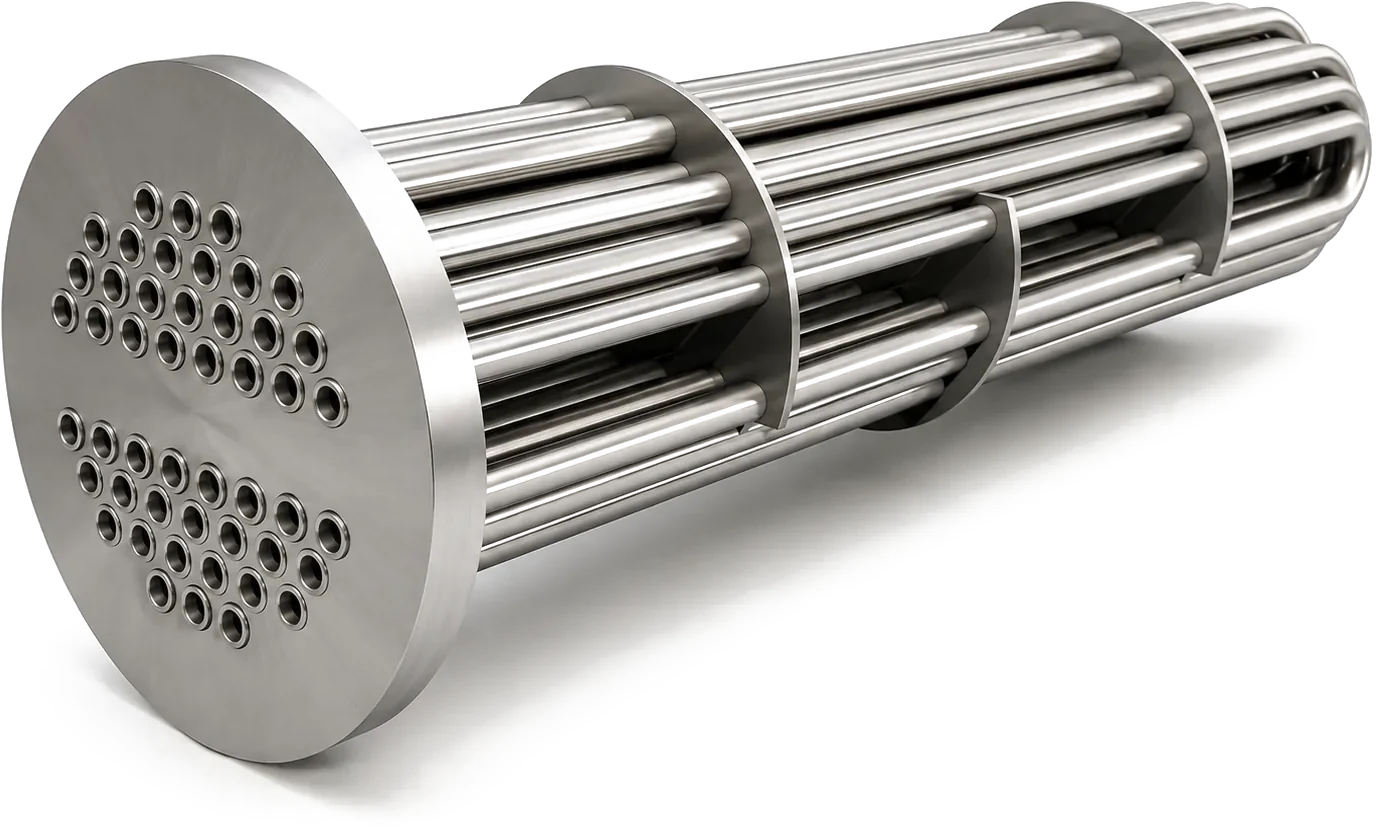
New 316L U-tubes rolled into a new tubesheet cut to your shell's bolt circle, so the heater is back in service on the same foundation.
Dimensions from your drawing, or from the old bundle laid on the shop floor.
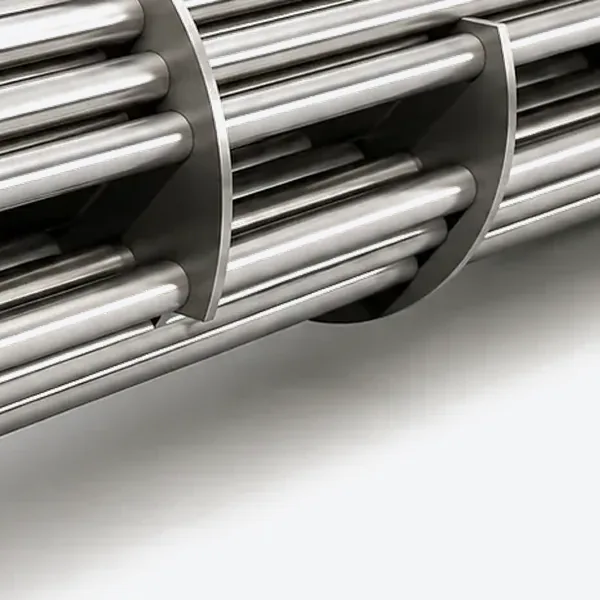
What a new bundle is made of
- 316L U-tubes, 3/4-inch or 1-inch, to the original count
- 316L tubesheet machined to the old bolt circle and gasket face
- Baffles cut and spaced to match the shell's flow path
- Tie rods and spacers new, bundle shipped on a cradle
- Rolled joints, seal welding where the original had it
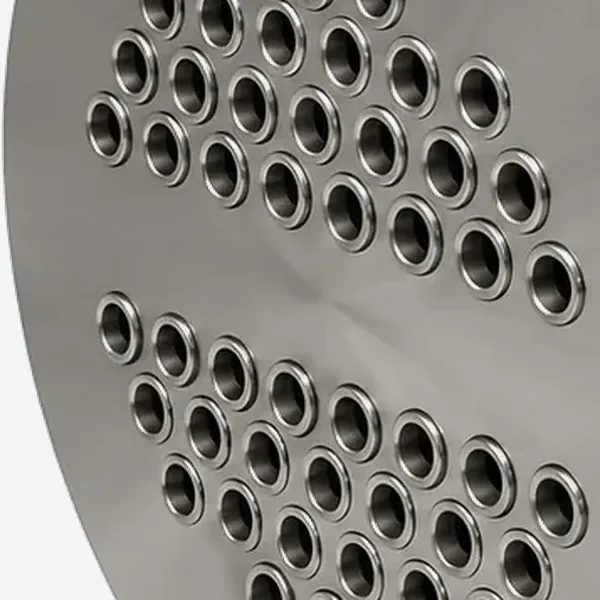
What we need to match it
- Shell inside diameter and bundle overall length
- Tubesheet outside diameter, thickness and bolt pattern
- Tube OD, count, pitch and layout angle
- Baffle count and spacing, or the original drawing
- Steam pressure and solution duty, to confirm the surface still fits
Options on the new bundle




What a replacement bundle order covers
Each line is matched to the shell it will live in. Where the old bundle was carbon steel on the solution side, it comes back 316L.
| Feature | Standard build |
| Tubes | 316L, U-bent, same OD and count as the original; wall gauge confirmed against the duty |
| Tubesheet | 316L, machined to the shell flange bolt circle and the steam-head gasket face |
| Baffles and tie rods | 316L, cut to the shell bore and positioned to the original spacing |
| Tube-to-tubesheet joint | Rolled; seal-welded where the plant specifies or the original was welded |
| Design conditions | Tube side 150 psig at 400°F; shell side 150 psig at 250°F unless the shell nameplate says otherwise |
| Gasket | New bonnet and head gaskets shipped with the bundle; EPDM or FKM to the circuit |
| Testing | Hydrotest of the tube side before shipment; witnessed test on request |
| Documentation | Bundle drawing, material certifications; U stamp partial data report where the shell is stamped |
Getting a replacement bundle right
Measure the shell, not just the bundle
The old bundle tells us how it was built; the shell tells us what will fit. We ask for the shell inside diameter at the flange and at the far end, because a shell that has been pulled and reinstalled a dozen times can be slightly out of round and a bundle built to the drawing will bind. We also want the distance from the flange face to the far shell head, so the U-bends do not touch. Photographs of the flange face with a tape across it cover most of this if the drawing is lost.
- Shell bore at both ends, flange bolt circle and bolt count
- Face-to-face length of the shell and location of the nozzles
- Nameplate data: design pressure, temperature and code stamp
Use the occasion to fix what was wrong
A bundle that failed in eight years instead of twenty usually had a reason. If the old one was carbon steel tubes on a rinse heater, the new one is 316L and that problem is gone. If it had too few baffles and the caustic crawled through at low velocity, we can change the baffle spacing inside the same shell and raise the velocity without touching the piping. If the plant has since moved from 50 psig to 125 psig steam, tell us; the steam temperature went from 298°F to 353°F and the roll joints should be checked against it.
A bundle for a shell we did not build
Most replacement bundles go into shells made by someone else years ago, and that is fine. Any U-tube heater with a single tubesheet and a bolted shell flange can take a new bundle built to its dimensions. Send whatever you have: the original drawing, a nameplate photograph, the old bundle itself if it is already out. Where the Replace a Heater decision is still open, that page walks through when a bundle is enough and when the shell should go too.
Plan the outage around the pull
The new bundle arrives on a cradle at the length of the shell. The outage needs the same clearance a routine pull needs, a lift for the bundle weight shown on our drawing, and fresh gaskets for the shell flange and steam head, which we ship with it. If the old bundle is scaled into the shell, budget time for it; a bundle that has not moved in ten years rarely slides.
Replacement bundle questions
Usually not. A drawing or a set of measurements and photographs is enough to build a matching bundle, and shipping a scaled bundle across the country adds cost without adding information. When the drawing is gone and the plant is unsure of its measurements, sending the old tubesheet end for us to measure removes the risk; we measure it, build new, and return or scrap the old one as you direct.
Only within the same shell bore and length, which fixes the tube count for a given tube size. Going from 1-inch to 3/4-inch tubes puts more tubes and more surface in the same shell, at the cost of more tube-side pressure drop on the steam, which is rarely a concern. Changing baffle spacing raises solution velocity instead. Tell us the duty that was falling short and we will say which lever to pull.
We machine the gasket face to the dimensions you give us or to the old tubesheet, and we match the raised face or flat face the head was made for. The bolt holes are drilled to the measured circle, not the nominal one. If the head gasket face is damaged, that shows up when the old bundle comes out, and a photograph lets us say whether a thicker gasket covers it.
The pressure boundary of a U-tube bundle is the tubes and tubesheet, and when the original shell carries an ASME U stamp we supply the new bundle with the corresponding partial data report so the vessel's documentation stays whole. Where the shell was never stamped, we build to the same code rules and provide the hydrotest record and material certifications without the stamp.
Cost and schedule, mostly. A bundle is a fraction of a complete unit, and it slides into a shell that is already piped, insulated and supported. A whole heater makes sense when the shell is pitted, the nozzles are the wrong size for a circuit that has grown, or the duty has changed enough that the same bore can not hold the surface. If the shell passes inspection, buy the bundle.
Related
Heat Exchangers
U-Tube Removable Bundle
The construction we quote first for steam-to-caustic: a U-bundle that grows and shrinks on its own and slides out of the shell when the solution side needs cleaning.
+ Learn More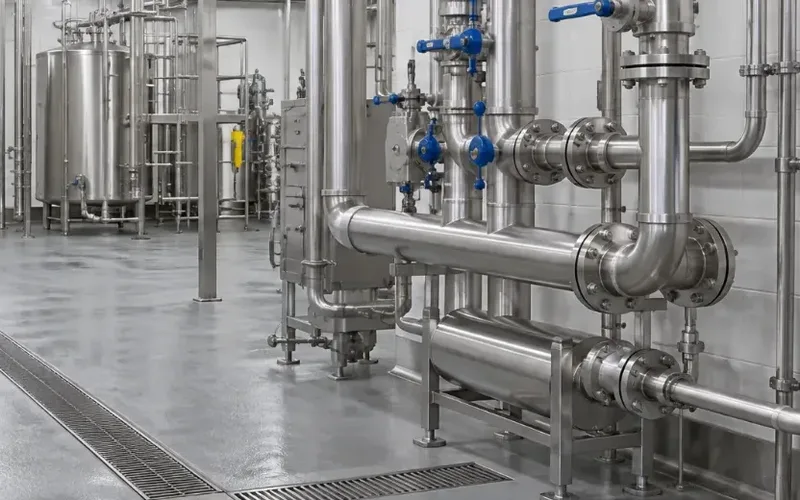
Heat Exchangers
Straight Tube, Brushable
For the plant that would rather brush tubes on a Saturday than rig a bundle: straight 316L tubes between two tubesheets, heads off at both ends in minutes.
+ Learn More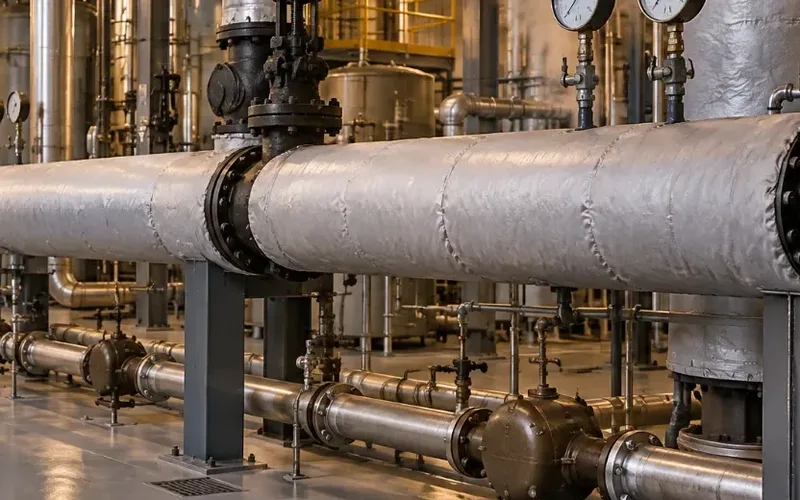
Heat Exchangers
Shell & Tube
The construction that carries the main CIP duty: a U-tube bundle condensing steam inside, a 316L shell around it, and three ways to buy it, full unit to bundle.
+ Learn More