
1-805-484-2992
Quotes - Engineering - SalesWhen the plates have given what they had
A plate pack wears out as a set. One plate thinned by an acid wash that ran too strong, two with corner cracks from a decade of thermal cycling, a dozen with gasket grooves distorted by the time somebody closed the frame on a plate that had slipped. Changing the three worst plates leaves a pack of mixed ages that leaks at the next weakest one. When a pressure test shows cross-leakage from the caustic side into the water side, or the frame has to be closed well past its stamped dimension to hold, the plates are done. The frame is not. Frame plates, carrying bar and tie bolts are heavy steel that outlive several packs.
A replacement pack from HeatX is every plate new, every gasket new, pressed to the plate pattern, port layout and hanger that your frame carries. The plates slide onto the existing carrying bar in the sequence shown on the new hanger drawing, the frame closes to a fresh stamped dimension, and the nozzles have not moved. A plant with a competent millwright does the changeover in a shift.
We supply new plates and gaskets. We do not strip, clean or rework the plates you have, and we do not mix your old plates into the new pack. The pack that arrives is the one the frame was first built around, as it was on the day it was first commissioned.
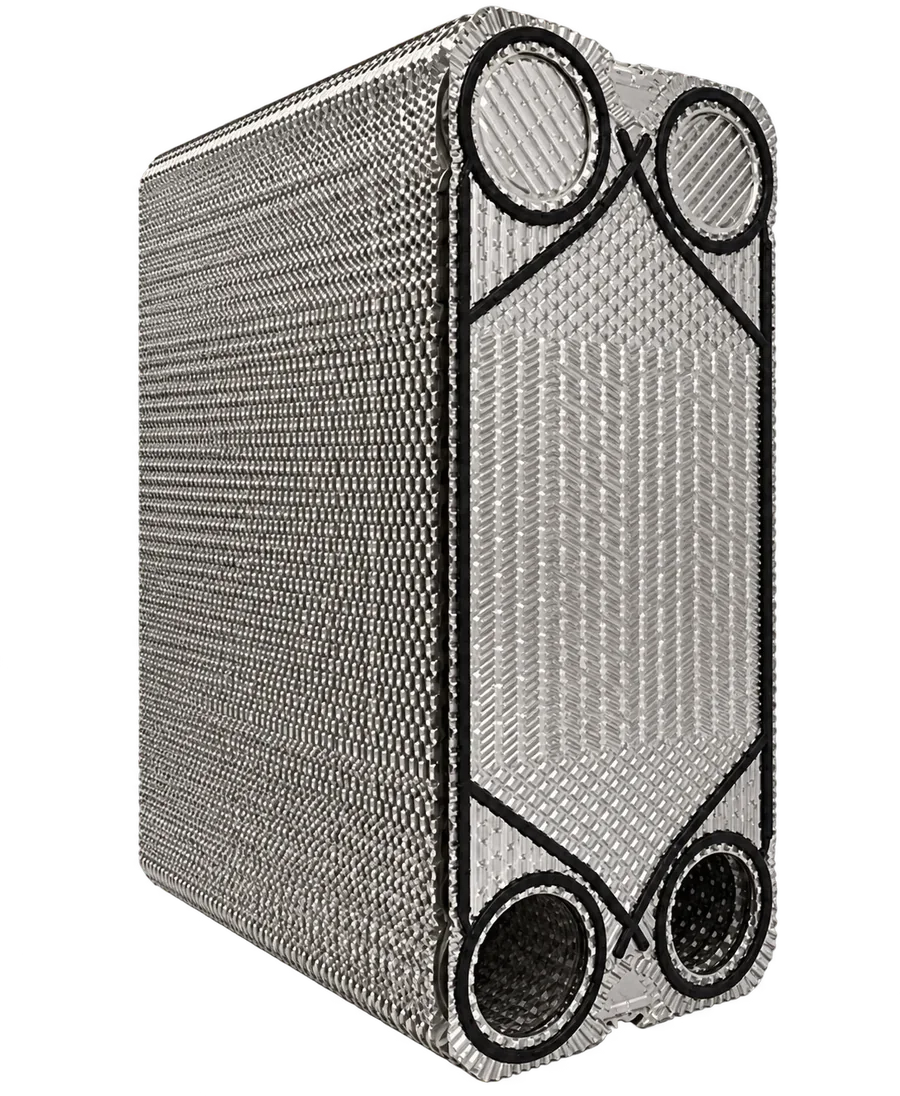
A full set of new 316L plates and gaskets, pressed to your frame's pattern and shipped in hanging order, so the exchanger is back to its first-day capacity.
Measured from your hanger drawing or from one plate sent to us.
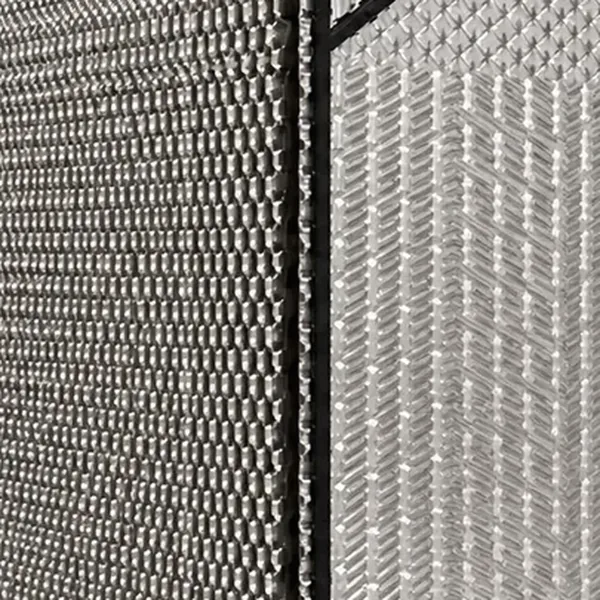
The new pack
- 316L plates, 0.5–0.6 mm, new gaskets fitted and cured
- EPDM or FKM to the circuit, compound marked on the hanger drawing
- Start and end plates, and blanked ports, included
- Plates numbered and shipped in hanging order
- New tightening dimension computed for the plate count
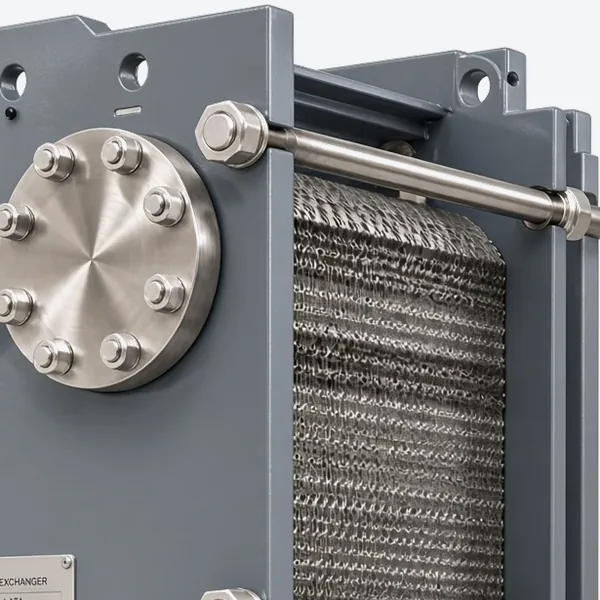
What tells us the pattern
- Frame nameplate and the existing hanger drawing, if you have it
- One plate from the old pack when the drawing is gone
- Plate count and whether the frame has spare bar length
- Both liquids, their concentration and hottest temperature
- Design flows, so we confirm the plate count still fits the duty
Choose on the order




What a replacement pack order includes
Every line is matched to the frame the pack will hang in. Old plates stay with you.
| Feature | Standard build |
| Plates | 316L, 0.5–0.6 mm, pressed to the frame's plate pattern and port layout |
| Plate count | Equal to the old pack, or revised to the current duty within the carrying-bar length |
| Gaskets | New, fitted to every plate; EPDM standard, FKM where the acid step passes through |
| End plates | Start and end plates with blanked ports, sized to the frame |
| Sequence | Hanger drawing with plate numbers and chevron orientation for each position |
| Tightening dimension | Calculated for the new pack and compound; stamped tag supplied for the frame |
| Testing | Pack hydrotest on our frame before shipment where the plate size allows; otherwise on site at closing |
| Documentation | Material certifications for plates and gasket compound; revised nameplate data where the count changed |
Doing the plate pack changeover well
Confirm the pattern before anything is pressed
Plates of the same nominal size from different frames are not interchangeable; the corrugation depth, the port diameter and the hanger notch all have to match the bar and the frame plate ports. The surest reference is the hanger drawing that came with the frame. Failing that, one plate from the old pack, with its gasket still on, tells us everything, and it does not have to be a good plate. Photographs of the frame nameplate and the port face complete the picture.
- Hanger drawing or one old plate; nameplate photograph
- Measured frame plate port centers and bolt pattern
- Current tightening dimension, so we know how far the old pack had drifted
Right-size the count while the pack is out
The original pack was sized for the circuit of its day. If the plant has since gone from a 3-inch to a 4-inch CIP supply, from 70 gpm to 120 gpm, the same plate count now runs a higher pressure drop and a poorer approach. A replacement is the moment to add plates up to the bar length, or to change the chevron angle for a different pressure-drop balance. Give us today's flows and temperatures and we will size the new pack to them rather than copy a number that may be ten years stale.
Put the right compound on the new plates
The most common reason a pack fails early is that an acid step was added after it was bought and the EPDM gaskets never had a chance. If that is the history behind your changeover, the new pack goes out with FKM, and the hanger drawing says so in capital letters. The elastomer page covers the choice; here the point is that a replacement pack is the cheapest moment to correct it.
Closing the frame on new plates
New gaskets seat differently from old ones. Bring the tie bolts in a turn at a time, diagonally, checking the dimension at all four corners, and stop at the new stamped figure rather than the one on the old tag. Fill both sides slowly, vent the high points, and run the first thermal cycle under observation. A new pack that is closed to the old dimension will be over-compressed by the difference the old gaskets had lost, and that is the leak that gets blamed on the new plates.
New plate pack questions
Yes. A replacement pack is defined by the frame's plate pattern, not by who built the frame, and most of the packs we supply go into frames that have been in a plant for years. We need the pattern reference from the hanger drawing or one sample plate, the port layout and the count. From those the new plates are pressed to hang on your carrying bar and seal against your frame plate.
Because the rest of the pack is the same age and has seen the same cycles, and because a new plate with a fresh 5 mm gasket does not compress like its neighbors with gaskets that have lost height. The result is a pack that closes unevenly and leaks somewhere else within months. A matched set with a single tightening dimension is the only arrangement we stand behind.
With the frame already drained and the pack opened, hanging 40–60 plates in order, closing to the stamped dimension and testing is a day's work for two people who have done it before. The plates arrive numbered and the drawing shows the chevron direction at each position, which is where most of the time is lost on an undocumented pack. Allow extra time if the carrying bar needs cleaning.
No. One plate, or the hanger drawing, identifies the pattern, and the old plates are yours to scrap. Shipping a full pack accross the country adds freight and tells us nothing the single plate did not. If the plant wants us to see the failure mode, photographs of the cracked corners or the thinned areas are more useful than the plates themselves, and they travel for free.
The same or better. New plates have no scale and new gaskets seal every channel, so a pack sized to the original count recovers the heat it did on its first day. Where the duty has grown we add plates within the bar length and the capacity grows with them; where it has shrunk we can fit fewer and a shorter dimension. Either way the quote states the duty the new pack is sized for.
Related

Heat Exchangers
Plate Pack & Frame
Thin 316L plates, a pressed gasket on each, and a frame that squeezes them into a counterflow exchanger: the construction for recovery and warm rinse water.
+ Learn More
Heat Exchangers
EPDM & Acid Elastomers
Which rubber goes on the plate: EPDM for sodium hydroxide and hot water, FKM where nitric runs through the same pack, and the temperatures where each gives up.
+ Learn More
Heat Exchangers
Gasketed Plate
Pressed 316L plates in a frame, with the elastomer picked for caustic or acid: the construction for recovery and water-heated rinse, and the three ways to buy it.
+ Learn More