
1-805-484-2992
Quotes - Engineering - SalesWhy dairy caustic runs hotter than anyone else's
A dairy is the one plant where the CIP heater's own surface is part of the fouling problem. Milk protein denatures on anything above about 160°F and binds calcium phosphate into milkstone, and the hottest surface in the caustic loop is the heater. Dairies run caustic at 160–175°F because that is where whey protein and fat come off a pasteurizer plate in 20–45 minutes, but the same temperature makes the heater tubes the first place a film forms once the acid step gets skipped.
That single fact drives most of our dairy recommendations. The caustic heater is a U-tube shell-and-tube with steam inside the tubes and solution in the shell, so the bundle can be pulled and the shell side inspected the day the approach temperature starts to climb. The acid step, nitric or phosphoric at 0.5–1.5% and 120–150°F, dissolves the mineral the caustic leaves behind, and a dairy that runs it only on weekends will see the heater lose capacity by Thursday in hard-water country.
Below the heater sits the plant: HTST and UHT lines at 30–120 gpm, separators and homogenizers on the same loop, cheese vats and silos on spray circuits at 100–300 gpm, and a hot-water sanitize that wants 180°F at the coldest return point. Each of those circuits is heated a little differently, and the three pages below take them one at a time.
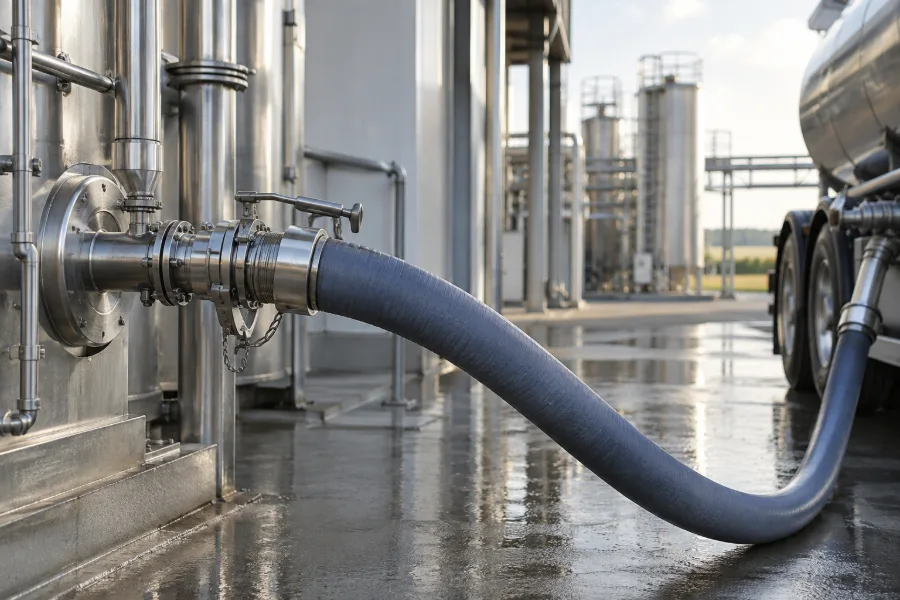
Tank recirculation
- Silo and vat spray circuits at 100–300 gpm
- Tank brought to 170°F before the cycle starts
- Heater sized on the heat-up minutes you allow
Once-through inline
- Pasteurizer and line loops at 30–120 gpm
- Full rise delivered at full flow, every second
- Heater sized on the worst second of the run
Four dairy circuits and what each asks of the heater
Dairies rarely have one CIP circuit. A mid-sized fluid plant may run three or four at once from a shared caustic tank, and the heater on that tank sees the sum of them. These are the four we size most often, and the figures below are the ones that move the heater size.
Pasteurizer and UHT lines
- Line flow set by pipe size, about 70 gpm in a 3-inch line
- Caustic at 170°F for protein, often the hottest loop in the plant
- Once-through heater or tank loop, depending on the skid layout
- Return temperature is the control point, not the supply
Cheese vats and silos
- Spray devices draw 25–100 gpm each, so circuits run 100–300 gpm
- Large volume, modest rise: the return comes back only 10–20°F cooler
- Tank recirculation, heater sized for heat-up before the first wash
- Fat on the vat wall wants caustic at the top of the range
Separators and homogenizers
- Small circuit, high soil load from concentrated cream and fines
- Usually cleaned on the pasteurizer loop rather than their own
- Check every component is rated for the circuit pump's 150 psig
- Acid step matters more here because of mineral-rich sediment
Hot-water sanitize
- 180–190°F at the return for at least 5 minutes
- Steam-to-water shell-and-tube sized for the rinse gpm
- No chemical on this heater, so EPDM and mill finish do
- Frequently the duty a packaged water heater used to carry
The bundle comes out, so leave the room
A dairy caustic heater with a 316L U-bundle is designed to be pulled, and the clearance it needs on the steam-head end is the bundle length plus about a foot. We have seen heaters mounted against a wall or under a mezzanine where the only way to inspect the shell side was to cut pipe. Ask for the pull dimension with the quote and mark it on the floor before the pipefitters arrive.
Protein film versus milkstone
Caustic lifts the protein and the fat; it does nothing for the calcium phosphate that the protein carried onto the surface. In hard water that mineral layer builds a few thousandths of an inch per month on a heater running 170°F, and it conducts heat far worse than the steel it sits on. The acid step is what keeps the heater's approach where it was sized, and skipping it shows up as a longer heat-up before the circuit is ready.
Where plate exchangers fit in a dairy
A dairy already owns plate heat exchangers on the product side and is used to opening them. For the CIP loop, a gasketed plate pack belongs on recovery, taking heat from the 150–160°F return to preheat makeup water, and on modest-pressure hot water. On the steam-to-caustic duty we put the solution in a shell, where a fouling layer does not seize a 3–5 mm channel and the bundle lifts out whole.
Sanitary or utility construction
Most dairy CIP heaters are utility equipment: mill-finish 316L, flanged or NPT, no 3-A symbol. Where the plant's inspector treats the CIP supply as part of the sanitary loop, we build the solution side with tri-clamp connections to 4 inches, a self-draining layout and a 32 Ra interior. Settle that with the sanitation manager before the quote, because it is not a change that can be made after the shell is rolled.
Dairy CIP questions
Usually it is fouled rather than undersized, if it once met the schedule. Check the steam pressure at the heater inlet first; a control valve throttled for a smaller duty or a trap holding condensate will cut capacity without any fouling. If steam is right, pull the bundle and look at the shell side. A 2,000-gallon tank heated from 70 to 165°F in 30 minutes needs about 3.2 MBtu/h, which is what we would size for, with a fouling allowance of 0.001–0.002 on the solution side.
It can if the tank and pump can, because the heater follows the tank. A shared caustic tank heater is sized for heat-up plus the heat the circuits carry away, and a silo circuit at 200 gpm returning 15°F cooler is pulling 1.5 MBtu/h out of the tank on its own. Tell us which circuits run at the same time and we size for that case, not for the nameplate flow of every loop added together.
Rarely in a dairy. Acid runs at 120–150°F, well under the caustic temperature, and most plants heat it in the same shell-and-tube by sending it through the solution side after the intermediate rinse. What changes is the head gasket: EPDM is fine for phosphoric, but a plant on hot nitric several times a week should specify FKM. One heater, one gasket choice, made at the quote.
It changes the solution-side heads and nozzles, not the thermal design. Tri-clamp fittings are available through 4 inches; a 6-inch circuit goes flanged. We also set the nozzles so the shell drains fully to one low point and give the interior a 32 Ra finish if the inspector asks for it. The steam side stays flanged, and carbon steel is acceptable on the steam head alone, since the solution never reaches it.
Related
Applications
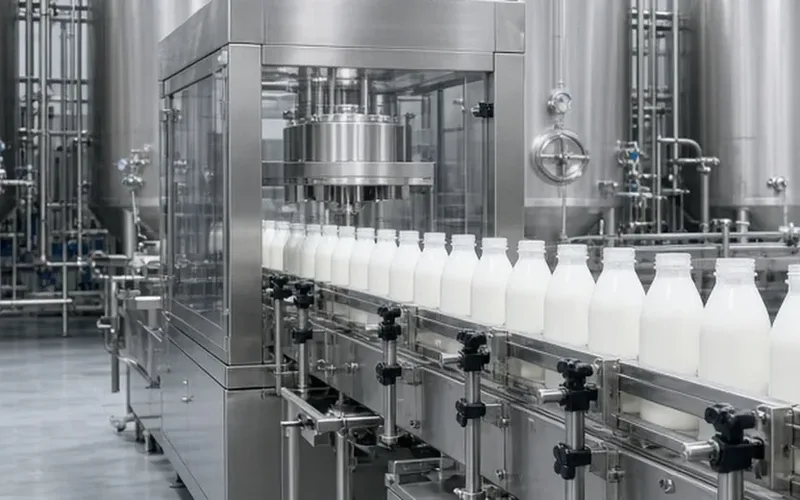
Milkstone & Protein Film
Milkstone forms on the heater before it forms anywhere else. How the film builds, what it costs in heat-up time, and how the heater is sized and built for it.
+ Learn More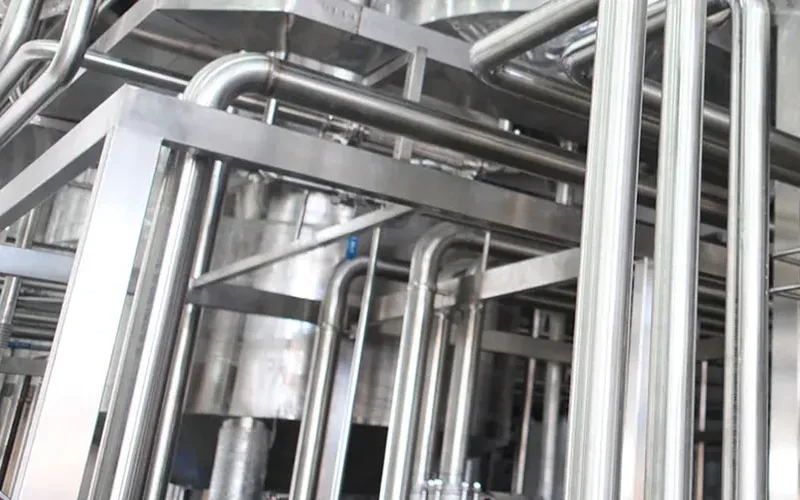
Applications
Pasteurizer & Line Circuits
HTST and UHT loops run a fixed flow at the hottest caustic in the plant. How a tank loop and a once-through heater are sized differently for the same line.
+ Learn More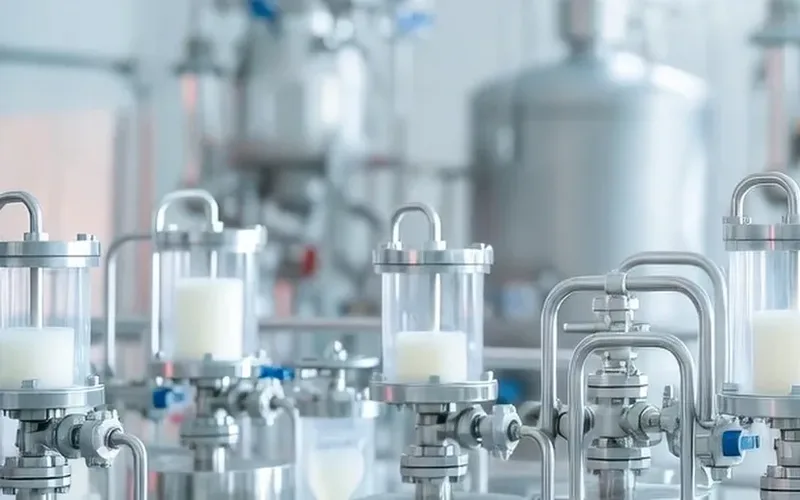
Applications
Vat & Silo Circuits
Vats and silos are cleaned by spray devices at 100–300 gpm, so the heater's real job is tank heat-up. How the minutes you allow set the heater size.
+ Learn More
