
1-805-484-2992
Quotes - Engineering - SalesA heater that answers to the tank, not the circuit
Gallons, degrees and minutes
A tank recirculation heater sits in a side loop on the caustic tank: a pump draws from the tank bottom, pushes through the heater and returns hot caustic to the tank. The circuit pump that feeds the spray devices is separate and may not run at all while the tank heats. That makes the duty a batch problem. The heater has to lift the whole tank volume from wherever it settled overnight to the wash temperature before the first cycle, then add back the heat lost to pipework, to the cold equipment being washed and to the return.
Tanks run 500–5,000 gallons. A 2,000-gallon tank at 70°F that must be at 165°F in 20 minutes needs about 4.75 MBtu/h; give it 60 minutes and 1.6 MBtu/h does the same job. The right heater depends on how long the sanitation schedule allows, and the most common complaint we hear, a tank still at 140°F when the cycle starts, is a heater sized for the hour when the plant needed the twenty minutes.
The loop pump is sized for the heater, not for the spray devices. 50–150 gpm through a U-tube shell keeps caustic velocity high enough to carry heat away from the tube wall and slow the milkstone, while the surface area is set by the heat-up duty.
See the U-Tube Removable Bundle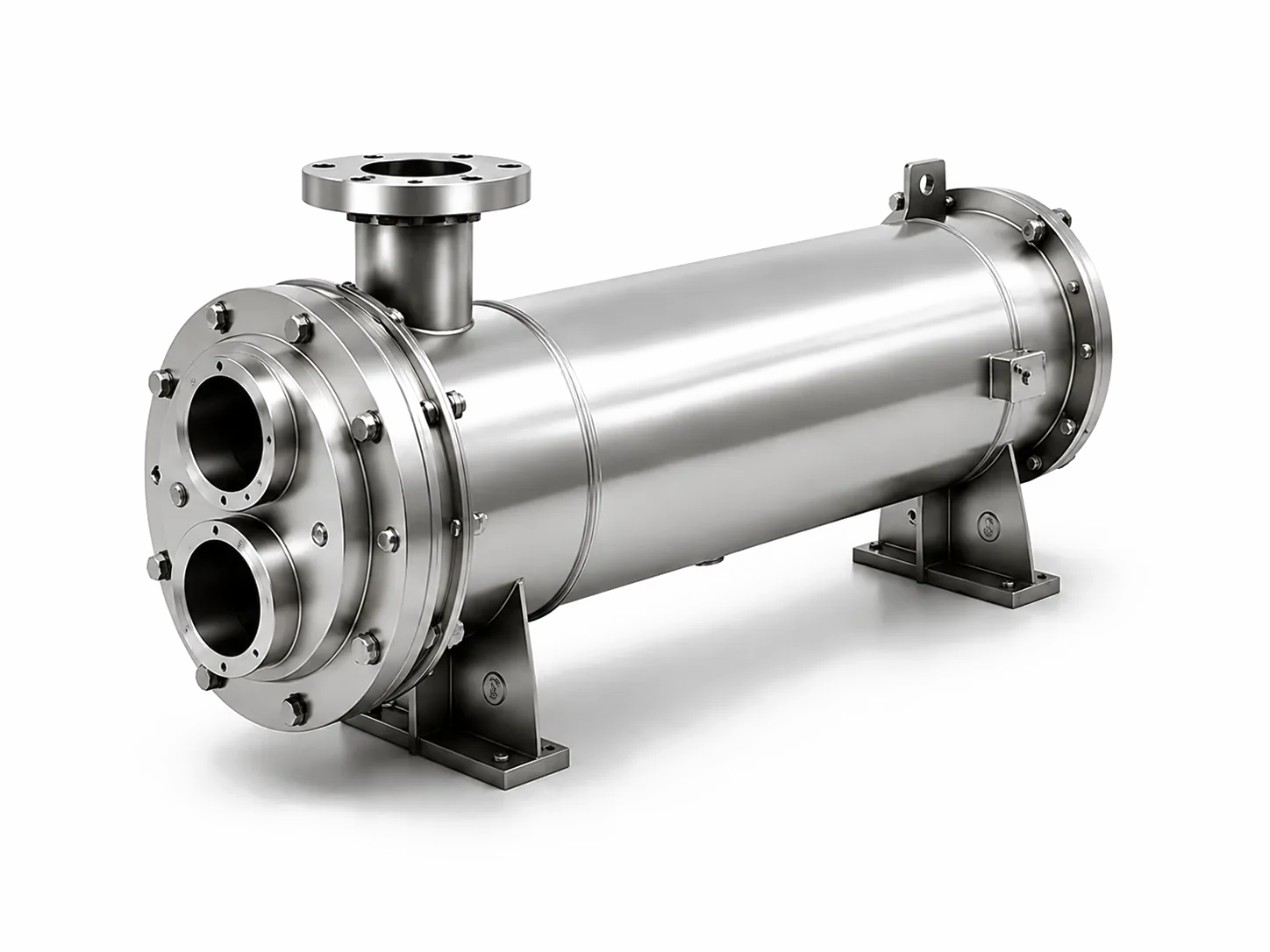
Tank recirculation heater, typical conditions
What a caustic tank loop usually looks like when it reaches us. Your plant figures replace these on the quote.
| Condition | Typical value |
| Tank volume | 500–5,000 gallons of 1–2% sodium hydroxide |
| Start temperature | 70°F after an idle night; 120–140°F between back-to-back cycles |
| Wash temperature | 160–175°F dairy, 140–160°F brewery |
| Heat-up window | 20–60 minutes, set by the sanitation schedule |
| Loop flow | 50–150 gpm through the heater, independent of the circuit pump |
| Steam | 15–125 psig at the heater inlet; condenses at 250–353°F |
| Construction | U-tube bundle, steam in the tubes, caustic in a 316L shell |
| Holding duty | A fraction of heat-up: pipe losses plus the cold equipment on each cycle |
Getting the tank loop right
Heat-up duty versus holding duty
Heat-up is the big number. For a batch it is gallons times 8.3 pounds per gallon times the temperature rise, divided by the minutes available and multiplied by 60 to get Btu/h. The 2,000-gallon example above works out to about 4.75 MBtu/h in 20 minutes. Holding duty during the wash is usually a quarter to a third of that: the losses from an insulated tank and loop are small, and most of the holding load is the cold tank or pipeline the caustic is being sprayed on. A heater sized for heat-up carries holding easily; one sized for holding never catches up.
Where the heater sits in the loop
Draw from the tank bottom, through the pump, through the heater, and back in near the top on the far side so the tank mixes. Put the heater low so it floods and drains, and keep the suction line short so the pump does not pull air when the level drops during a cycle. The temperature sensor that runs the steam valve belongs in the tank or on the return to it, not at the heater outlet; controlling on outlet temperature makes the valve hunt every time cold caustic returns from the circuit.
- Suction from the tank bottom, heater outlet returning high
- Steam control on tank temperature, not heater outlet
- Shell drain and vent so the loop empties for a bundle pull
- Loop pump sized for heater velocity, 50–150 gpm
Fouling in a tank loop
A tank heater sees the dirtiest caustic in the plant, because everything the circuit lifts ends up back in the tank. Protein, fat and milkstone that passed through the circuit at 160°F come through the heater again and again, and the hot tube wall is where the mineral part settles. Size with a fouling allowance of 0.001–0.002 on the caustic side and plan on pulling the U-bundle at a frequency the plant sets by inspection, often once or twice a year in a dairy with hard water.
When inline beats the tank loop
If the plant runs single-use CIP, makes up fresh caustic for each wash, or has no tank at all, there is nothing to preheat and a tank loop heater is the wrong tool. The heater then goes in the supply line and heats the full circuit flow in one pass. The inline page covers that case, including why the steam valve matters more there than it does here.
Tank heating questions we hear
As long as the schedule gives it, and no longer. Twenty minutes from a cold overnight start is a demanding duty and roughly triples the heater against a one-hour heat-up. Many plants start the heater on a timer an hour before the first wash and size for that; a plant that washes around the clock seldom sees the tank below 130°F and sizes smaller still.
It can, but then the tank only heats while a circuit is running, and the first cycle of the day starts cold. A dedicated loop pump of 50–150 gpm lets the heater work while the circuit is idle and keeps the velocity through the shell steady regardless of which circuit is selected. It is a small pump next to the heater it feeds.
Because the heater outlet runs well above the tank while heating and swings every time cold return arrives. A sensor in the tank, or on the line returning to it, sees the quantity the plant actually cares about and moves the steam valve slowly. The heater outlet is still worth reading as a high limit so the caustic never flashes at the tube wall.
Not on a shared bundle. Acid and caustic tanks each take their own loop and heater, because the acid circuit runs cooler, fouls less and attacks a different gasket. Where one heater must see both, the solution-side head gasket goes to FKM and the duty is sized for the caustic case, which is the harder of the two.
Related
CIP Heaters
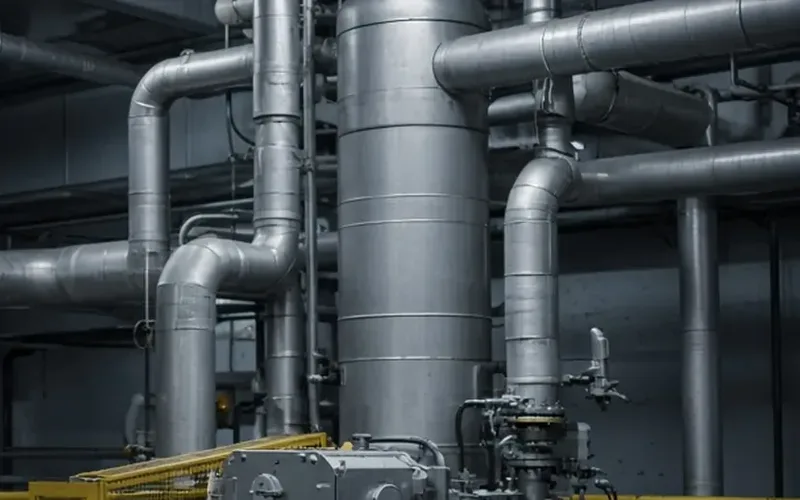
Steam-to-Caustic U-Tube
The construction behind most caustic heaters: steam condensing inside a U-bundle, caustic on the shell, and a bundle that slides out when the milkstone builds.
+ Learn More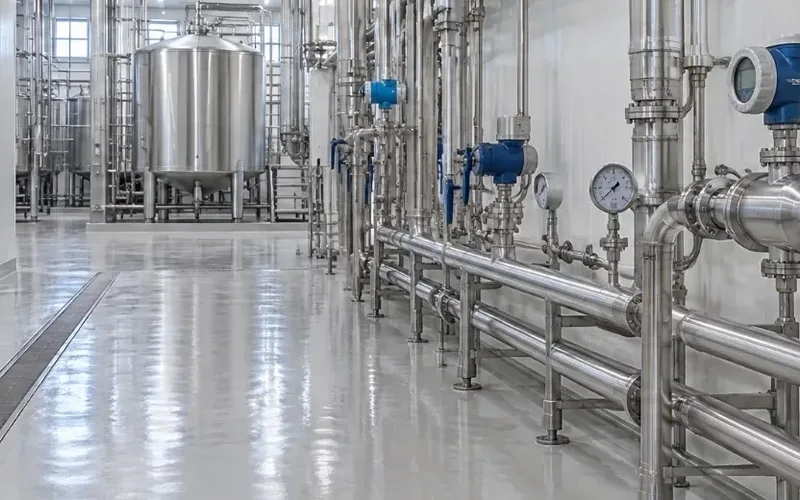
CIP Heaters
Inline Once-Through
No tank to average things out: an inline heater meets target temperature at circuit gpm on every pass. Line sizes, steam rates and the valve response it needs.
+ Learn More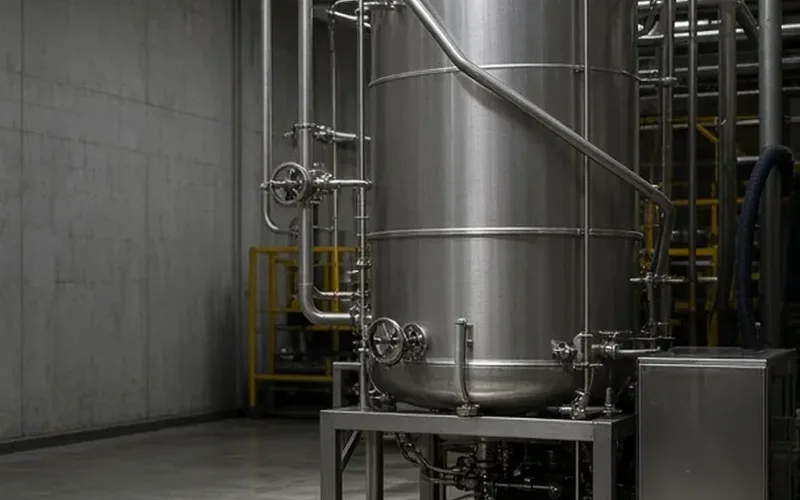
CIP Heaters
Caustic Heaters
Steam into a sodium hydroxide loop at 140–175°F: how the U-tube heater is built, and whether the tank loop or the supply line is the right place to put it.
+ Learn More
