
1-805-484-2992
Quotes - Engineering - SalesWhat a complete inquiry looks like
A CIP heater is priced from about a dozen facts, and an inquiry that carries all of them is quoted the day it arrives. One that carries half of them starts a round of e-mails, and the heater that comes out of that round is sized on the answers somebody gave from memory. This page is the list. It is longer than most plants expect and shorter than it looks, because most of the answers are already on the CIP system's drawings or its operator screen.
The checklist
The facts fall into five groups. The circuit and its chemistry decide the metal and the elastomer. The flow pattern and the duty point decide the size. The fouling picture decides the construction and the allowance. The rating, finish and connections decide how the heater is built and inspected. And the scope question, full unit or bundle only, decides what we are quoting at all. Each group is set out below with the one item that is most often left off.
Send it however it is easiest: the quote form, an e-mail with a photograph of the nameplate and a sketch, or a call with the data sheet in front of you. We would rather receive a hand sketch with the right numbers than a formal specification with the steam pressure guessed. Where a figure is unknown, say so and tell us what you do know about it; a range we can work with is better than a single number that was invented to fill the box.
Seven lines, five groups
- Circuit: caustic, acid, hot-water rinse, sanitize or recovery; chemical and its percentage; acid type if any
- Flow pattern: tank recirculation with tank gallons and minutes allowed, or once-through with circuit gpm
- Duty point: gpm, inlet temperature at its coldest, target temperature, and where the target is measured
- Steam: pressure at the heater inlet, or boiler pressure with header size and run if that is all you have
- Fouling: water hardness, how often the acid step runs, whether the bundle or pack must come out
- Build: solution-side rating, steam-side rating, finish (mill or 32 Ra), connection type and size, code stamp
- Scope: complete heater, or a new bundle or plate pack to the dimensions of the one in service
the figure most often left offSteam pressure at the heater inlet is the line plants skip most and the one that moves the size most; 125 psig at the boiler is 15 psig in many sanitation rooms.
The figure most often missing from each group
Every group on the checklist has one item that plants leave off more than the rest, usually because it seems obvious or because the answer lives in another department. These are the five we end up asking for.
- Chemistry: which acid. "CIP acid" can be nitric or phosphoric, and the gasket depends on which
- Flow pattern: whether a loop pump exists, which decides tank sizing against inline sizing
- Duty point: the coldest inlet of the year; summer figures undersize a winter heater by a third
- Steam: the pressure where the heater sits, not the boiler gauge, since 125 psig at the boiler can be 15 at the heater
- Fouling: hardness of the plant water, which sets the allowance between 0.001 and 0.002
Call and talk it through with an engineer: 1-805-484-2992
What we do with the inquiry
The circuit and chemistry go first because they close off options. Caustic at 1–2% means 316L and EPDM; a nitric acid step means FKM; a chloride source means a longer conversation about alloy. Once those are set, nothing later on the list can reopen them, and the materials line of the quotation is already written.
The flow pattern and duty point produce the heat load. On a tank system we compute the heat-up duty from gallons, rise and minutes, then check the hold against the cold return at circuit flow. On a once-through heater we take the highest gpm against the coldest inlet. With steam pressure at the heater we have the approach, and with the fouling allowance we have the surface. That is the heater, in principle, within an hour of reading the inquiry.
The build group turns a sized heater into a drawing. Our standard shell-side rating is 150 psig at 250°F on the solution and 150 psig at 400°F on the steam; a plant that needs more says so here. Tri-clamp connections run to 4 inches and larger sizes go flanged. Mill finish is right for a utility heater; 32 Ra on the solution side is specified where the loop is treated as sanitary. A code stamp is a line item, and the inspector decides whether it is needed, not us.
The scope line is read last but matters most to the price. A complete heater is shell, bundle, heads and supports. A new bundle built to the dimensions of the one in service is a fraction of that, and needs the shell diameter, tube length, tube count and layout, baffle spacing and the head bolt pattern from the existing unit, or the nameplate and a drawing. A plate pack needs the plate model, count, hanger dimensions and gasket material. The swap page sets out when each is the right buy.
The quotation comes back with the duty restated as we understood it, the surface and the fouling allowance we used, the materials, the steam lb/h and the recommended valve and trap capacity, the connection schedule and a general arrangement sketch. If we read something differently from how you meant it, the restated duty is where it shows, and a one-line reply fixes it before anything is built.
About a dozen answers, most of them already on the CIP system's operator screen.
The quotation restates the duty as we read it, so a misunderstanding is caught before the drawing.
Request a QuoteQuote questions
Send the boiler or header pressure, the header pipe size, roughly how far the sanitation room is from the boiler, and whether a pressure-reducing valve sits anywhere on the run. From those we estimate what arrives at the heater and size for it, stating the assumed figure on the quotation. If a gauge can be fitted before the order is placed, a single reading during a wash is worth more than any estimate.
Yes, and we will mark it as a budget figure. Flow, inlet and target give the duty, and we will assume 15 psig steam, 316L, EPDM and a fouling allowance of 0.001 unless you say otherwise. The firm price follows once the steam pressure, acid type and connection style are known, and it is usually within the range the budget figure named, unless the steam turns out to be lower than assumed.
A great deal. A clear shot of the nameplate gives make, serial, design pressures and temperatures and often the surface area; a second shot of the whole unit with a tape measure across the shell gives diameter and length; a third of each connection gives the type and size. Those three photographs frequently replace the entire build group of the checklist and most of the scope question.
The circuit and chemistry live with sanitation or the chemical supplier's service sheet. Flow, temperatures and cycle times are on the CIP operator screen or in the recipe. Steam pressure belongs to utilities or the boiler house. Connection sizes and the existing heater's nameplate are in maintenence's files. One person rarely holds all five groups, which is why the inquiry is best assembled by the engineer who owns the project rather than forwarded from one desk to the next.
Related
Sizing & Selection
Match a Nameplate or OEM Model
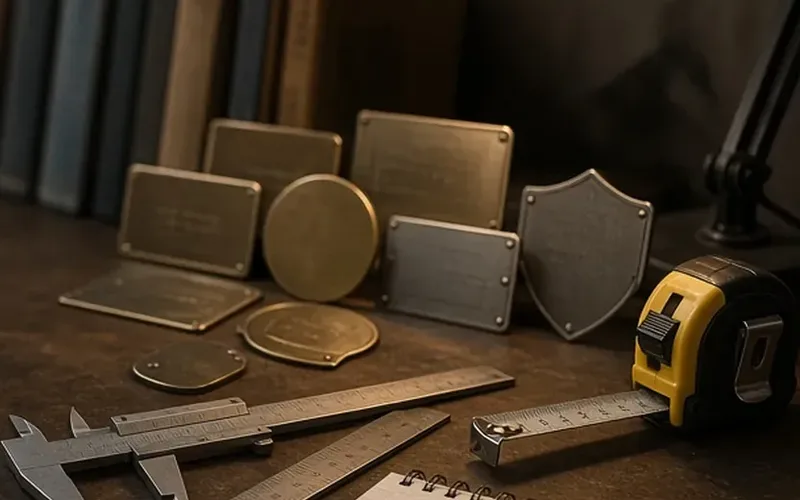
The nameplate on an existing CIP heater carries most of what a replacement needs. How to read it line by line, what it leaves out, and how it becomes a new unit.
+ Learn More
Sizing & Selection
Bundle or Plate-Pack Swap
A new bundle to the old dimensions keeps the shell, piping and steam valve. When that is the sound buy, when the shell or frame should go too, and what to measure.
+ Learn More
Sizing & Selection
Replace a Heater
A worn CIP heater can be matched from its nameplate or OEM model number, or renewed one piece at a time with a new bundle or plate pack. Here is how to decide.
+ Learn More