
1-805-484-2992
Quotes - Engineering - SalesThe paperwork is part of the heater
A pharmaceutical suite or a cosmetics plant cleans tanks, mixers and transfer lines the same way a dairy does, with hot caustic, an acid step and a hot rinse. What is different is what the plant asks of the hardware. The CIP supply is usually treated as part of the sanitary envelope, the final rinse is purified water or water for injection rather than city water, and the heater must arrive with material certifications, a surface-finish statement and a drawing the validation group can file.
On the thermal side, the circuits are spray-device tank circuits at 50–200 gpm with a short caustic step, often 15–20 minutes at 150–165°F, and a hot rinse at 175–185°F that the plant holds longer than the chemical step. Lotion and emulsion vessels add wax, mineral oil and emulsifiers that want the top of the caustic range and a surfactant. None of these soils fouls a heater the way milkstone does, so the bundle comes out less often, but the plant still wants to be able to inspect it.
We build the pharma CIP heater as a U-tube shell-and-tube with the solution side in 316L at 32 Ra, tri-clamp connections through 4 inches, a self-draining shell and heads with EPDM gaskets, and we supply the material test reports with it. Mill-finish stainless does the same thermal job for less money; we say so, and let the quality group decide.
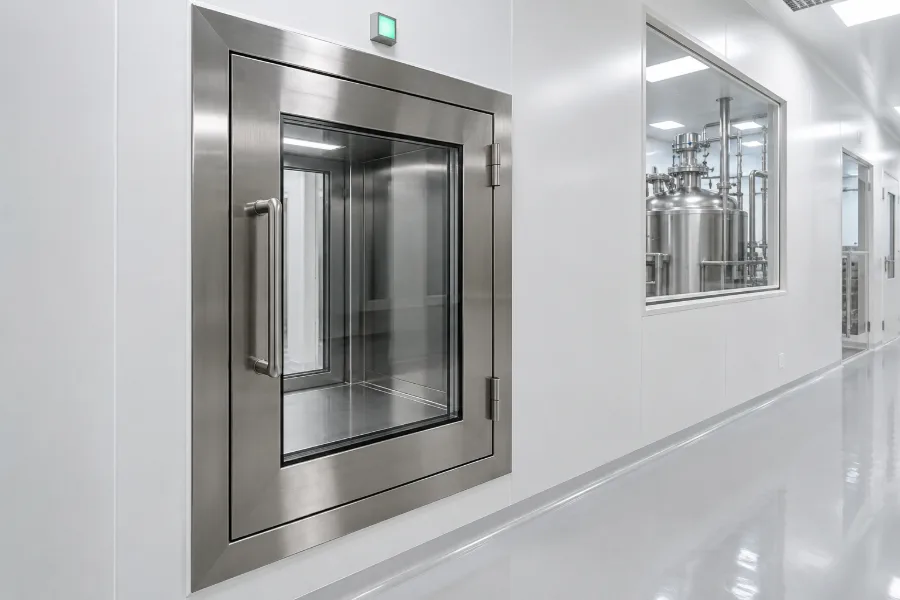
Sanitary CIP supply
- Tri-clamp to 4 inches, flanged above
- 32 Ra interior and a self-draining shell
- Material certs and a finish statement supplied
Utility CIP supply
- Flanged or NPT solution connections
- Mill-finish 316L, same thermal design
- Standard documentation at lower cost
What pharma and personal-care circuits run at
These plants seldom have a dozen circuits. They have a few tanks, a few mixing vessels and a water loop, and each is cleaned with a short, well-documented cycle. The heater sees four kinds of duty.
Tanks and vessels
- Spray-device circuits at 50–200 gpm with short cycles
- Caustic 150–165°F for 15–20 minutes
- Hot purified-water rinse at 175–185°F
- Heater drains with the circuit between campaigns
Lotion and emulsion vessels
- Wax and oil films want caustic at 165–175°F plus surfactant
- Tank recirculation from a dedicated CIP tank
- Acid step for pigment and mineral residue
- Fat film reaches the heater shell side, so the bundle still pulls
Purified-water and WFI loops
- Hot rinse water heated once-through at the loop flow
- No chemical on this heater: EPDM, 32 Ra, drainable
- 15 psig steam still sits 65°F above a 185°F target
- Low holdup volume so the loop flushes in one pass
Sterilization and sanitize holds
- Hot water at 180–190°F held at the return
- Steam-to-water duty sized on the worst second
- Rinse gpm from the line size, about 70 gpm in 3-inch
- Rating documented: 150 psig at 250°F on the shell side
What the validation group will ask for
Expect to be asked for material test reports on every solution-side part, a surface-finish statement, an elastomer certificate for the EPDM, weld maps and a drawing with drain points marked. We supply these with the heater and we ask the plant which ones are required before the shell is built, because adding a 32 Ra finish or a passivation certificate after the fact means a second shop visit.
Drainability is a layout question
A self-draining heater is not just a nozzle at the bottom. The U-bundle has to sit so the shell side drains past the tubes to one low point, the heads have to drain without a dead leg behind the gasket, and the mounting has to hold the pitch the drawing shows. We set the nozzles for the orientation the plant tells us, horizontal or vertical, and we mark the drain on the drawing.
Caustic temperature on wax and emulsions
Lotion, cream and emulsion residues are mostly fat, wax and emulsifier, and they soften above about 150°F and saponify in caustic at 165–175°F. A cosmetics plant that runs caustic at 140°F because that is what the data sheet for a water-based product suggested will find the mixer walls still greasy. The heater is sized for the hot case, so the plant can run cooler when the batch allows.
Why we still size for fouling
Pharma soils do not form milkstone, but surfactant-laden caustic in hard water still deposits carbonate, and emulsion fat does reach the heater. A fouling allowance of 0.001–0.002 on the solution side adds 10–20% surface and keeps the heater on temperature between acid steps. Removable U-bundle construction lets the quality group inspect the shell side on a schedule rather than when the approach starts to drift.
Pharma suite questions
Usually neither, and we ask rather than assume. A 3-A symbol applies where the inspector treats the CIP supply as a sanitary loop; most CIP heaters are utility equipment. BPE-style fittings and finishes are available on the solution side if the quality plan calls for them, and the steam side stays a standard flanged utility head. Tell us what the validation master plan requires and we build to it, not above it.
The thermal side does not: it is a steam-to-water shell-and-tube sized for the loop flow and a 60 to 180°F rise. What changes is holdup and finish. We keep the solution-side volume low so the loop flushes in one pass, finish it to 32 Ra, use tri-clamp connections and set the shell to drain to one point. EPDM is the gasket, because there is no acid on this heater.
Wax and emulsion fat are exactly the soils that bridge a 3–5 mm plate channel, and the steam side of a plate pack cycles its gaskets hard. For steam-to-caustic we put the solution in a 316L shell with a removable bundle. A gasketed plate pack earns its place on recovery, taking heat from the 150–160°F return in to makeup water with EPDM gaskets.
Related
Applications
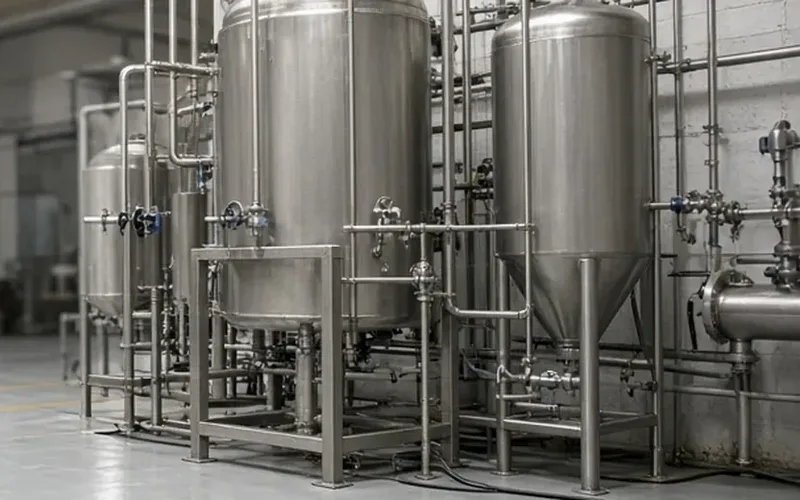
Tank & Vessel Circuits
Pharma vessel CIP is light on soil and heavy on flow, water quality and paperwork. The sanitary drainable heater we build for spray circuits and hot purified rinse.
+ Learn More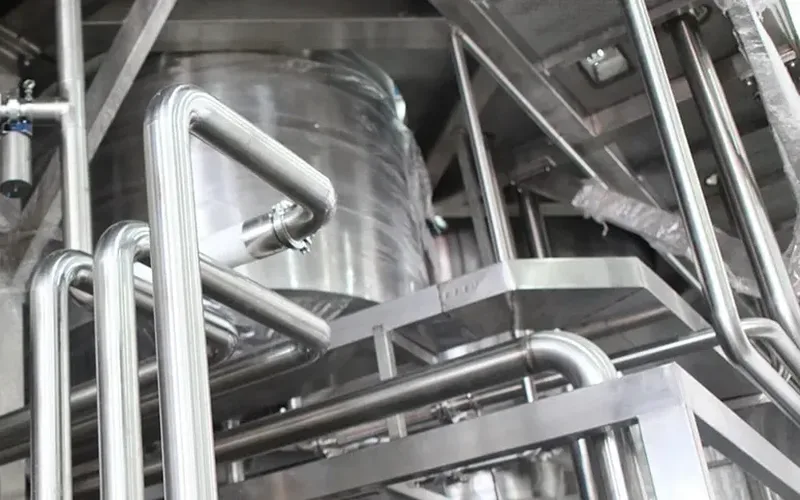
Applications
Lotion & Emulsion Vessels
Lotion and cream residues are wax and oil, and nothing moves until they melt. The hot pre-rinse, the surfactant caustic and the tank heater sized for a melting soil.
+ Learn More
Applications
Dairy
Dairy circuits run the hottest caustic on this site and foul the heater itself. Why dairies pull bundles, and how pasteurizer, vat and silo loops differ.
+ Learn More