
1-805-484-2992
Quotes - Engineering - SalesReplacement path
Replacing a CIP heater starts with what the old one tells you
A CIP heater that has run ten or fifteen years carries most of its own specification on the shell. The nameplate gives the design pressure and temperature on both sides, the shell diameter, the tube length and often the surface area; the connections tell you the service and the flow; the controller setpoint and the steam gauge tell you the duty it has actually been meeting. From those a replacement can be sized as a like-for-like unit or, more usefully, as a unit sized to the duty the plant runs today, which is seldom the duty it was bought for. Plants add circuits, raise caustic temperatures and move from 60-minute heat-ups to 20. The old heater has been coping; the new one should fit.
There are three paths through this section. Match the nameplate or OEM model to an equivalent complete unit, which is the path when the shell is corroded, the heads are cracked or the connections no longer suit the loop. Swap only the bundle or the plate pack, which is the path when the shell and frame are sound and the tubes or gaskets are the problem. Or, where a packaged hot-water generator has been feeding the rinse and sanitize water, replace it with a steam-to-water shell-and-tube sized for the rinse gpm. Each path needs a different set of measurements, and the pages say which.
Where to go from here
Match a Nameplate or OEM Model
- What to read off the plate: pressures, temperatures, diameter, tube length
- How an OEM model number translates into a duty we can size to
- When the equivalent unit should be larger than the one it replaces
Bundle or Plate-Pack Swap
- A new U-bundle into a sound shell, or a new pack into a sound frame
- Measurements that make a bundle fit: tube count, pitch, baffle spacing, length
- When the frame is not worth keeping and the whole unit should go
What to Send for a Quote
- A nameplate photo and the three readings that fix the duty: gpm, inlet, target
- Steam pressure at the heater and the chemical with its strength
- Full unit or bundle-only, and the pull clearance the room allows
Read the plate
pressures, temperatures, shell size, tube length
Check the duty
gpm, target and steam as run today
Inspect the shell
sound shell keeps, cracked shell goes
Choose the path
complete unit, or bundle or pack only
When the whole unit should go
Pitting on the shell interior, a cracked solution-side head, nozzles that no longer match the loop, or a shell too short for the duty the plant now runs: any one of these ends the case for a bundle swap. A complete unit also lets you correct what the old installation got wrong, such as a bundle that faced the wall or a steam connection that trapped condensate. We size it to the current duty, keep the connection sizes and face-to-face length where that saves pipework, and build the solution side in 316L.
When a new bundle or pack is enough
If the shell holds pressure and the heads seal, a new U-tube bundle restores the heater to new on the side that fouls, and nothing else needs to change. The same is true of a gasketed plate pack: new plates and new gaskets in a sound frame. What we need are the dimensions that make the new part fit, the tube count, pitch, baffle spacing, length and head bolt pattern on a bundle, the plate model and count on a pack, and the gasket material chosen for the chemistry the loop now runs.
Reading the nameplate for the duty
The plate states design conditions, not operating ones. A shell side stamped 150 psig at 250°F and a tube side stamped 150 psig at 400°F tells us the ratings to match; it does not tell us the caustic ran at 165°F with 40 psig steam. Take the operating figures from the controller and the steam gauge during a wash, and note the heat-up time the schedule gives the tank. Those three numbers, with the plate, are enough to size the replacement.
Hot-water generators on the rinse
Many plants heat sanitize and final-rinse water in a packaged steam-to-water generator with its own tank or coil, and replace it when the coil leaks. The equivalent is a steam-to-water shell-and-tube sized for the rinse flow and temperature, 120–140°F for the final rinse and 180–190°F for the sanitize step, often without a storage tank at all. The off-menu Hot-Water Generator Swap page covers the measurements.
Call and talk it through with an engineer: 1-805-484-2992
Before you choose
Measure the shell outside diameter and length, count the tubes if a head is off and note their outside diameter, measure the connection sizes on all four nozzles, and photograph the unit from the pull side. Add the operating figures: caustic target, loop flow if known, steam gauge at the heater. A heater can be sized from that set without the plate; a plate without the duty would have been less useful.
Often, and the test is simple: does the tank reach temperature before the schedule says the wash starts? If the operators have been starting cold or waiting, the old heater was already too small for the duty the plant grew into. Size to today's heat-up time and flow, and add the fouling allowance of 0.001–0.002 that the original may have lacked. Bigger shell, same connections.
No. A bundle has to fit a specific shell and head, and the plate gives diameter and length but not the tube count, pitch, baffle spacing or bolt pattern. Those come from a drawing, a measurement with the bundle out, or the old bundle itself shipped to us as a pattern. Where none of that exists, a complete unit is usually faster then reverse-engineering a bundle.
It means whatever gasket the chemistry calls for now. A bundle that ran EPDM for fifteen years on a caustic loop that has since added a nitric acid step should come back with FKM in the head joint. The swap is the moment to correct it, because the gasket is a new part either way, and the material costs a fraction of a second bundle in three years.
Related
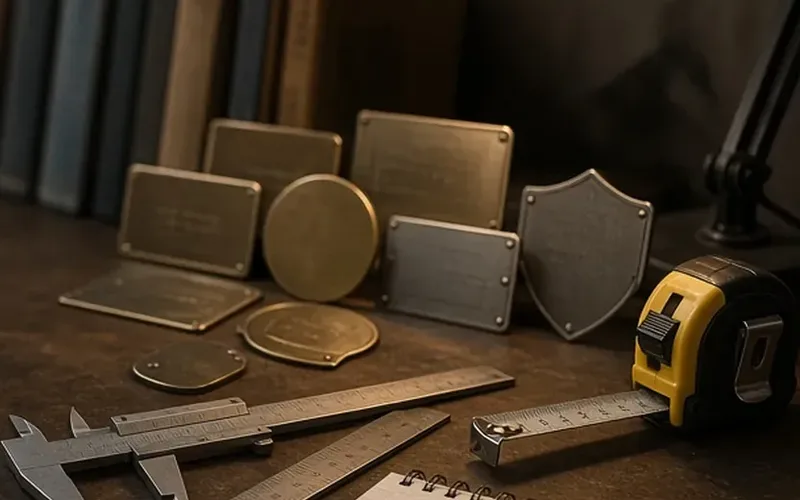
Sizing & Selection
Match a Nameplate or OEM Model
The nameplate on an existing CIP heater carries most of what a replacement needs. How to read it line by line, what it leaves out, and how it becomes a new unit.
+ Learn More
Sizing & Selection
Bundle or Plate-Pack Swap
A new bundle to the old dimensions keeps the shell, piping and steam valve. When that is the sound buy, when the shell or frame should go too, and what to measure.
+ Learn More
Sizing & Selection
What to Send for a Quote
The complete list of what a CIP heater quotation needs, grouped the way we read it, with the figure that is most often missing from each group and why it matters.
+ Learn More