
1-805-484-2992
Quotes - Engineering - SalesHeating rinse water from water you already have
Liquid to liquid is where the plate earns its place
Many plants carry a hot-water loop at 180–200°F for process and washdown. A gasketed plate pack puts that loop on one side of a stack of 316L plates and the CIP rinse water on the other, and the thin 0.5–0.6 mm plates with a 3–5 mm channel gap give an approach of 5–10°F. Rinse water at 60°F comes out at 130°F for the final rinse from a loop running at 140°F or more, with nothing in the CIP room but two pairs of pipes and a frame.
That is a duty a shell-and-tube cannot do economically, because water against water with a small temperature difference needs a long, expensive bundle. Plate wins the water-to-water case on surface per dollar, on footprint, and on the fact that the pack opens for inspection by backing off the tightening bolts. EPDM gaskets handle hot water and the traces of caustic that follow the wash through the line, and they are rated to about 300°F.
The limits are just as clear. Plates on steam are not what we recommend for a CIP duty: the steam-side pressure and temperature cycling every wash shortens gasket life, and a 185°F sanitize from a 180°F loop is impossible on any surface. When steam is the heat source, or the sanitize step needs 180°F and up at the return, the duty belongs on the steam-to-water shell-and-tube.
See the Plate Pack & Frame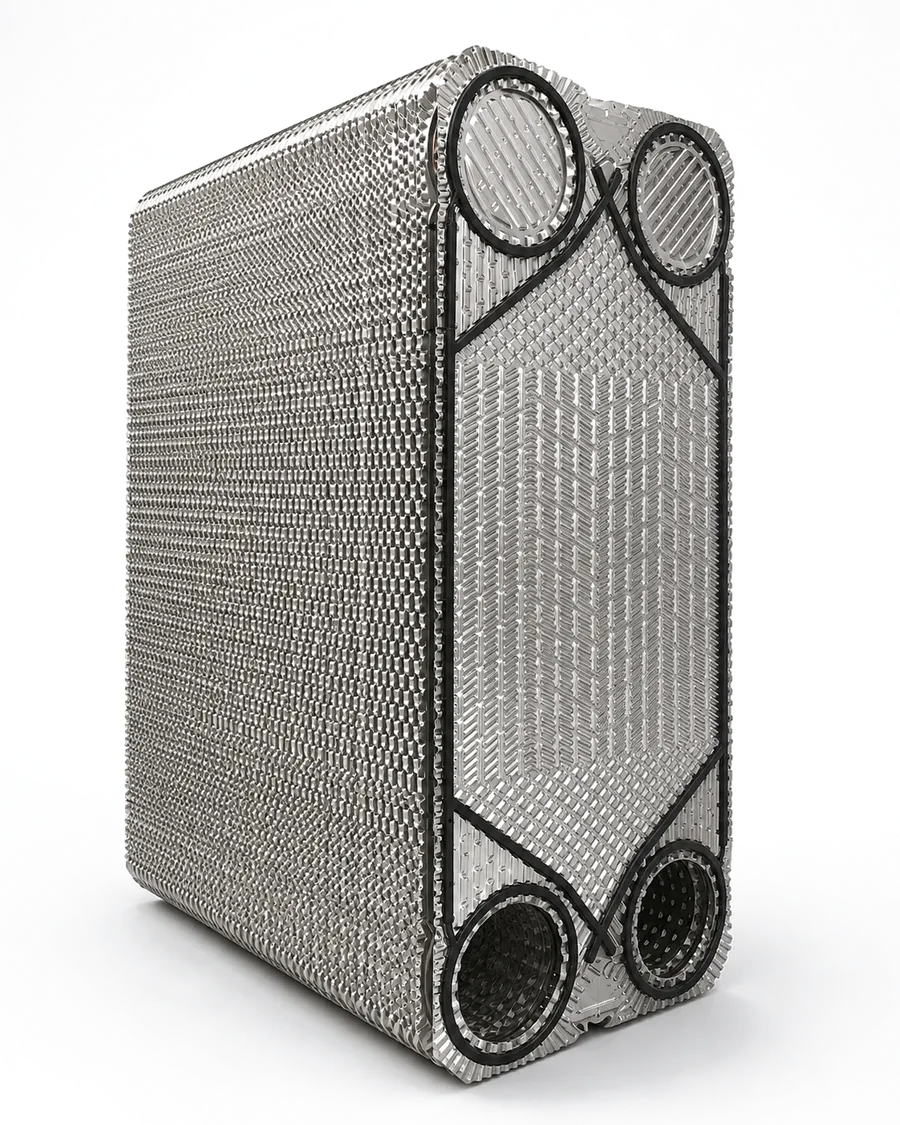
Plate rinse heater, typical conditions
Standard build for a water-to-water CIP rinse heater. The hot side is the plant loop, the cold side is the rinse water.
| Condition | Typical value |
| Hot side | Plant hot water, 160–200°F, dropping 35–70°F across the pack |
| Cold side | Rinse water 55–75°F in, 100–140°F out |
| Flow | 30–200 gpm rinse water, once through, hot side matched |
| Plates | 316L, 0.5–0.6 mm, 3–5 mm channel gap |
| Gaskets | EPDM, clip-on, rated to about 300°F; FKM only if the acid rinse passes through |
| Frame | 150 psig both sides, painted carbon steel or stainless clad |
| Connections | Tri-clamp to 4 inches; flanged at 6 inches and above |
| Approach | 5–10°F between loop inlet and rinse outlet |
Where the plate rinse heater fits, and where it does not
The hot-water loop sets the ceiling
A plate heater never delivers more than the loop brings. If the loop arrives at the CIP room at 160°F after losses, the best rinse outlet is 150–155°F, which is fine for a final rinse and useless for sanitize. Check the loop temperature at the point of use with the rest of the plant drawing on it, not on the boiler-room gauge on a quiet Sunday morning.
Flow balance on the hot side
Water-to-water heating only works if the hot side can give up the heat. Lifting 70 gpm of rinse water by 70°F takes about 2.45 MBtu/h, and that comes out of the loop as roughly 70 gpm dropping 70°F, or 140 gpm dropping 35°F. Many plant loops cannot spare that much flow for 10 minutes without starving another user. We ask for the loop pump curve for exactly that reason.
Gaskets and the acid step
If the plate heater sits in the common supply line, the acid solution at about pH 2 passes through it a few times a week. EPDM tolerates dilute phosphoric at rinse temperature; nitric, hot or often, is where we move the gaskets to FKM. Say which acid the plant runs and how the lines are valved, and we pick the elastomer rather than assume it.
Opening the pack
A plate pack opens without pulling anything: back off the tightening bolts, slide the pressure plate, and every channel is visible. On softened water the pack may never need it; on hard water, scale shows on the cold-side plates near the hot inlet first. Leave the length of the frame free in front of the pressure plate when you set it, the same way a bundle needs its pull clearance.
Plate rinse heater questions
It can be built, and we would rather not quote it for CIP. Steam at 250°F against a gasket rated to about 300°F leaves little margin, and the valve cycling every wash works the gaskets hard. For a steam-heated rinse the U-tube shell-and-tube costs about the same at these sizes and has no gaskets in the steam path. Plate is our answer when the heat source is water.
5–10°F on a well-balanced duty with equal flows, closer with more plates. It is the reason plate wins on water-to-water: a shell-and-tube chasing a 10°F approach grows very long. Do not design to the 5°F end on a pack that will see hard water, because scale on the cold-side plates takes the first few degrees within a season.
It depends on how the plant treats the rinse loop. Tri-clamp ports, a drainable frame and a 32 Ra plate finish are available where the final rinse is treated as a product-contact step. Where the plate heater only warms pre-rinse water, standard 316L plates with flanged ports are a utility exchanger and priced as one. The plates themselves are the same alloy either way.
Enough for the duty plus about 10–20% for fouling, on a frame with room to add more. A 70 gpm rinse duty typicaly lands at a few dozen plates in a mid-size frame; we quote the frame length with spare capacity so a later change in the step means adding plates, not replacing the unit. The exact count follows from the four temperatures and two flows you send.
Related
CIP Heaters
Steam-to-Water Shell & Tube
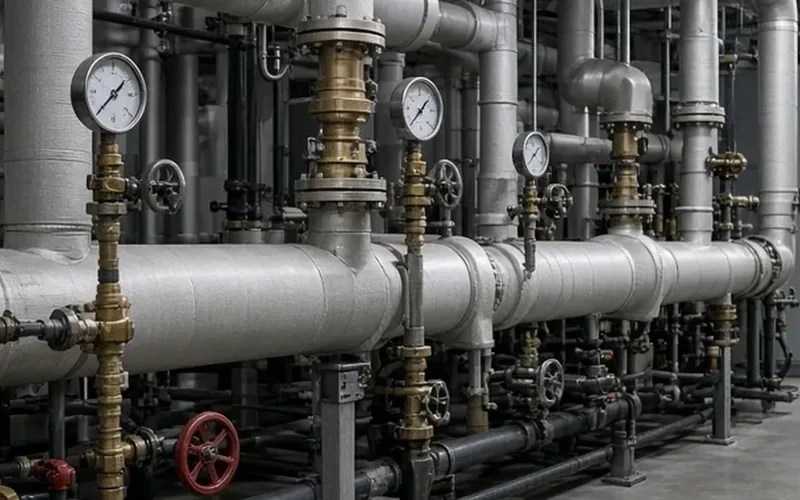
Steam inside the U-tubes, rinse water in the shell: how a once-through heater holds 185°F at 70 gpm on 15 psig steam, and what the control valve has to do.
+ Learn More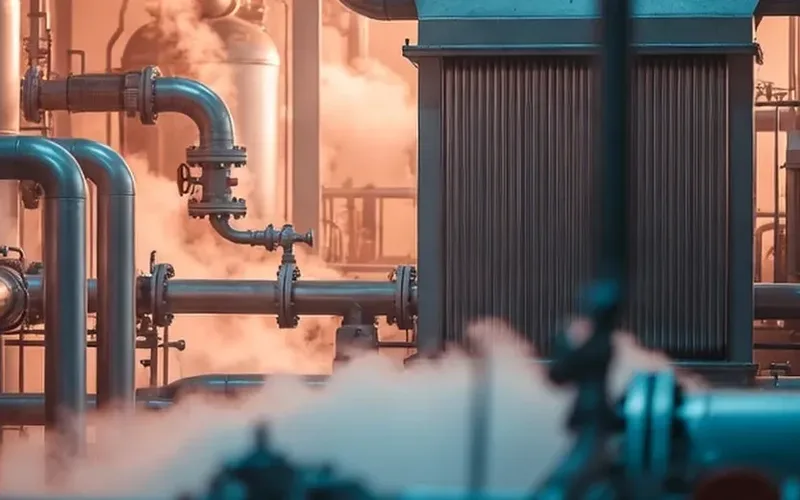
CIP Heaters
Hot-Water Rinse Heaters
Rinse and sanitize water runs hotter than the caustic and goes to drain, so the heater sees full circuit flow in one pass. Which construction handles that, and why.
+ Learn More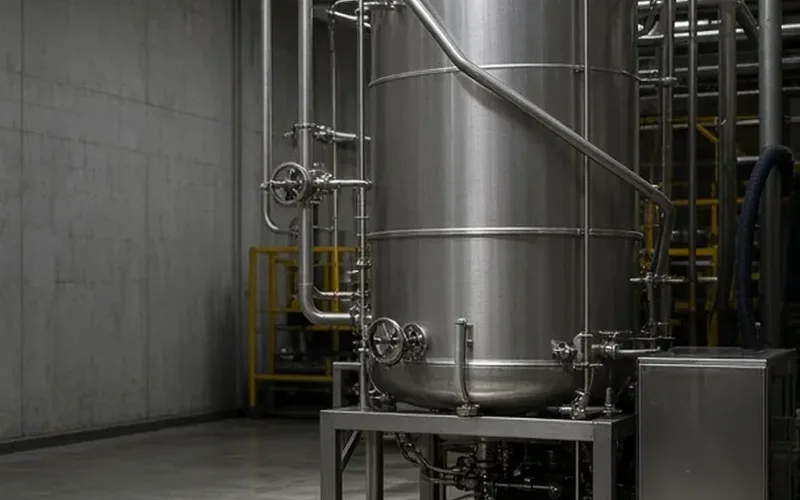
CIP Heaters
Caustic Heaters
Steam into a sodium hydroxide loop at 140–175°F: how the U-tube heater is built, and whether the tank loop or the supply line is the right place to put it.
+ Learn More
