
1-805-484-2992
Quotes - Engineering - SalesTwo acids, one alloy, two gasket answers
What each acid does at wash strength
The acid step uses nitric or phosphoric acid at 0.5–1.5%, roughly pH 2, to dissolve the calcium phosphate and carbonate that caustic cannot lift. At that strength and at 120–150°F, 316L stainless is comfortable with either acid. Nitric is an oxidizing acid and actually reinforces the passive oxide film that protects the alloy; phosphoric is a weak acid that barely touches it. We build the shell, bundle, tubesheet and solution head of an acid heater in 316L and have no reason to go further up the alloy table for a CIP duty.
The two acids part company at the gasket. Nitric oxidizes elastomers as readily as it oxidizes anything else, and EPDM, which is the right gasket for caustic and hot water, hardens and cracks when hot nitric runs across it a few times a week. Phosphoric is gentle on the same material. So a phosphoric-only plant can often keep EPDM, while a nitric plant specifies FKM on every elastomer the acid reaches.
The alloy risk in a CIP heater is not the acid at all. It is chloride: brine from a cheese plant, softener regeneration water, or a chlorinated sanitizer sitting in a hot, stagnant shell. Those are what pit 316L, and procedure keeps them out.
See the Shell & Tube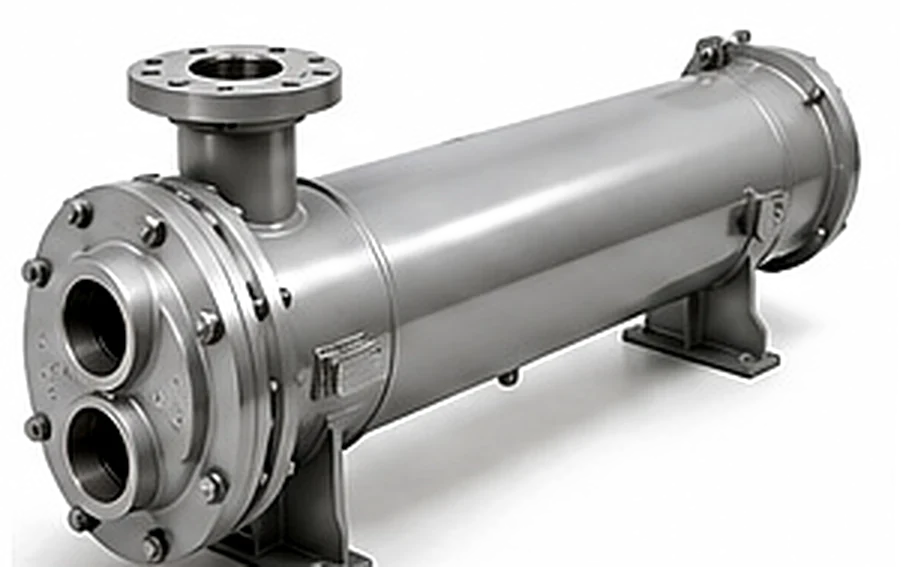
Acid heater construction and conditions
Standard values for a steam-to-acid CIP heater. The gasket rows are the ones that change with the acid; the rest is common to both.
| Condition | Typical value |
| Acid | Nitric or phosphoric, 0.5–1.5%, about pH 2 |
| Solution temperature | 120–150°F, held through a 10–20 minute step |
| Wetted metal | 316L shell, U-tubes, tubesheet and solution head |
| Head gasket, phosphoric | EPDM, rated to about 300°F |
| Head gasket, nitric | FKM fluoroelastomer |
| Steam side | 15–125 psig in the tubes; rated 150 psig at 400°F |
| Shell-side rating | 150 psig at 250°F |
| Fouling allowance | 0.001–0.002 on the acid side; carry-over protein, not mineral |
| Chloride | Keep brine, softener regenerant and chlorinated sanitizer out of the hot loop |
Concentration, temperature and what moves with them
Going up in concentration
Acid strength is set by the chemistry program, and 0.5–1.5% covers almost every plant. If a plant pushes nitric toward 3% for a descaling pass, 316L is still fine; nitric and stainless are an easy pairing well beyond CIP strength. The gasket is what notices. At higher concentration and the same temperature, FKM remains the answer and EPDM becomes a certain failure rather than a slow one. For heat transfer the solution behaves like water at any of these strengths, so the surface area does not move with concentration.
Going up in temperature
The acid step is run at 120–150°F because that is where the mineral comes off at a sensible rate. Pushing to 160°F or more buys little cleaning and costs gasket life, since as a rule of thumb elastomer attack roughly doubles for every 18°F of temperature. It also raises the duty and brings the acid heater closer to the caustic heater in size. If a plant insists on hot acid, we quote it, size for it and specify FKM without being asked.
- 120–150°F: EPDM on phosphoric, FKM on nitric
- Above 150°F: FKM on either acid
- Above 160°F: ask why; the mineral is already gone
Where chloride comes from
Pitting in a CIP acid heater is almost always traced to chloride, not acid. Cheese plants carry brine on equipment that then goes through the CIP loop; softener regeneration can back up into makeup water; a chlorinated sanitizer left in a shell that is then heated concentrates at the tube wall as water evaporates from a half-drained unit. The fix is procedural: rinse chloride out before the acid step, drain the shell when the loop is idle, and keep sanitizer out of the heater while it is hot. 316L handles the acid; it needs help with the salt.
Sizing the acid heater
Dedicated acid tanks are smaller than caustic tanks and the rise is lower, so the acid heater is usually the smallest heater in the CIP room. Size it as a tank heater on gallons and minutes, or as an inline heater on circuit gpm, exactly as for caustic, at 500 Btu/h per gpm per degree. Where one heater serves the whole sequence, the inline page explains sizing by the caustic step while the gasket follows the acid.
Concentration and temperature questions
Not at CIP strength. Nitric acid at 0.5–1.5% and up to 150°F is a mild duty for 316L, and 304 would survive it too; we use 316L for the chloride margin and because the rest of the loop is 316L. Higher alloys belong in chemical plants running concentrated acid, not in a wash loop at pH 2.
Whatever the dosing sets, usually 0.5–1.5% in the tank, and the heater sees the same. There is no concentration at the tube wall on the acid side, because nothing boils; the solution stays well below saturation temperature. Concentration only climbs in a shell left half full and hot, which is a drainage habit to fix rather than a materials problem.
Nitric. The metal does not care which acid it gets, and a heater gasketed in FKM for nitric is at ease with phosphoric. The reverse is not true: EPDM chosen on a phosphoric program fails as soon as the plant switches to nitric for a descaling pass. Specify for the harsher acid the plant will ever use, even occasionaly.
Far less. Acid dissolves the mineral layer rather than depositing it, so the acid-side surface stays close to clean. What arrives is protein and fat carried over from the caustic step on the first pass, which is why we still hold a fouling allowance of 0.001–0.002. Bundle pulls on a dedicated acid loop are rare, and usually for inspection.
Related
CIP Heaters
Acid-Duty Gaskets
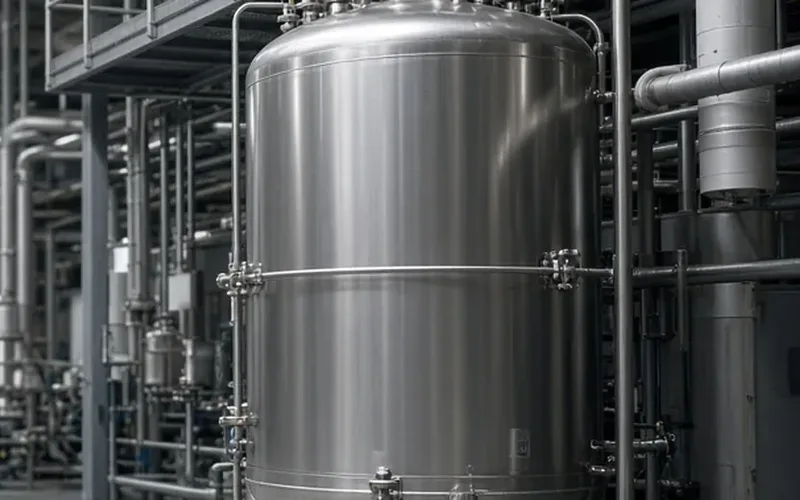
The acid step is the test every plate gasket has to pass. Why EPDM is right on caustic and wrong on hot nitric, and how to specify the pack before it fails.
+ Learn More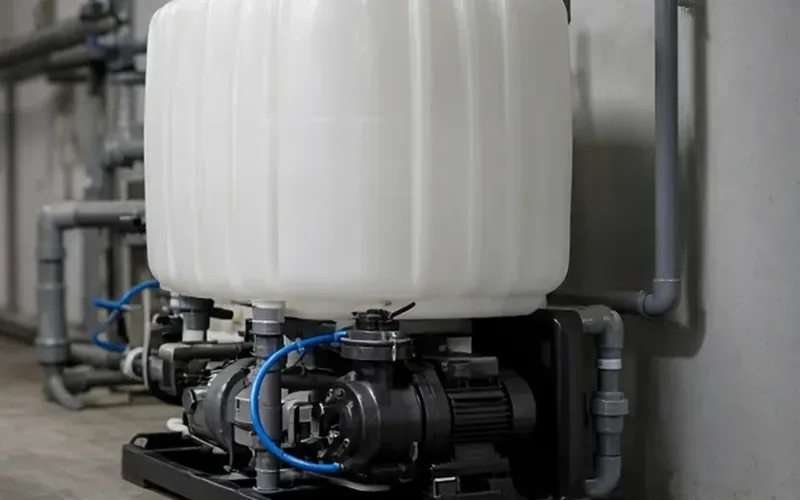
CIP Heaters
Acid Heaters
The acid step runs cooler and less often than caustic, yet it decides the elastomer on every heater it touches. Materials, temperatures and when FKM is required.
+ Learn More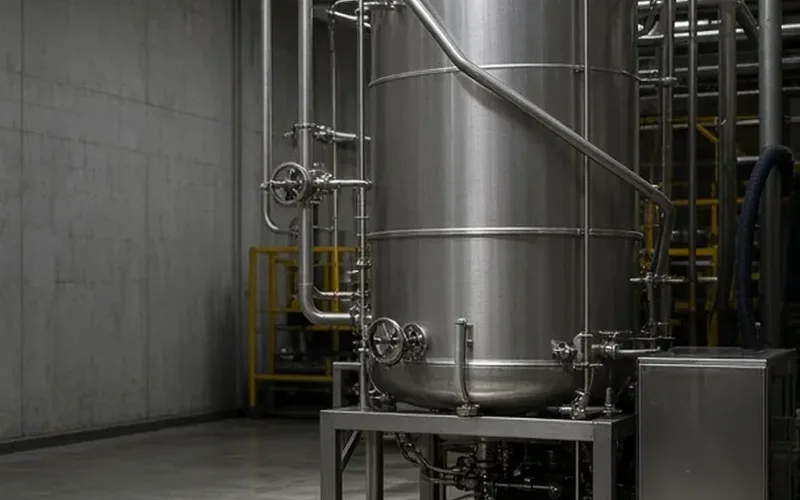
CIP Heaters
Caustic Heaters
Steam into a sodium hydroxide loop at 140–175°F: how the U-tube heater is built, and whether the tank loop or the supply line is the right place to put it.
+ Learn More
