
1-805-484-2992
Quotes - Engineering - SalesDesign level
The same steam-to-caustic duty is built three ways
A CIP heater that holds 1–2% caustic at 165°F can be built as a utility exchanger, as a sanitary exchanger, or as a 3-A marked exchanger, and the thermal design is identical in all three. What changes is everything around the heat transfer: the finish on the solution side, whether the shell drains itself when the pump stops, the connection style, the gasket geometry, and the paperwork. Each step up costs money and buys something specific, so the first question we ask about any CIP heater is which of the three the plant actually treats its CIP loop as.
The honest answer at most plants is utility. The solution that passes through the heater is a cleaning chemical, not the product, and the loop that carries it is usually mill-finish stainless with flanged or threaded ends. A dairy that treats the CIP return as part of the product zone, or a pharma or personal-care plant whose validation covers the loop, wants a drainable unit with tri-clamp ends and a 32 Ra solution side. The 3-A symbol sits on top of that for the plants whose inspector asks to see it on the heater and not just on the equipment it cleans.
The three pages below run in order of cost. Read Industrial first; if the loop needs more, Sanitary and 3-A say exactly what more means and what it adds.
The three build levels
Industrial
- Mill-finish 316L on the solution side, flanged or NPT connections
- ASME stamp on the shell, carbon steel allowed on the steam head only
- The right answer for most caustic and acid tank heaters
Sanitary
- Tri-clamp ends to 4 inches and a layout that drains when the pump stops
- 32 Ra on every surface the solution touches, crevice-free head gaskets
- For plants whose CIP loop is written into the sanitary zone
3-A Sanitary
- The 3-A symbol on the heater, not only on the vessel it cleans
- Material, finish and gasket rules the inspector can check on a drawing
- Specified by the inspector, never assumed by the plant
Name the loop
utility, sanitary or 3-A marked
Set the ratings
150 psig shell, 150 psig steam side
Pick the ends
tri-clamp to 4 inches, flanged above
Choose the finish
mill finish or 32 Ra polished
Ratings that do not change with the build level
Whichever level you choose, the shell side carrying solution is rated 150 psig at 250°F and the tube side carrying steam 150 psig at 400°F. Plant steam arrives at 15–125 psig and condenses between 250 and 353°F, so the steam-side rating covers the whole range without a special design. The tubes are 3/4-inch or 1-inch 316L in a U-bundle that expands freely, which is what keeps the hot end of the exchanger free of a gasket.
Connections by size, not by preference
Tri-clamp ends are available to 4 inches, and above that the connection goes flanged whatever the sanitary intent, because a 6-inch clamp will not hold the loads a full silo circuit at 200 gpm puts on it. Steam and condensate are always flanged or threaded; there is no sanitary arguement on that side. A utility unit takes 150-pound flanges or NPT throughout and nobody has to buy clamp fittings.
Finish, and what it costs
Mill-finish 316L is what the tube mill and the plate mill deliver, and on a cleaning-solution heater it cleans up with every cycle. A 32 Ra polish, about 0.8 µm, is the usual sanitary call and adds hand work to the shell interior, heads and nozzles. Beyond that, electropolishing is a pharma request and rarely useful on a CIP heater. Ask for the finish the loop is validated to, not the finest one on the price list.
What the inspector looks at
On a 3-A heater the inspector checks what a drawing can prove: material certificates for every solution-contact part, the surface finish, the gasket material and how it is retained, radii in corners, and that the unit drains from its lowest point without being tilted. None of that changes the heat transfer. It changes the drawing package and the shop hours, and it has to be stated on the quote, because it cannot be added once the shell is welded.
Call and talk it through with an engineer: 1-805-484-2992
Certification questions
On the shell, in most states, yes, because the solution side is a pressure vessel above 15 psig and the steam side is above 15 psig as well. We build the shell to Section VIII and stamp it as standard on every level. What the stamp does not cover is sanitary design; a stamped utility heater and a 3-A heater carry the same U stamp and look nothing alike inside.
Not in any useful way. The finish is applied before the heads are welded to the shell, the drain point is set by the nozzle layout, and tri-clamp ends are a different nozzle. A unit bought as utility stays utility. Decide the level before the order; if the loop might be reclassified within the life of the heater, sanitary costs less now than a second heater later.
316L is the sanitary alloy. The L grade has low carbon so the welds do not sensitize, and it resists the caustic and the dilute nitric or phosphoric acid of CIP at any level of build. A higher alloy enters the conversation only where the plant runs brine or a chloride-bearing sanitizer, and then it is a corrosion question, not a certification one.
The plant's own quality or regulatory group, usually with the inspector who signs off on the equipment the loop cleans. If the CIP return is drawn inside the sanitary boundary on the plant's zoning map, the heater on it is sanitary. If the loop is a utility that happens to feed sanitary equipment, the heater is utility. Settle that question before you ask for a quotation.
Related
Sizing & Selection
Industrial
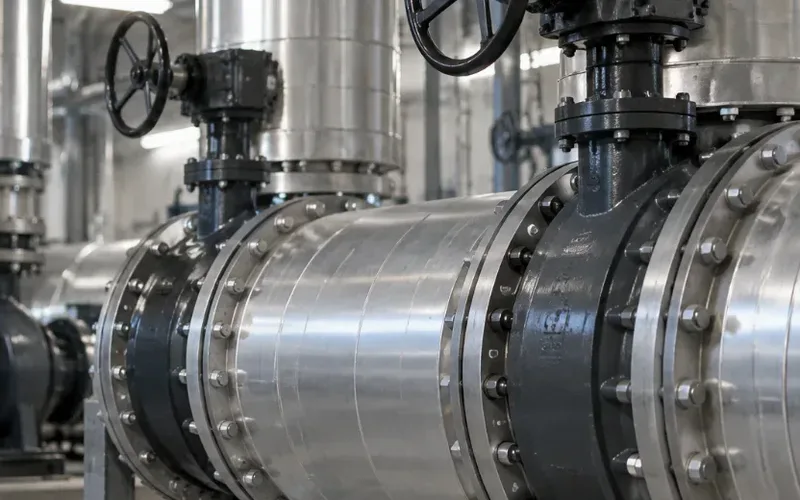
The industrial build: ASME shell, mill-finish 316L solution side, carbon steel steam head, flanged or NPT ends. What it saves and what it gives up.
+ Learn More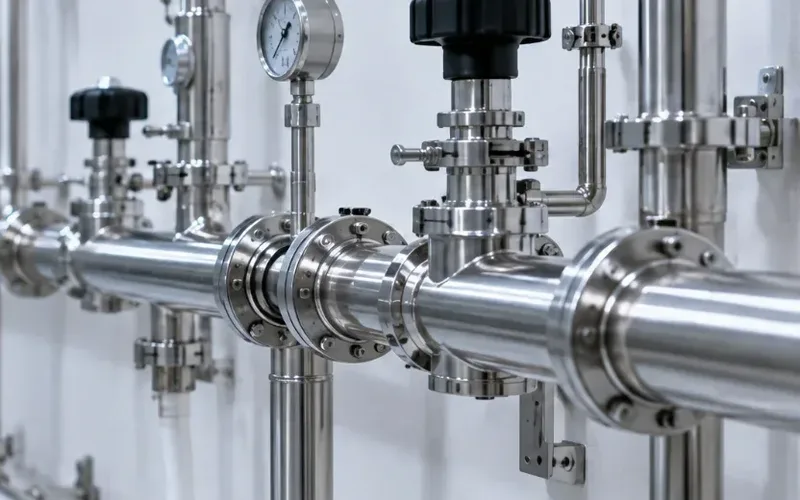
Sizing & Selection
Sanitary
Tri-clamp ends to 4 inches, a shell that drains without tilting, 32 Ra on the solution side and crevice-free gaskets. For loops inside the sanitary zone.
+ Learn More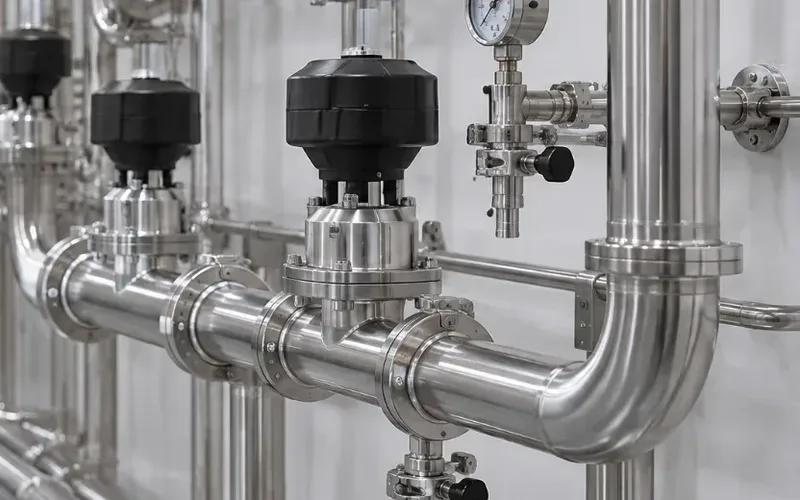
Sizing & Selection
3-A Sanitary
The 3-A symbol on a CIP heater means a third party reviewed the design against the sanitary standard. Who needs it on the heater and what it adds to the build.
+ Learn More
