
1-805-484-2992
Quotes - Engineering - SalesWhat a steam-to-solution shell-and-tube is made of
Nearly every steam-heated CIP duty on this site comes back to the same machine: a bundle of 3/4-inch or 1-inch tubes bent into a U, rolled into a single tubesheet, hanging inside a 316L shell. Steam enters the tube-side head, condenses inside the tubes and leaves as condensate through a trap; solution enters the shell, washes over the outside of the tubes and leaves hotter. The three pages in this section are the three ways that machine is bought.
The head is the only place carbon steel appears, because only steam touches it. Shell, tubes, tubesheet and any solution-side bonnet are 316L, with an EPDM bonnet gasket as standard and FKM on acid duty.
Steam side
- 150 psig at 400°F design on the tube side
- Plant steam 15–125 psig, saturated, with valve and trap
- Condensate drains through the head; vacuum breaker fitted
- Carbon steel head permitted; stainless on request
Solution side
- 150 psig at 250°F design on the shell side
- 316L shell, tubes, tubesheet and bonnet
- Caustic 1–2%, acid 0.5–1.5%, or rinse water
- Fouling allowance of 0.001–0.002 on this side only
- Tri-clamp to 4 inches or flanged, drainable
Bundle
- U-tubes, free thermal expansion, no expansion joint
- Pulls from the shell for milkstone and protein film
- Straight tubes with removable heads when the plant brushes
- New bundle to the shell drawing when the shell is sound
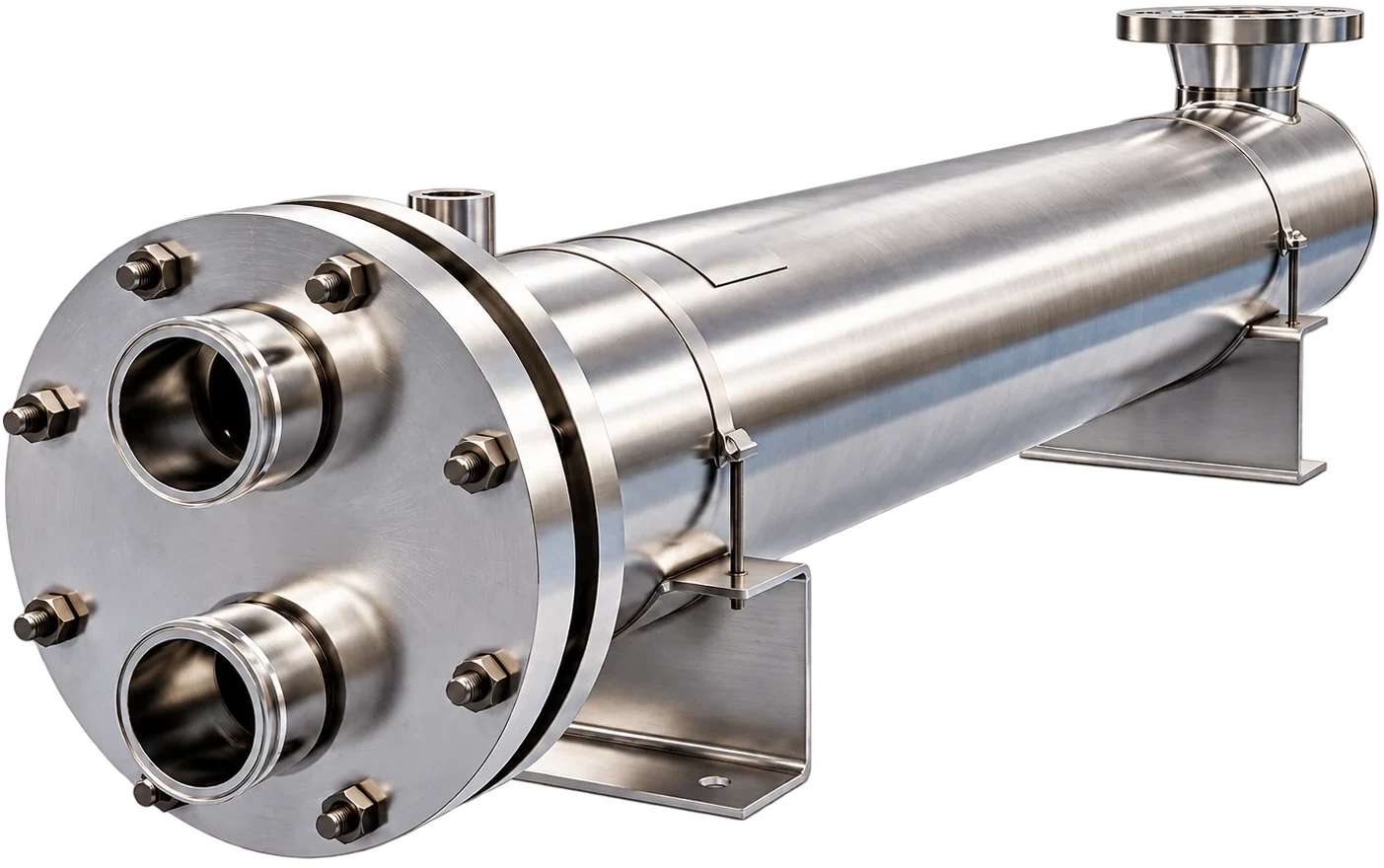
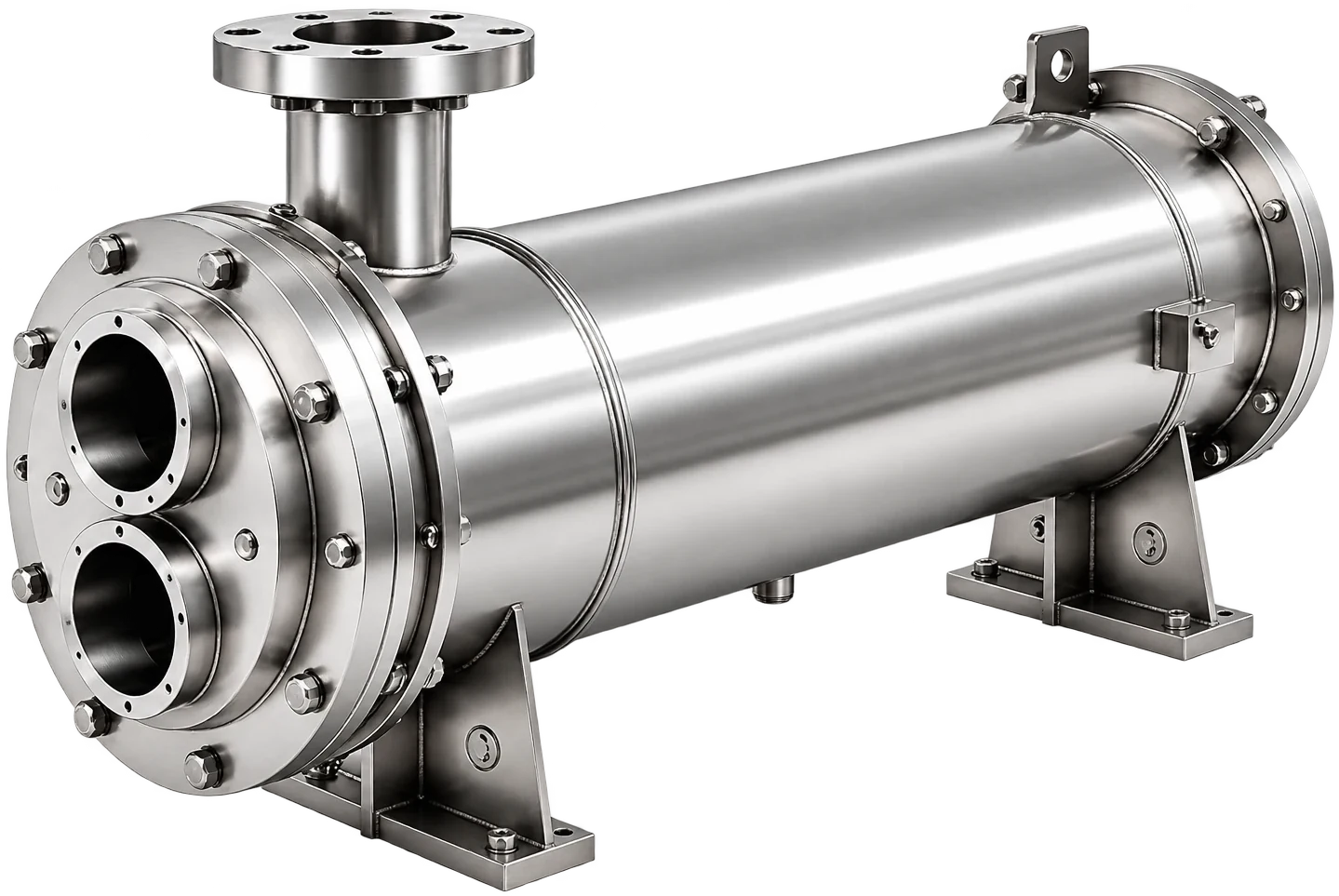
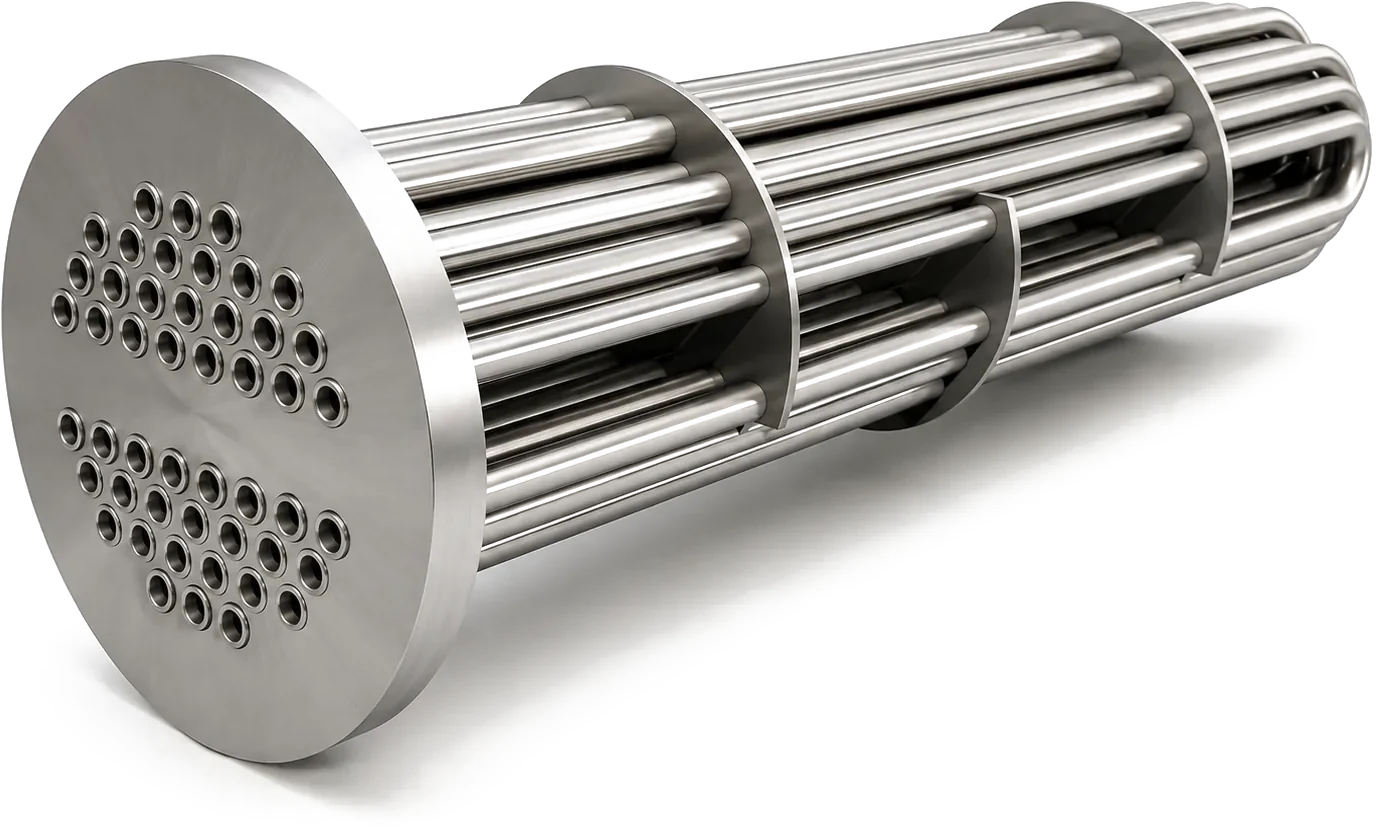
Talk to an Application SpecialistSteam in the tubes and solution in the shell puts the fouling where a pull can reach it and the growth where a U-bend absorbs it.
The reason the main CIP duty stays on shell-and-tube.
Designing the shell-and-tube around the wash
Why steam goes in the tubes
Condensing steam inside a 3/4-inch tube gives a very high film coefficient and a tube wall close to steam temperature, so the surface works hard and the bundle stays short. It also puts the clean fluid on the side that cannot be cleaned without cutting tubes, and the fouling fluid on the outside, where a bundle pull exposes every tube. With 15 psig steam at 250°F and a 175°F caustic target, the 75°F approach is the margin that lets the control valve throttle without the outlet sagging.
Why the tubes are bent into a U
A tube at 300°F inside a shell at 170°F grows about 1/8 inch per 10 feet more than the shell does. A fixed straight bundle needs an expansion joint or lives with the stress; a U-bundle simply flexes at the bend, one tubesheet carries everything, and the whole assembly slides out of the shell. That is why the U-tube is the default and the straight tube is the exception that brushing justifies.
Ratings and what the nameplate says
The shell side is designed for 150 psig at 250°F and the tube side for 150 psig at 400°F, which covers plant steam to 125 psig with margin. An ASME code stamp is available on the shell and is usual on utility heaters; a sanitary heater adds tri-clamp connections to 4 inches, a drainable layout and a 32 Ra solution side. Flanges appear at 6 inches and above regardless of the loop's status.
Clearance, supports and the pull
A bundle pull needs its own length in front of the head end plus room for a sling. Saddles should let the shell drain through the low nozzle, the steam head should face the aisle, and the condensate trap should sit below the head. Heaters bolted against a wall with 2 feet of clearance are the ones whose bundles never come out, and they get replaced whole when a new bundle would have done.
Shell-and-tube questions
Heating a 2,000-gallon tank from 70 to 165°F in 20 minutes is about 4.75 MBtu/h; stretching that to 60 minutes drops it to about 1.6 MBtu/h. The minutes matter more than the gallons. A plant that starts the cycle on a timer rather than on tank temperature needs the short heat-up, and that is a larger bundle and a larger steam line, not a hotter boiler.
Rarely. Steam condenses to clean water inside the tubes and leaves nothing behind, so the tube bores stay as they were rolled. Boiler carryover or treatment chemicals can leave a film over years, which is why we ask about steam quality rather than add surface for it. On a U-tube the steam side is sized with no fouling allowance for the same reason; all the allowance goes to the solution side.
Yes, and a shared supply-line heater often does, through valves. 316L on the solution side handles 1–2% sodium hydroxide, 0.5–1.5% nitric or phosphoric and rinse water at CIP temperatures. The bonnet gasket is the one component that cares, and it becomes FKM when the acid step is in the loop. The sizing case is whichever duty has the largest flow and the highest outlet.
The pressure at the heater inlet with the plant running, not the boiler setting. A 100 psig boiler commonly delivers 40–60 psig at the far end of a plant, and a regulating valve ahead of the heater may bring it to 15 psig deliberately. We size the bundle to the pressure that will actually be there, because the approach, and therefore the surface, follow from it.
Because an oversized steam heater with an oversized valve hunts. The valve runs nearly closed, the outlet overshoots, the valve slams, and the tank or line temperature swings 10°F either side of target. A fouling allowance of 0.001–0.002 already adds 10–20% surface. Beyond that, size the heater to the duty and spend the margin on a valve with proper turndown.
Related
Heat Exchangers
U-Tube Removable Bundle
The construction we quote first for steam-to-caustic: a U-bundle that grows and shrinks on its own and slides out of the shell when the solution side needs cleaning.
+ Learn More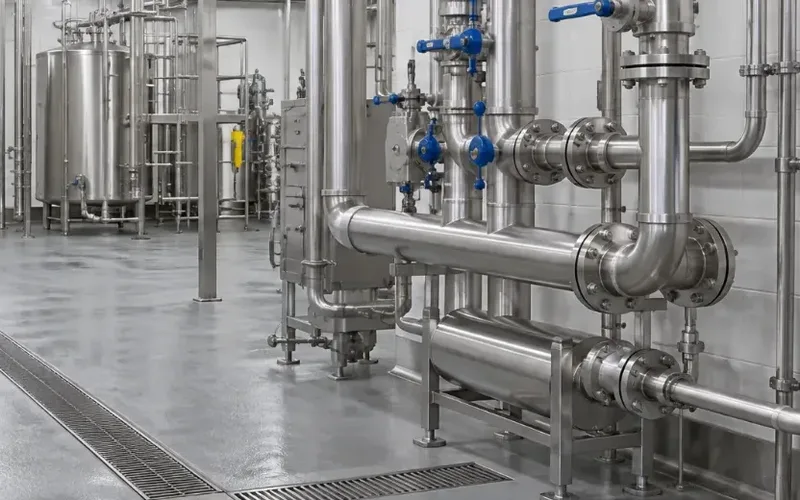
Heat Exchangers
Straight Tube, Brushable
For the plant that would rather brush tubes on a Saturday than rig a bundle: straight 316L tubes between two tubesheets, heads off at both ends in minutes.
+ Learn More
Heat Exchangers
Replacement Bundles
When the shell is sound and the tubes are not, a new 316L bundle made to the old one's tubesheet and length drops back in without a pipe fitter.
+ Learn More