
1-805-484-2992
Quotes - Engineering - SalesCold vessels change the caustic arithmetic
A brewery heater has a different problem from a dairy heater. The soil is yeast, hop resin, protein haze and beerstone (calcium oxalate), none of which needs 175°F to lift, and the vessel being cleaned is often a fermenter or bright tank that was sitting at 40°F an hour earlier. Breweries therefore run caustic at 140–160°F, and the heater spends much of the cycle fighting a cold tank wall rather than heating fresh solution.
The second brewery problem is carbon dioxide. A fermenter full of CO2 turns sodium hydroxide into sodium carbonate on contact, which drops the free alkalinity and leaves a carbonate scale that only the acid step removes. Plants purge or vent before caustic, but the solution that comes back is still weaker than what went out, and the heater sees the carbonate on its solution side. That is a shell-side fouling case, and it is why the brewery caustic heater is still a removable-bundle U-tube even at the lower temperature.
Beverage lines pull the other way. Juice, soft-drink and bottled-water fillers lean on hot-water sanitize at 180°F or more, with sugar films that respond to warm caustic and an acid step that runs more often than a brewery's. The rinse heater, not the caustic heater, is often the largest exchanger in a beverage plant.
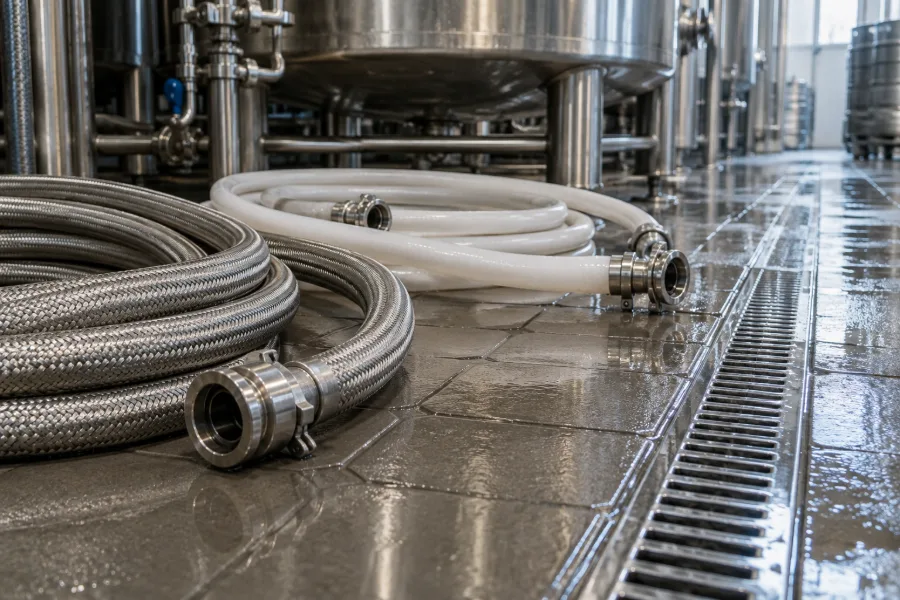
Brewhouse caustic
- 140–160°F against yeast and hop resin
- Tank wall at 40°F soaks up the first pass
- Removable bundle for carbonate on the shell side
Filler sanitize water
- 180–190°F held at the return for 5 minutes
- Once-through at the filler rinse flow
- Steam-to-water shell-and-tube, EPDM, mill finish
The circuits a brewery or beverage plant heats
A brewery cleans hot vessels and cold vessels from the same caustic tank, and a beverage plant adds a filler whose sanitize water is a heater duty in its own right. These four circuits cover most of what we are asked to heat in this industry.
Brewhouse kettle and whirlpool
- Hot-side soil: caramelized wort and hop resin on the kettle wall
- Caustic at the top of the brewery range, 160°F, from a tank loop
- Vessel is already warm, so heat-up is short and duty is modest
- Acid step for beerstone a few times a week
Fermenters and bright tanks
- Vessel at 40°F; the first pass drops the return 20°F or more
- CO2 purge first, or the caustic loses strength to carbonate
- Spray-device circuits at 50–150 gpm with a short cycle
- Heater sized on tank heat-up, not on a steady loop
Fillers and bottling lines
- Hot-water sanitize at 180–190°F, 5 minutes at the coldest point
- Once-through steam-to-water heater at the filler rinse flow
- No chemical on this heater, so EPDM gaskets and mill finish
- Typically 30–70 gpm for a 2- or 3-inch filler loop
Juice and soft-drink lines
- Sugar and pulp films come off at 150–160°F caustic
- Acid step runs most cycles for mineral and flavor carryover
- Plate recovery from the return line pays back fast on long rinses
- FKM head gasket if nitric is the acid of choice
Why the return temperature is what we size to
On a fermenter circuit the supply can leave the heater at 160°F and the return can come back at 125°F for the first several minutes while the tank wall warms. If the plant's cycle timer starts on supply temperature, the caustic step is half over before the vessel is at temperature. We size brewery heaters so the return reaches setpoint within the heat-up time the plant allows, and we ask for the vessel volume and wall mass to do it.
Carbonate, beerstone and the acid step
Calcium carbonate from CO2-laden caustic in hard water and calcium oxalate from the wort both end up on the solution side of the heater. Neither comes off with caustic. A brewery that runs phosphoric acid at 120–140°F once or twice a week keeps the heater approach steady; one that does not will see heat-up creep. Phosphoric is gentle on EPDM, so the head gasket stays standard unless the plant moves to hot nitric.
The sanitize heater on a filler
A filler sanitize loop is the simplest and hardest duty on this site: plain water, once-through, from 60°F to 185°F at 50 gpm, which is 3.1 MBtu/h with no tank to buffer it. Steam at 15 psig condenses at 250°F and still leaves a 65°F approach, so the heater is a steam-to-water U-tube shell-and-tube with a control valve that can follow a step change when the pump starts.
Where a plate pack belongs here
Beverage plants with long hot rinses throw away a lot of 150°F water. A gasketed plate exchanger on the return line against incoming makeup at 60°F recovers 60–70% of that heat at a 5–10°F approach, and EPDM plate gaskets are happy on water and caustic. We keep plate off the steam-to-caustic duty in a brewery for the same reason as anywhere else: thermal cycling on the steam side shortens gasket life.
Brewery questions we hear
Not directly. The loss is CO2 from the fermenter converting hydroxide to carbonate, and a cold vessel full of gas does it fast. What the heater sees is the carbonate scale that the weaker solution deposits on its shell side, and that is why we hold the removable-bundle design even at 150°F. Purge or vent the vessel before caustic and the titration will settle; the bundle still needs the acid step.
A brewhouse under about 30 barrels often heats a 500-gallon caustic tank from a single shell-and-tube and runs every circuit from it in sequence. Taking that tank from 70 to 160°F in 45 minutes is about 0.5 MBtu/h, a small unit on 15 psig steam. The decision is less about brewhouse size than about whether the fermenter cellar and the filler are cleaned at the same time.
It can, and in a small plant it often does, by running rinse water through the solution side after the chemical is pushed out. The heater is then sized for the sanitize duty, which is usually the larger of the two, and the caustic step runs with the control valve throttled. A plant that sanitizes the filler while another circuit is on caustic needs a second heater.
Phosphoric or a phosphoric-nitric blend at 0.5–1.5% and 120–140°F is the common choice, because it dissolves calcium oxalate and carbonate without being hard on EPDM. If the plant standardizes on nitric and runs it hot more than a couple of times a week, we change the shell-and-tube head gasket, or the plate gaskets on a recovery exchanger, to FKM. Tell us the acid and frequency with the quote.
Only if the plant treats the sanitize supply as part of the product-contact loop, which some bottled-water and aseptic lines do. In that case the solution side gets tri-clamp connections up to 4 inches, a drainable layout and a 32 Ra finish. A brewery filler rinse is normally a utility duty in mill-finish 316L with flanged connections. Either way the steam side is unchanged.
Related
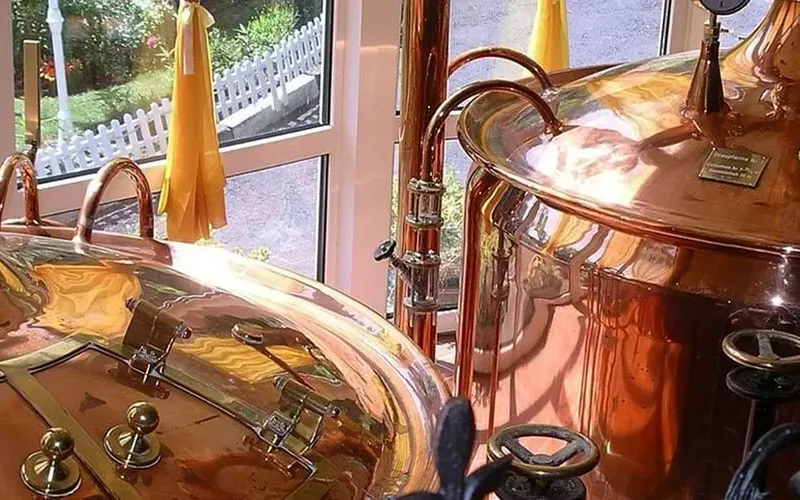
Applications
Brewhouse & Fermenter
Kettles want hot caustic, fermenters knock it cold and CO2 turns it to carbonate. How we size the brewery caustic heater around the cellar instead of the brewhouse.
+ Learn More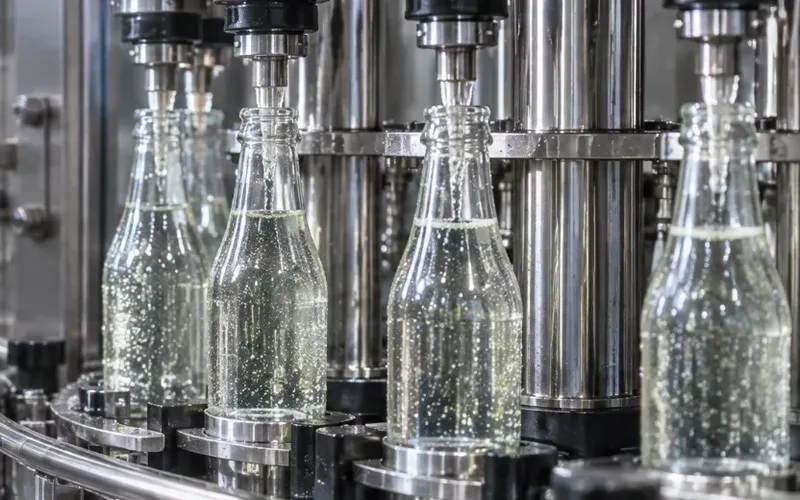
Applications
Filler & Bottling Rinse
A filler sanitize is a time-at-temperature test at the coldest valve, not at the heater. Why bottling lines get a once-through heater sized for the full rise.
+ Learn More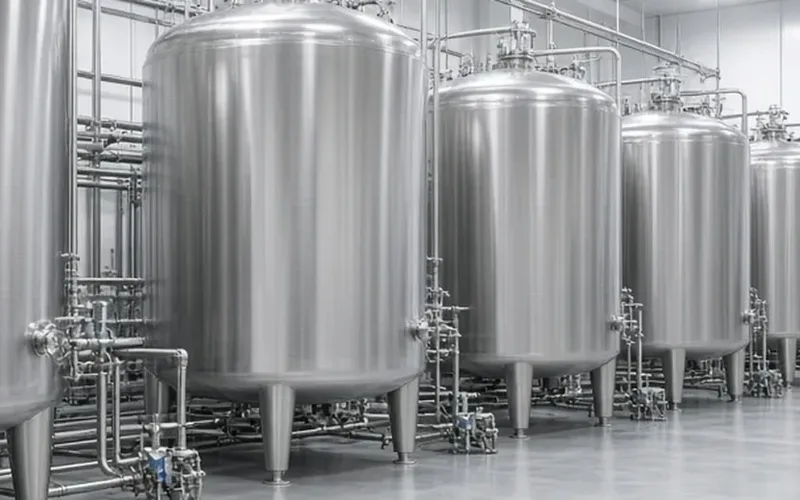
Applications
Juice & Soft Drink Lines
Juice and soft drink lines clean often, run acid most days and dump a lot of warm return. The caustic heater, the gasket for the acid, and where recovery pays.
+ Learn More
