
1-805-484-2992
Quotes - Engineering - SalesPlant by plant
The wash step sets the heater, and the plant sets the wash step
Every CIP circuit we heat does the same basic job: it brings a cleaning solution to the temperature at which the soil lets go, and it holds that temperature while the solution circulates through equipment the plant has just emptied. What changes from one plant to the next is the soil. A dairy leaves denatured protein and milkstone on hot surfaces. A brewery leaves yeast, hop resin and beerstone in cold vessels. A sauce line leaves burnt starch and fat. A lotion plant leaves wax. Each of those soils has a caustic temperature and a cycle length that works, and that pair of figures is what we size the heater against.
The heater itself never sees the product. On the solution side it sees 1–2% sodium hydroxide at 140–175°F, dilute nitric or phosphoric acid at 120–150°F, or rinse water on its way to 180°F for a sanitize hold. On the other side it sees plant steam, usually somewhere between 15 and 125 psig at the heater inlet. That is why one family of constructions covers four very different industries: a U-tube shell-and-tube with steam in the tubes and solution in the shell for the caustic and rinse duties, and a gasketed plate exchanger where two solutions trade heat in a recovery loop.
The pages under this one walk through each plant type and then down to the individual equipment circuits, because the useful question is not which heater a dairy buys but which heater the pasteurizer loop in that dairy needs at 70 gpm and 170°F. Each equipment page ends with what to send us so the quote comes back sized, not guessed.
Dairy Plants: Caustic at 160–175°F lifts protein film and the acid step takes the milkstone. The removable U-bundle earns its keep when the heater itself fouls.
Brewery & Beverage: Cooler caustic, 140–160°F, because fermenters are cold and CO2 eats alkalinity. Hot-water sanitize on fillers works the rinse heater hardest.
Food Plants: Burnt starch and rendered fat want hotter, longer caustic and bigger tanks; brine plants add chloride, the one thing 316L does not forgive.
Pharma & Personal Care: Spray-device circuits at high gpm, purified-water rinses, drainable sanitary construction and material certifications that leave with the heater.
Tank recirculation or once-through
Most plants run caustic from a CIP tank of 500–5,000 gallons and recirculate it through the heater between washes, so the heater's first job is to bring a cold tank up before the cycle starts and its second is to make up losses. A 2,000-gallon tank taken from 70 to 165°F in 20 minutes needs about 4.75 MBtu/h; give it an hour and 1.6 MBtu/h does the same work. The tank buys time, and time buys a smaller heater.
Line circuits and sanitize rinses often run once-through instead: the heater must deliver the full temperature rise at the full flow for every second the pump runs. A 3-inch line at about 5 ft/s carries 70 gpm, and taking that from 60 to 180°F is 4.2 MBtu/h with no tank to lean on. Once-through heaters are sized for the worst second; tank heaters are sized for the whole cycle.
What is the same everywhere
Whatever the plant, the solution side fouls and the steam side stays clean, so the exchanger is built with the solution in the shell, where a fouling allowance of 0.001–0.002 adds 10–20% surface and the bundle can be pulled when that allowance is used up. Steam goes inside the tubes, where condensing at 250°F on 15 psig still leaves a wide approach above any caustic target on this site.
The elastomer question is also the same everywhere: EPDM on caustic and hot water, FKM where nitric acid runs hot or often. It sits in the head gasket of a shell-and-tube and in every plate gasket of a plate pack, which is why a plate exchanger stays on recovery and modest-pressure hot water while the steam duty goes to tubes.
Related
Applications
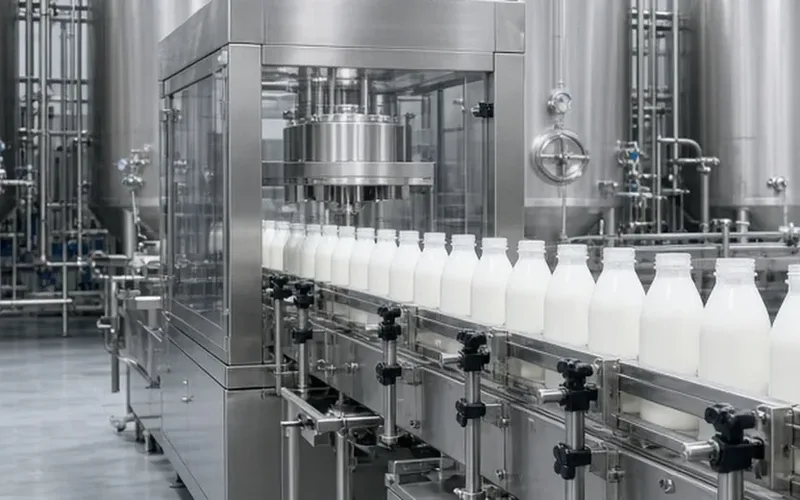
Milkstone & Protein Film
Milkstone forms on the heater before it forms anywhere else. How the film builds, what it costs in heat-up time, and how the heater is sized and built for it.
+ Learn More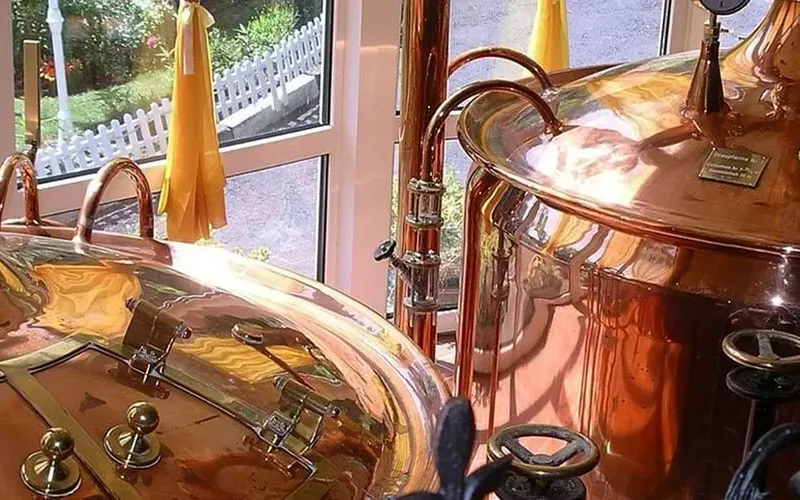
Applications
Brewhouse & Fermenter
Kettles want hot caustic, fermenters knock it cold and CO2 turns it to carbonate. How we size the brewery caustic heater around the cellar instead of the brewhouse.
+ Learn More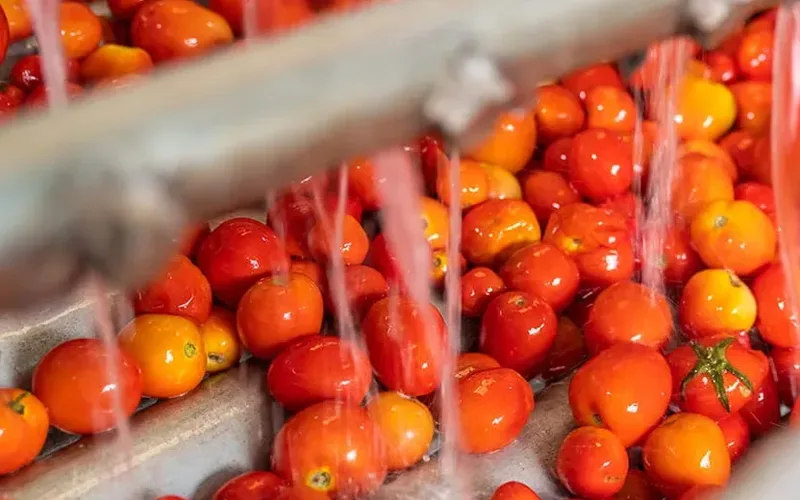
Applications
Kettle & Sauce Lines
Burnt-on starch and fat need caustic at the top of the range for most of an hour. Sizing a kettle-line tank heater that holds 175°F while the soil fights back.
+ Learn More
