
1-805-484-2992
Quotes - Engineering - SalesTwo constructions cover every CIP heating duty
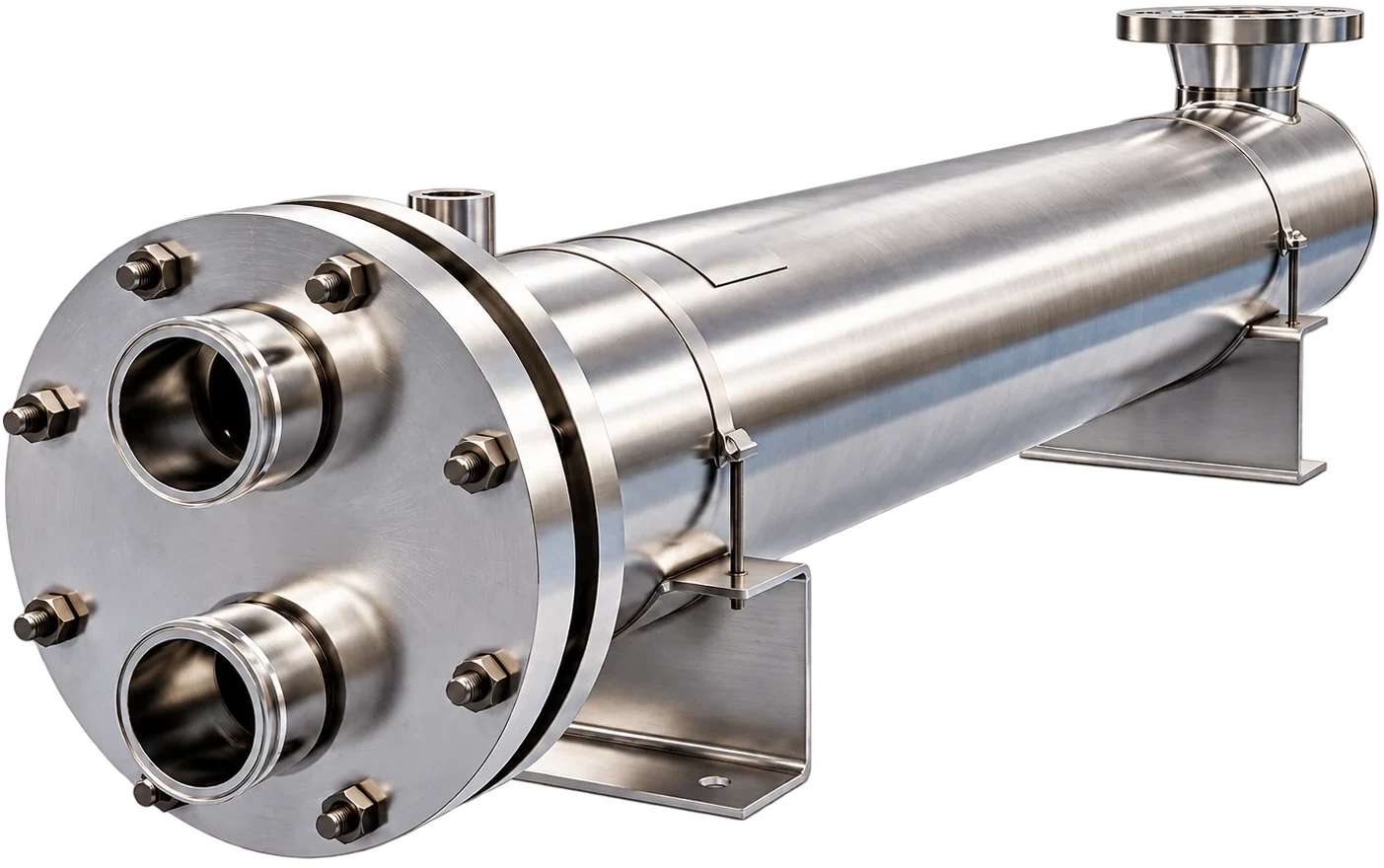
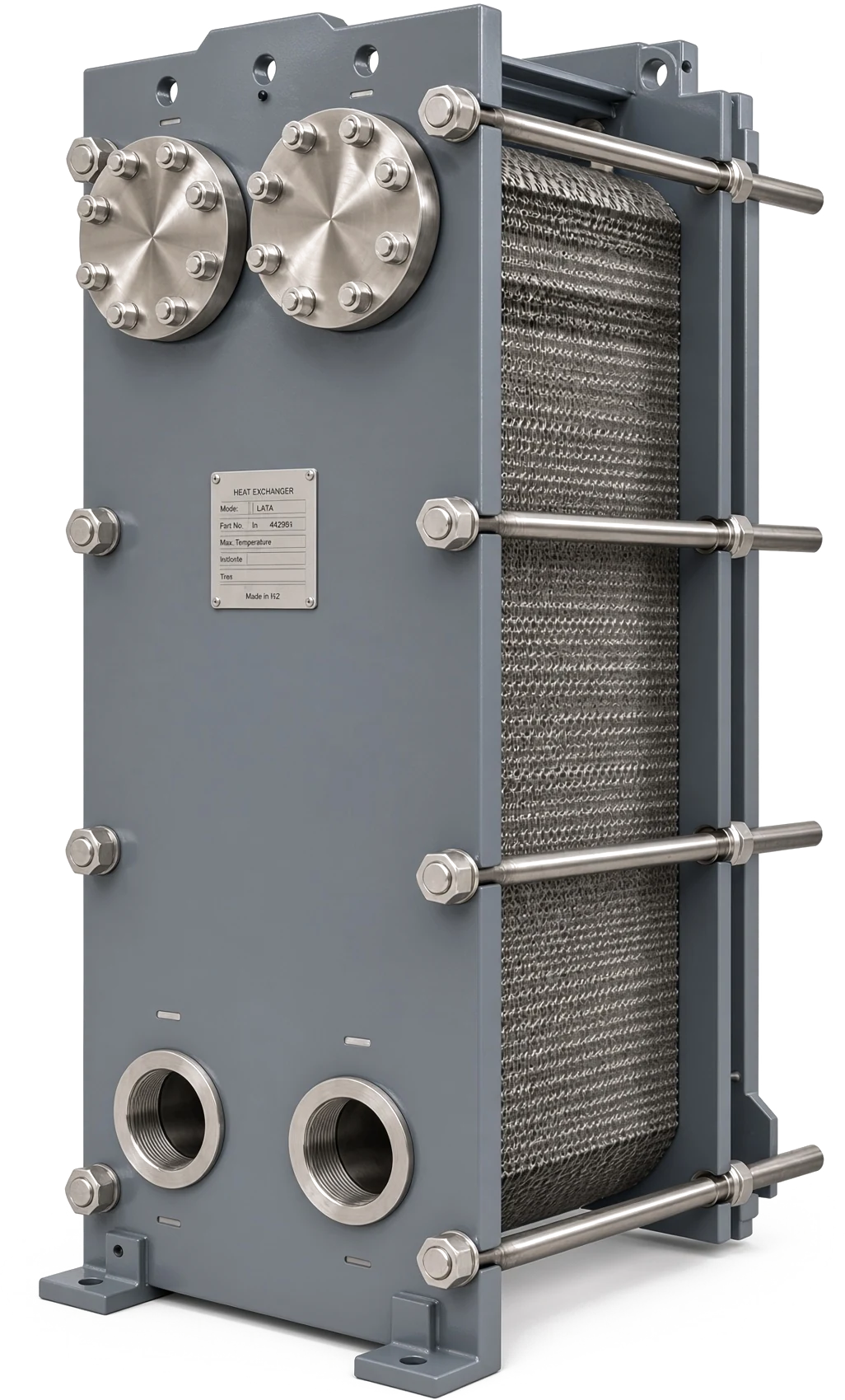
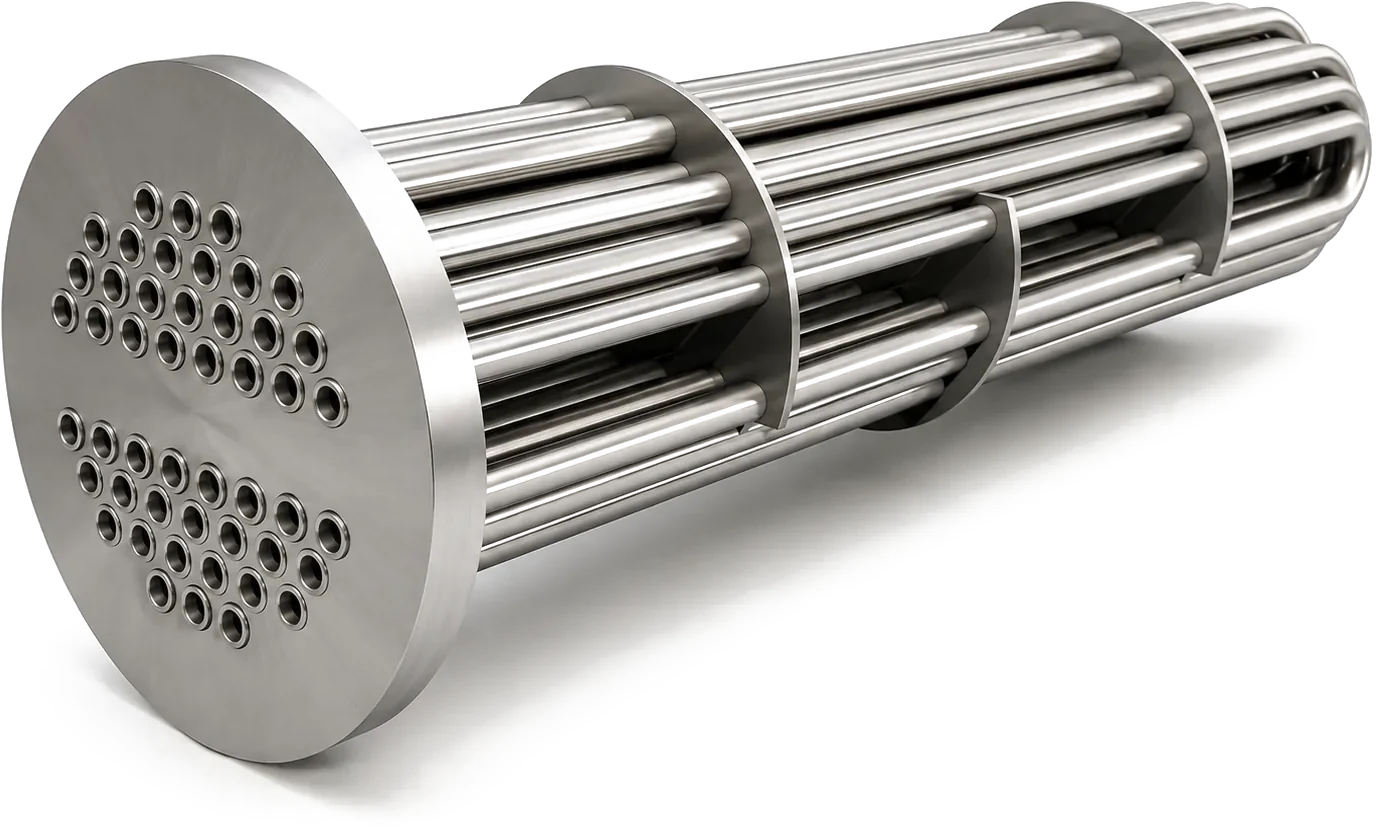
A CIP system heats three kinds of liquid: the caustic and acid solutions, the rinse and sanitize water, and the makeup or pre-rinse that recovery warms. Across all of them we build two constructions. The shell-and-tube with steam inside a U-tube bundle takes every duty where steam is the heat source. The gasketed plate pack takes every duty where one liquid heats another at a small temperature difference and modest pressure.
The split is not a matter of taste. Steam condenses at 250°F even at 15 psig, and the approach to a 175°F caustic target is 75°F; a bundle of 3/4-inch tubes handles that with the thermal cycling of a steam valve opening and closing every wash. A plate pack lives on close approaches, 5–10°F, between two liquids, and its gaskets do not like steam-side pressure and temperature swings.
The third box below is the swap: a new U-tube bundle to an existing shell, or a new plate pack to an existing frame. Both are new equipment built to the old unit's dimensions, and both are the fastest way back to a heater that reaches temperature when the shell or the frame is still sound.
The difference between the heating medium and the heated liquid at the point where they are closest. With 15 psig steam at 250°F heating caustic to 175°F it is 75°F; a plate pack warming makeup water from a 155°F caustic return runs 5–10°F. A large approach means a compact bundle; a small one means plates.
When the duty says shell-and-tube
Any duty with steam on one side: the caustic tank heater, the inline caustic heater, the acid heater and the rinse and sanitize water heater. Steam inside the tubes means the fouling solution is on the shell side where a removable bundle carries it, and the U-bend absorbs the growth of 250–353°F tubes inside a shell that stays near solution temperature.
The approach is the other reason. 15 psig steam heating caustic to 175°F has a 75°F approach, and that margin is what lets a modest bundle carry 3 MBtu/h and still leave the valve with authority. Carbon steel appears only on the steam head; everything the solution touches is 316L.
When the duty says plate
Any duty where liquid heats liquid: the caustic return at 155°F against makeup water, the final rinse against the next pre-rinse, and rinse water heated from a plant hot-water loop. These run at approaches of 5–10°F, and a shell-and-tube asked for that grows long and expensive while a plate pack adds a few plates.
The gasket is the design decision. EPDM covers caustic and hot water to about 300°F; the acid step, nitric in particular, moves the pack to FKM. We do not put a plate on the main steam-to-caustic duty, and the plate section says why in detail.
Before you choose plate or tube
It can be built, and we do not recommend it for CIP. Steam at 250–353°F on one side of a gasket rated to about 300°F, cycling with a control valve every wash, is what shortens gasket life. The U-tube shell-and-tube has no elastomer in the steam path and pulls apart for cleaning. Plate is our answer when the heat source is a liquid, where nothing else comes close.
Because the solution side fouls and the steam side does not. Milkstone, protein film and carbonate land on the outside of a bundle that slides out of the shell, and the steam inside the tubes leaves only condensate. The U-bend lets the tubes grow freely into the shell space whichever fluid is inside them, and steam inside makes that growth the largest. Straight tubes with removable heads reverse this when the plant wants to brush.
Yes. A replacement bundle is a new U-tube bundle built to the shell drawing or to the measured old bundle, and a replacement plate pack is new plates and new gaskets cut to the frame's pattern. We do not take in a customer's bundle or pack. The point of a swap is that the shell or frame, the nozzles and the piping stay, so the outage is a day rather then a repipe.
For a given duty, the one that fits it. A plate pack on a 10°F liquid-to-liquid approach costs a fraction of the shell-and-tube that would do the same work; a U-tube bundle on 15 psig steam costs less than a plate pack rated and gasketed for steam, and outlasts it. Pick by the heat source and the approach, and the price follows.
Related
Heat Exchangers
U-Tube Removable Bundle
The construction we quote first for steam-to-caustic: a U-bundle that grows and shrinks on its own and slides out of the shell when the solution side needs cleaning.
+ Learn More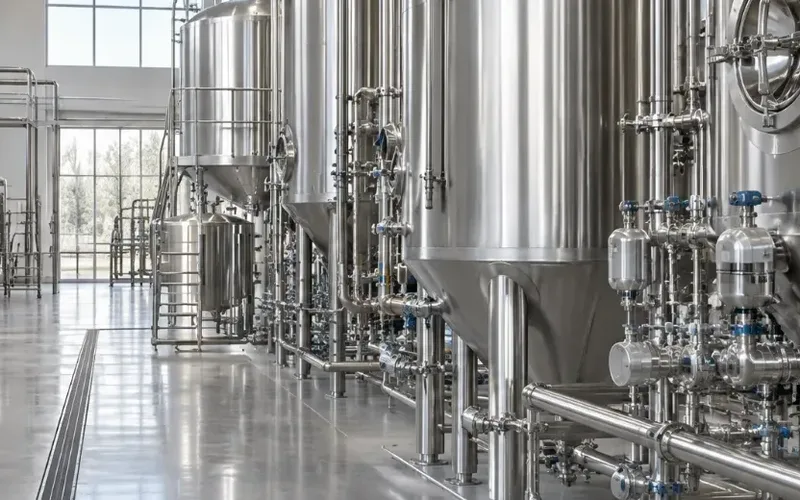
Heat Exchangers
Plate Pack & Frame
Thin 316L plates, a pressed gasket on each, and a frame that squeezes them into a counterflow exchanger: the construction for recovery and warm rinse water.
+ Learn More
Sizing & Selection
Bundle or Plate-Pack Swap
A new bundle to the old dimensions keeps the shell, piping and steam valve. When that is the sound buy, when the shell or frame should go too, and what to measure.
+ Learn More