
1-805-484-2992
Quotes - Engineering - SalesBrewery circuits
One plant, two cleaning problems, and a heater sized for the wrong one is sized wrong
The brewhouse is the hot side. A kettle boils wort for an hour or more, and what stays behind is a varnish of hop resin, coagulated protein and a hard calcium oxalate scale called beerstone, baked on by direct heat at the kettle wall or on the external calandria tubes. The whirlpool and the wort line to the heat exchanger pick up the same trub and protein. This soil wants caustic at 2–3%, run hot, 160–175°F, with a regular acid step to take the oxalate out, and it does not matter much that the kettle was still warm when the wash began.
The cellar is the cold side. Fermenters and bright tanks hold beer at 32–55°F, their walls are cold, and their headspace is full of carbon dioxide. Caustic sprayed into a CO2 atmosphere absorbs the gas, converts to sodium carbonate and loses strength within minutes, and the cold steel strips 20–40°F out of the solution on the first pass. Cellar circuits therefore run cooler, 140–160°F, at 1–2%, after a CO2 purge, with the heater working hard just to hold temperature.
Most breweries run both circuits off one CIP set, and the steam heater on it has to be chosen for the harder of the two cases. This page is about which case that is and what the heater looks like.
The cold tank, not the hot kettle, usually sets the brewery heater
A 200-barrel fermenter at 35°F takes more heat out of 160°F caustic in its first pass than a kettle wash needs in total. Recovering a 30°F first-pass drop at 150 gpm is about 2.25 MBtu/h, and the heater sized for the kettle hold will not do it.
The two brewery circuits
Brewhouse circuit: pre-rinse warm, caustic at 2–3% and 160–175°F for 30–45 minutes, intermediate rinse, acid at 0.5–1.5% (phosphoric is common in breweries, nitric where beerstone is heavy) at 120–140°F once or twice a week, final rinse. Flow follows the spray devices in the kettle and whirlpool, 50–100 gpm each, so the circuit is 100–200 gpm. Return temperature is good because the vessels are still warm from the brew.
Cellar circuit: CO2 purge first, then a pre-rinse, then caustic at 1–2% and 140–160°F for 20–30 minutes through sprays sized for the tank diameter, often 100–150 gpm on a 200-barrel vessel. Acid after every caustic cycle on many cellar programs, because the acid also sanitizes and leaves the tank at a pH the beer can tolerate. The first-pass return can be 30°F below supply from a 35°F tank, and the heater must put that back while the wash runs.
The heater we recommend
A steam-to-caustic U-tube in 316L with steam inside the tubes and caustic on the shell, 150 psig at 250°F on the solution side, sized for the cellar recovery case: 150 gpm lifted 30°F is about 2.25 MBtu/h, which with 15 psig steam at the heater condenses roughly 2,400 lb/h. The same unit holds the brewhouse caustic at 175°F with the valve turned down. Brewery steam is often 15 psig from a small boiler, and at 250°F saturation that still gives a 75°F approach on the hottest kettle target.
What to watch is carbonate. Caustic that has absorbed CO2 carries sodium carbonate, which stays dissolved on its own but drops calcium carbonate from hard makeup water onto the hottest surface in the circuit, which is the outside of the heater tubes. We size with a fouling allowance of 0.001–0.002 and keep the bundle removable so the scale can be seen and the bundle pulled; a brewery that purges CO2 properly sees very little of it. Phosphoric acid in the cellar step is easy on the EPDM head gasket; choose FKM only where nitric is used hot.
Send us the brewery circuit this way
Tell us about the coldest tank on the CIP set as well as the hottest vessel; the cold one usually sizes the heater.
- Brewhouse vessels and cellar tanks washed from the same CIP set
- Largest cellar tank in barrels and its holding temperture
- Spray flow in gpm per vessel and the circuit total
- Caustic strength on each side, 2–3% brewhouse and 1–2% cellar
- Acid used, phosphoric or nitric, and how often
- Steam pressure at the heater, often 15 psig in a brewery
- CIP tank volume and the time allowed to heat it
Call and talk it through with an engineer: 1-805-484-2992
Brewery circuit questions
No, that is CO2. Caustic sprayed into a tank that was not purged absorbs carbon dioxide and converts to sodium carbonate, which titrates as lost strength. The fix is purging the headspace before the wash, not more heat. What the heater does see is calcium carbonate from the water hardness, which scales on the hot tubes, so a brewery with a weak-caustic problem usually has a fouling problem a few months later.
Yes, and many do. Fifteen psig condenses at 250°F, which is 75°F above a 175°F kettle wash and 90°F above a 160°F cellar wash, both comfortable approaches for a shell-and-tube. The bundle is longer than it would be on 50 psig, so give us the pressure actually at the heater inlet during a wash rather than the boiler rating.
Not on steam for the main caustic duty. Gasketed plates handle solution-to-solution recovery well, for instance warming makeup water against the hot return, and EPDM is fine on caustic. Putting steam on a plate pack means the gaskets take 250°F and a pressure swing every cycle, and cellar programs cycle several times a day. A U-tube with one head gasket is the longer-lived answer.
Because the brewhouse vessels are warm when the wash starts and return solution near supply temperature, so the heater only covers tank losses. A 200-barrel fermenter at 35°F sends the first pass back 30°F cooler, and at 150 gpm the heater must supply about 2.25 MBtu/h to recover. Holding 175°F in the kettle is a smaller duty than recovering 160°F in the cellar.
Related

Applications
Wine Fermentation Tank CIP
Wineries clean more with hot water than with chemicals. The heater on a fermentation tank circuit is sized for rinse and sanitize gallons; caustic is lighter duty.
+ Learn More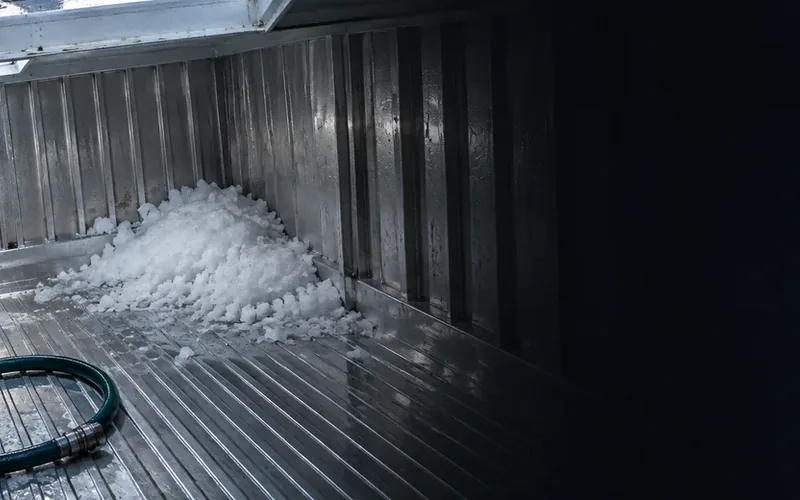
Applications
Fermentation Tank Interior CIP
Inside a fermenter the soil is a yeast and protein ring at the fill line on a wall that may still be jacket-cooled. The heater's job is keeping caustic warm there.
+ Learn More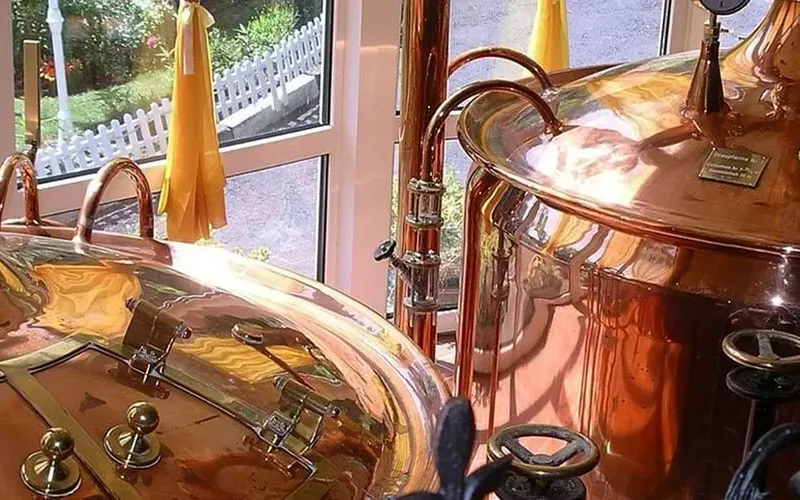
Applications
Brewhouse & Fermenter
Kettles want hot caustic, fermenters knock it cold and CO2 turns it to carbonate. How we size the brewery caustic heater around the cellar instead of the brewhouse.
+ Learn More
