
1-805-484-2992
Quotes - Engineering - SalesSoft drinks
Heating caustic for a beverage line that breathes CO2
A soft drink plant cleans two kinds of soil with one CIP set. In the syrup room the residue is concentrated sugar, flavor emulsion and color, a sticky film that comes off readily once it is warm. On the carbonated side, through the carbonator, the buffer tank and the filler bowl, the soil is lighter but the circuit carries dissolved carbon dioxide back to the tank. Caustic absorbs CO2 and converts to carbonate, so a 1.5% charge can test at 1% after a few circuits, and the plant either doses more or washes weaker than it thinks. Neither fault is the heater's, but both show up as a line that still smells of syrup.
Beverage circuits are long and large. A 4-inch supply header to the filler runs about 120 gpm at line velocity, and plants with a continuous blender feed the line once-through rather than from a hot tank. Taking 120 gpm from 90°F to 150°F inline is 3.6 MBtu/h, a sizeable steam duty that runs only for the 20–30 minutes of the caustic step and then idles.
That start-stop pattern, more than the chemistry, is what shapes the heater for a drink line.
Inline heating of 120 gpm from 90°F to 150°F is 3.6 MBtu/h
The duty appears in full the moment the caustic step starts and vanishes at the rinse. A U-tube bundle takes that cycling; the steam valve, trap and condensate return have to be sized for 3.6 MBtu/h too, or the heater waits on them.
The circuit: sugar film, carbonate drift, 150°F
Soft drink CIP runs cooler than dairy. Sugar and emulsion film release at 140–150°F with 1–1.5% sodium hydroxide, and there is no protein to denature, so plants rarely go above 155°F on the caustic step. The acid step is light, phosphoric at 0.5–1% and about 120°F, and it runs weekly rather than daily unless the water is hard. Carbonated circuits are rinsed longer because residual CO2 in the filler bowl foams the caustic and the foam carries soil back out of the return.
The weak point in the chemistry is the carbonate. Caustic that has absorbed CO2 is still alkaline but far less effective on sugar film, and it precipitates calcium carbonate on hot surfaces. The hottest surface in the loop is the shell side of the heater, so a drink line heater scales from the inside even though the product never touches it.
The heater: a 316L U-tube for inline duty, bundle out for descaling
For a once-through beverage line we recommend a U-tube shell-and-tube with steam inside the tubes and the caustic in a 316L shell. The U-bundle is free to expand on each start, and it pulls so the carbonate that forms on the shell side can be cleared in the plant's own acid step with the bundle in a tank, or brushed off between seasons. On 100 psig steam the tubes sit at 338°F, which gives a large approach to 150°F caustic and keeps the surface compact for 3.6 MBtu/h.
Give the heater the flow it was sized for. Beverage lines often have a small CIP pump and a large production pump on the same header, and a heater sized for 120 gpm that sees 40 gpm from the CIP pump will overheat the solution and bake carbonate on faster. Tell us which pump drives the wash and we size to it.
What to send for a drink line heater
Beverage plants vary more in flow than in chemistry, so flow and the start condition decide the heater. These items let us size the bundle and the steam valve together.
- Header size and CIP supply flow in gpm, and which pump drives it
- Solution temperature leaving the blender or tank and the target at the filler
- Caustic concentration as charged and as it tests at the end of a wash
- Steam pressure at the heater location
- Once-through or tank recirculation for each circuit
- Connection type, and whether the filler circuit is treated as sanitary
Call and talk it through with an engineer: 1-805-484-2992
Drink line questions
The carbonated circuit returns dissolved CO2 to the tank, and sodium hydroxide reacts with it to form sodium carbonate, which is much weaker on sugar film. The syrup room has no gas in the line. Plants that measure conductivity see the number hold while the free caustic falls, because carbonate still conducts. A longer pre-rinse that vents the filler bowl before caustic is the usual fix.
For hot-water rinse at modest pressure a plate pack is a fine choice, and we supply it. For the caustic step on steam it is not what we recommend: steam-side pressure and temperature cycling at every start shortens gasket life, and a drink line starts and stops the duty several times a shift. A U-tube with steam in the tubes takes that cycling without gaskets in the steam path.
At 100 psig, roughly 4,000 lb/h while the line comes up, dropping as the return warms. The boiler sees a sharp demand step. If other users are sensitive to header pressure, a slow-opening steam valve or a short heat-up ramp on the CIP controller smooths it. Tell us if the plant wants a limit on steam draw and we size for it.
Usually not for still and carbonated soft drinks, where the CIP loop is utility equipment in mill-finish 316L with flanged or tri-clamp ends to suit the piping. Where the same filler runs juice or dairy-based drinks under an aseptic program, the loop is treated as sanitary and the heater follows: drainable shell, tri-clamp to 4 inches, and 32 Ra on the solution side.
Related
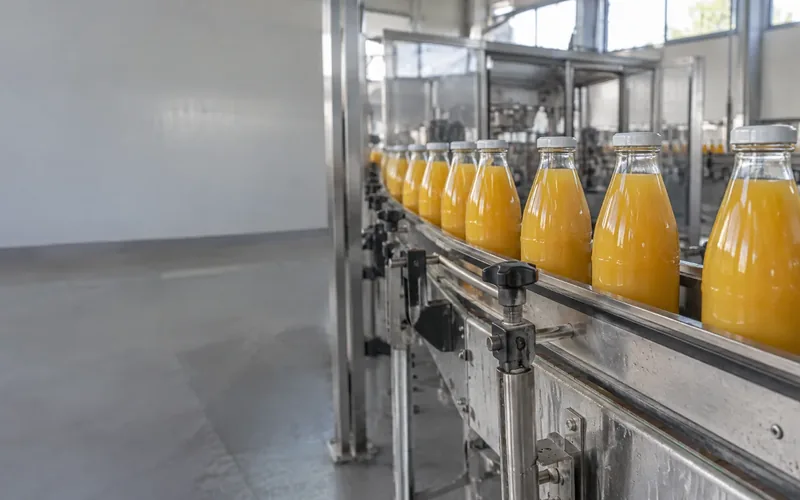
Applications
Juice Processing CIP
Pectin gel insulates the heater as surely as it coats the evaporator. Sizing a juice plant caustic heater with a strainer ahead of it and a bundle that pulls.
+ Learn More
Applications
Coffee Processing CIP
Coffee oil polymerizes in to a varnish that only hot, strong caustic will move. Why a coffee plant heater is often a brushable straight-tube unit for a 175°F tank.
+ Learn More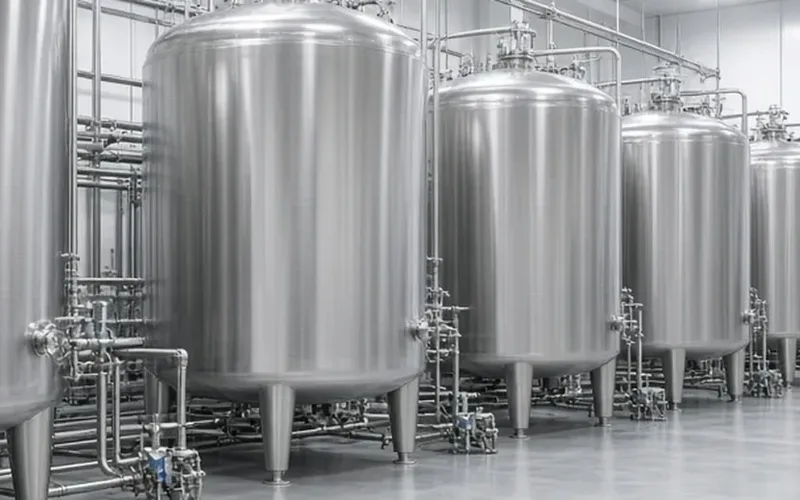
Applications
Juice & Soft Drink Lines
Juice and soft drink lines clean often, run acid most days and dump a lot of warm return. The caustic heater, the gasket for the acid, and where recovery pays.
+ Learn More
