
1-805-484-2992
Quotes - Engineering - SalesMill finish is the surface the cleaning solution was made for
Mill finish is the surface 316L tube and plate have when they leave the mill: bright, smooth to the hand, typically 40–60 Ra, with the light directional pattern of rolling or drawing. On a CIP heater it is the surface that 1–2% caustic at 165°F and dilute acid at 120–150°F pass across on every cycle, which is to say it is cleaned by the plant's own chemistry more often than any other surface in the building. For a utility loop that is the whole argument.
What mill finish gives up, and keeps
What polishing to 32 Ra buys is inspectability and, in a product-contact vessel, a surface that releases soil at a lower velocity and can be verified with a profilometer. Neither applies to a heater that carries cleaning chemical and sits outside the sanitary boundary. The soils that form on a caustic heater, milkstone, protein film and carbonate scale, deposit by temperature on the hottest tubes and form on polished and mill surfaces at much the same rate; the bundle pulls for them either way.
The saving is real and it compounds. Polishing a shell interior, two heads and a set of nozzles is hand work, and polishing a bundle means buying polished tube at a premium and welding it with extra care. On a mill-finish unit that money goes nowhere, or goes into surface area, which is the one thing a CIP heater can never have too much of. The pages on sanitary and 3-A build describe when the finish is required; this page is about the far larger number of loops where it is not.
Mill finish compared with a 32 Ra polish
- Same 316L alloy, same resistance to caustic and to dilute nitric or phosphoric acid
- Same ratings: 150 psig at 250°F on the shell side, 150 psig at 400°F on the steam side
- Same U-tube bundle, pulled for milkstone on the same schedule whatever the finish
- No finish survey, no profilometer readings, no polished-tube premium in the price
- Flanged or NPT connections that match utility pipe without adapters
- Not inspectable to a sanitary standard, and cannot be polished after the shell is welded
typical mill finish on 316LMill-finish stainless from the tube and plate mill runs about 40–60 Ra, smooth enough that caustic and acid clean it on every cycle without a polish.
What to say on the quote for a utility unit
A utility heater needs fewer decisions than a sanitary one, but the ones it needs should be written down, because a shop that is not told will build to its own habit.
- State mill finish on the solution side so no polishing is priced in
- Connection standard and size: 150-pound flanges, NPT on 2-inch and smaller, or a mix
- Whether the steam head may be carbon steel or must match the shell in 316L
- Pickling and passivation after welding, which we do as standard and will confirm
- Insulation clips or a jacket if the heater sits where someone can touch the shell at 165°F
Call and talk it through with an engineer: 1-805-484-2992
Where mill finish does its work, and where it stops
A caustic tank heater in a cheese plant is the usual case. The loop runs 3-inch flanged pipe from a 3,000-gallon utility tank to the vats and back, with the heater on saddles beside the tank. The shell interior, heads and nozzles are mill-finish 316L; the bundle is drawn 3/4-inch 316L tube as the mill supplies it. Caustic at 1–2% and 165°F crosses that surface for 30 minutes a cycle, several cycles a day. There is no cleaner surface in the plant.
The soil that does form is milkstone, calcium phosphate bound in denatured whey protein, and it forms on the hottest tubes near the steam inlet when the water is hard and the caustic has run above 160°F. It does the same on a polished bundle, because deposition is driven by temperature and supersaturation, not by surface roughness at this scale. The plant pulls the bundle twice a year and runs an acid circulation on it; the mill surface brushes clean.
What the plant saved was the polishing of some 80 square feet of shell, head and nozzle surface and the premium on roughly 400 feet of polished tube, together with the finish readings and the documentation. That saving went into a shell one size larger, which gave the heater a fouling allowance of 0.001–0.002 with room to spare and a longer interval between pulls. On a utility loop, surface beats polish every time.
Where mill finish stops is at the sanitary boundary. If the plant's zoning map, its customer audit or its inspector places the CIP return inside the product-contact zone, the heater on it must be inspectable, and inspectable means a specified finish, drainability and documented gaskets. A mill-finish heater cannot be polished after the shell is welded and the bundle is in; it is replaced. That is the one decision to get right before the order.
Between the two there is a hybrid some plants choose: mill finish on the shell and bundle, tri-clamp nozzles to match stocked fittings, and a drain nozzle at the low point. It is still a utility heater and we say so on the drawing. It saves adapters and lets the loop be flushed to empty, and it costs little. What it does not do is make the unit sanitary, and no auditor will read it as such.
On a utility loop, surface area beats surface finish.
The money a polish would cost is better spent on a larger shell and a longer interval between pulls.
Request a QuoteMill finish questions
Not in CIP service. Corrosion resistance comes from the alloy's passive layer, which forms on a mill surface as readily as on a polished one once the unit is pickled and passivated after welding, and the caustic and dilute acid of a CIP loop do not attack 316L at either finish. Chlorides from a brine plant or a chlorinated sanitizer are a risk to both finishes equally.
The marks on mill-finish tube are a few microns deep, far smaller than the milkstone crystals and protein films that make up CIP fouling, and those deposits grow from the hottest tube surfaces outward whether or not there is a pattern beneath them. In practice a mill-finish bundle and a polished one pulled from the same caustic loop after a season carry the same scale in the same places.
It is included. Every 316L unit we build is pickled to remove weld heat tint and passivated to restore the chromium oxide layer before it ships, utility or sanitary, because a welded surface left as-welded is where corrosion starts regardless of finish. What the utility unit skips is the finish survey and the profilometer readings, not the chemical treatment.
Yes, and many utility plants should. A low nozzle on the shell and a slight slope in the installation lets the caustic drain back to the tank when the pump stops, which saves chemical and leaves nothing standing in the shell overnight. Drainability is a layout choice; finish is a surface choice, and the two are independant. Ask for the drain nozzle on the quote.
Related
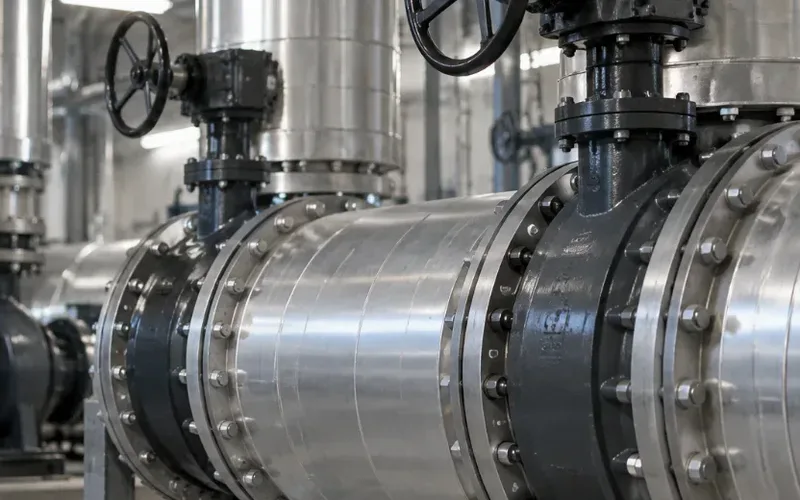
Sizing & Selection
Industrial
The industrial build: ASME shell, mill-finish 316L solution side, carbon steel steam head, flanged or NPT ends. What it saves and what it gives up.
+ Learn More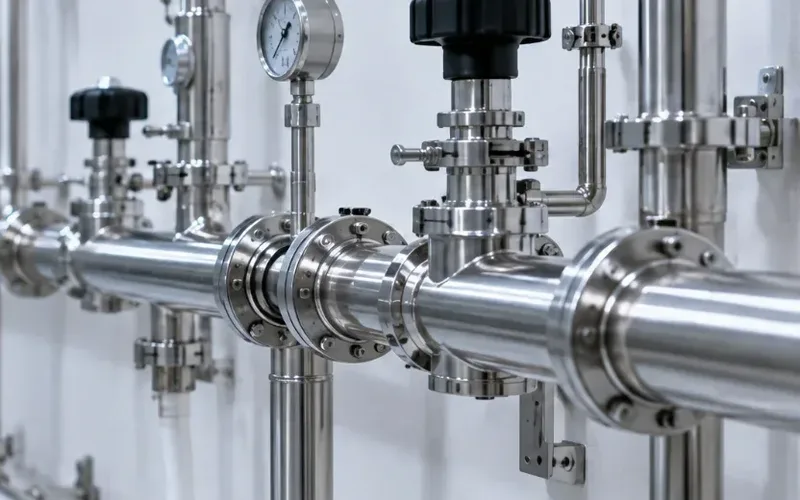
Sizing & Selection
Sanitary
Tri-clamp ends to 4 inches, a shell that drains without tilting, 32 Ra on the solution side and crevice-free gaskets. For loops inside the sanitary zone.
+ Learn More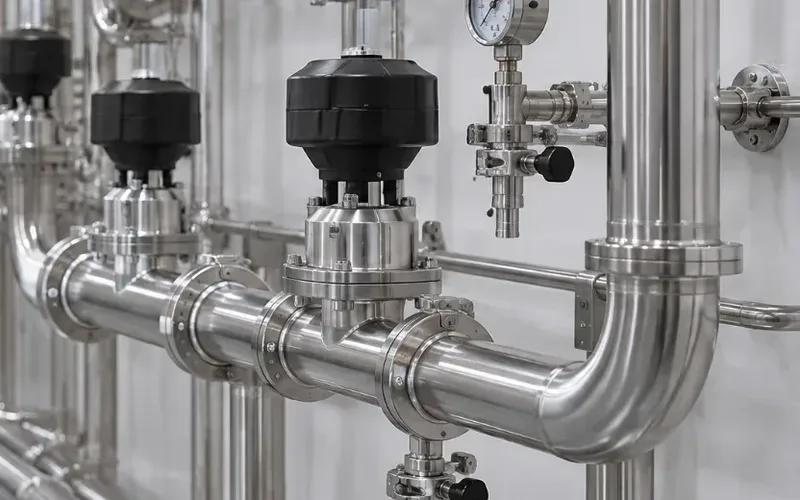
Sizing & Selection
3-A Sanitary
The 3-A symbol on a CIP heater means a third party reviewed the design against the sanitary standard. Who needs it on the heater and what it adds to the build.
+ Learn More
