
1-805-484-2992
Quotes - Engineering - SalesTwo fluids, two ratings, and why neither is set by the pump
A steam-to-solution CIP heater has two pressure boundaries and they are rated separately. The shell side carries the caustic, acid or rinse water and is designed for 150 psig at 250°F. The tube side carries the steam and is designed for 150 psig at 400°F. Neither figure comes from the duty; a CIP pump seldom delivers more than 60 psig and plant steam arrives at 15–125 psig. The ratings come from the code the shell is built to and from the margin that lets one standard design serve any CIP loop.
The standard figures
The temperature halves of those ratings are chosen the same way. Caustic never runs above 175°F and the sanitize water stops at 190°F, so 250°F on the shell side is comfortable. Steam at 125 psig condenses at 353°F, and a superheated header can run hotter, so 400°F on the tube side covers it. The nameplate carries both pairs, and an inspector compares them with the relief valve settings on each side; the relief valves, not the operating pressures, are what the ratings have to exceed.
Connections follow the service rather than the rating. The solution side takes tri-clamp to 4 inches on a sanitary unit, or 150-pound flanges or NPT on a utility one; 6-inch and larger always go flanged. The steam inlet and condensate outlet are flanged or threaded whatever the sanitary intent, sized for the steam velocity at the lowest pressure the plant will run and for the condensate load at the start of a cold heat-up, which is when the trap works hardest.
Ratings and connections on a standard CIP heater
- Shell side, solution: 150 psig at 250°F, ASME Section VIII, U-stamped
- Tube side, steam: 150 psig at 400°F, covering saturated steam to 125 psig and modest superheat
- Hydrotest at the code multiple of design pressure on each side, witnessed
- Solution nozzles: tri-clamp to 4 inches, flanged above; or 150-pound flanges and NPT on utility units
- Steam inlet sized for velocity at the lowest supply pressure, typically 2 to 4 inches
- Condensate outlet sized for the cold-start load, with a trap and a check downstream
- Relief protection on each side set at or below the stamped pressure for that side
tube-side design temperatureSteam at 125 psig condenses at 353°F, so a 400°F tube-side rating covers every pressure a plant boiler normally supplies, superheat included.
When the standard ratings are not enough
The standard pair serves nearly every CIP loop. A few situations push one side past it, and each is worth stating on the quote rather than discovering at the hydrotest.
- Steam supplied above 150 psig without a reducing station: the tube side is rated to the header
- A CIP pump with a shutoff head over 150 psig on a long silo circuit: shell side rated up
- A hot-oil or high-pressure hot-water utility in place of steam: tube side re-rated for the fluid
- Vacuum on the shell side when a tank drains through the heater: full-vacuum shell rating
- A jurisdiction requiring registration beyond the ASME stamp: stated on the order
Call and talk it through with an engineer: 1-805-484-2992
How the ratings and connections play out on a real loop
Consider the solution side first. A 120 gpm caustic circuit at 165°F is pushed by a centrifugal pump with a shutoff head of perhaps 80 feet, about 35 psig. The heater's shell is rated 150 psig, more than four times that, which looks wasteful until the relief valve is considered: it is set at or below 150 psig, and it protects the shell from the one event the pump cannot cause, a steam leak into a blocked-in shell. The margin is there for the fault, not the duty.
The tube side is governed by the steam. Where the plant header runs 100 psig and a control valve at the heater brings it to 40 psig at full load, the tube side still sees 100 psig when the valve fails open, so the rating must cover the header and so must the relief valve. The 400°F rating covers the 338°F saturation at 100 psig with room for the superheat that a long outdoor steam line can carry in winter.
Connections on the solution side are decided by the loop's own standard. A sanitary dairy loop in 3-inch tri-clamp pipe gets 3-inch tri-clamp nozzles on the heater; a utility brewery loop in flanged pipe gets 150-pound flanges. Where a 6-inch silo circuit at 200 gpm or more arrives, the nozzle is flanged even on a sanitary unit, because a 6-inch clamp cannot carry the pipe loads. The nozzle size matches the line; the shell may be much larger.
The steam connections are sized for two different moments. The inlet is sized for steam velocity at the lowest pressure the plant can hold at the heater, because low-pressure steam is bulky: 15 psig steam needs a nozzle roughly three times the area that 100 psig steam needs for the same heat. The condensate outlet is sized for the start of a cold heat-up, when 4.75 MBtu/h into a 2,000-gallon tank is condensing roughly 5,000 lb/h and the trap must pass it all.
Finally the nameplate. It carries the design pressure and temperature of each side, the hydrotest pressure, the year, the shell diameter and the serial number, and it is what a replacement is sized from fifteen years later. Keep a photograph of it with the installation drawing. A heater whose nameplate is legible is a heater that can be matched; one whose plate has corroded is a measuring job.
The ratings protect against the fault, not the duty; the connections match the loop.
State the steam header pressure and the pump shutoff head, and both ratings are settled.
Request a QuoteRating and connection questions
Because the rating has to exceed the relief valve setting, and the relief valve has to protect against events the pump does not cause: a tube leak admitting 100 psig steam into a shell blocked in by closed valves, or thermal expansion of trapped caustic. 150 psig is the code-standard class that covers those, uses standard flanges and costs no more than a lower figure would.
It can, and it saves nothing, because a 150 psig at 400°F tube side uses the same 316L tube and the same tubesheet thickness that a lower rating would need for the thermal loads. Keeping the standard rating also means a future boiler upgrade or a change of steam source does not strand the heater. We rate the tube side to the plant header as a matter of course.
A tri-clamp joint in 2 to 4 inches is rated well above the 60 psig a CIP pump delivers, so on the solution side it does not. Above 4 inches the clamp's rating and its ability to carry pipe loads both fall off, which is why 6-inch nozzles are flanged. The steam side never uses clamps; a flange or a thread holds the steam.
Larger than the condensate outlet and often larger than the plant expects, because the sizing is at the lowest steam pressure the heater will see. A 3 MBtu/h duty on 15 psig steam moves about 3,100 lb/h of low-density vapor and wants a 4-inch or 6-inch inlet; the same duty on 100 psig steam fits a 2-inch or 3-inch. Tell us the lowest pressure, and the nozzle follows.
Related
Sizing & Selection
Industrial
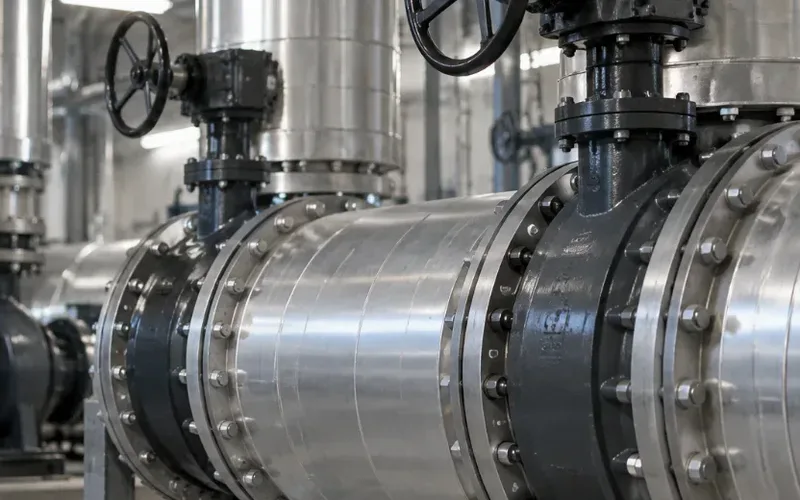
The industrial build: ASME shell, mill-finish 316L solution side, carbon steel steam head, flanged or NPT ends. What it saves and what it gives up.
+ Learn More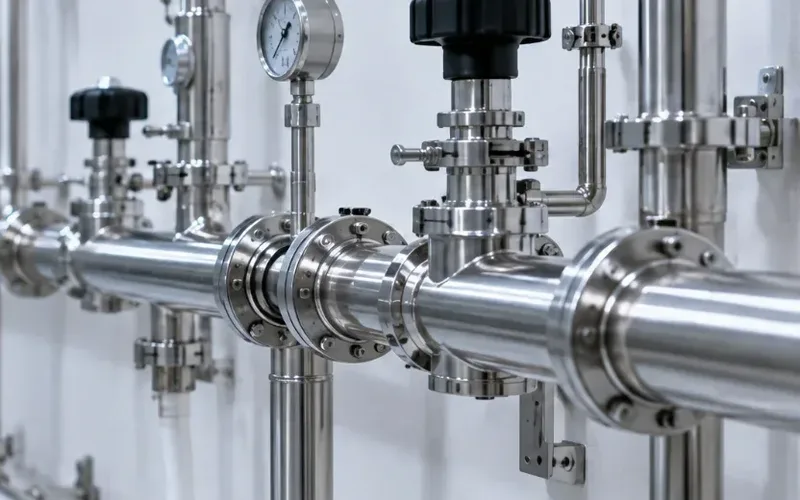
Sizing & Selection
Sanitary
Tri-clamp ends to 4 inches, a shell that drains without tilting, 32 Ra on the solution side and crevice-free gaskets. For loops inside the sanitary zone.
+ Learn More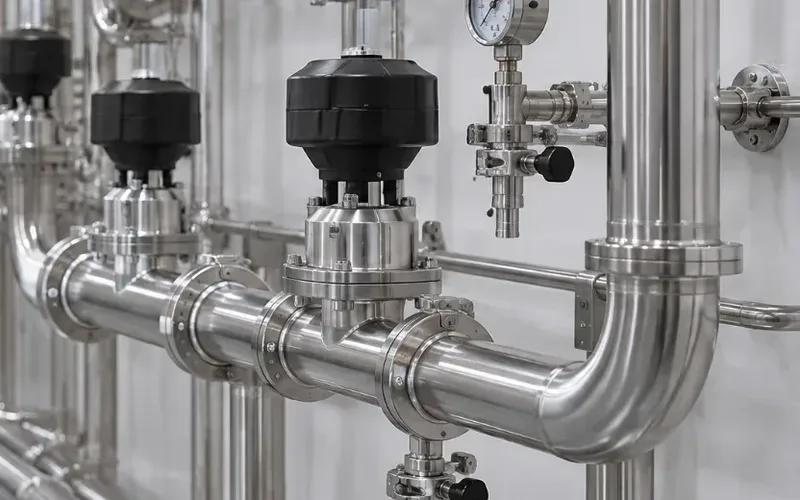
Sizing & Selection
3-A Sanitary
The 3-A symbol on a CIP heater means a third party reviewed the design against the sanitary standard. Who needs it on the heater and what it adds to the build.
+ Learn More
