
1-805-484-2992
Quotes - Engineering - SalesThe heater is the first thing in the loop to foul
A CIP heater has the hottest wetted surface in the whole cleaning circuit, and mineral comes out of solution on hot surfaces first. The caustic step lifts protein and fat off the plant's equipment and carries calcium and phosphate around the loop with it; above about 160°F in hard water those minerals bind into milkstone on the tube wall. The acid step dissolves some of it. What the acid misses builds, cycle by cycle, until the heater can no longer reach temperature in the time allowed.
What fouls and what does not
On a steam heater only one side fouls. Steam is clean, condenses inside the tubes and leaves nothing behind, so the tube bore stays bright for the life of the bundle. The solution side, which is the shell side on our U-tube design, carries the deposit. That is why we carry a fouling allowance of 0.001–0.002 on the solution side alone, which adds roughly 10–20% to the surface, and none on the steam side. A heater sized clean would reach target on the first day and miss it a month later.
The allowance buys time between cleanings; it does not remove the deposit. At some point the bundle has to come out or the tubes have to be brushed, and that decision is made when the heater is bought, not when it is dirty. A U-tube bundle slides out of the shell once the solution-side head is off and takes the deposit with it to a wash bay. A straight-tube heater with removable heads lets the plant brush the tubes without pulling anything. Either works; a fixed bundle that cannot come out does not.
Deposits by circuit, solution side only
- Caustic circuit: milkstone and carbonate scale on the hot tube surface, heaviest in hard water
- Caustic in a brewery: sodium carbonate from absorbed CO2, softer than milkstone but faster
- Acid circuit: the acid is the cleaner; the heater on this loop fouls least of any
- Rinse and sanitize water: hardness scale alone, slow but steady at 180°F and above
- Steam side: nothing, provided the condensate drains and the steam is not wet
the usual fouling allowanceA solution-side allowance of 0.001–0.002 adds 10–20% surface and buys months between pulls; it is carried on the shell side only, because the steam side never fouls.
Clearance the bundle needs
The pull is a mechanical job and it is planned on the drawing. A bundle that cannot be withdrawn because a wall, a column or the acid tank sits in front of the shell is the single most common complaint we hear about an otherwise good heater. Check these before the foundation is poured.
- Straight clearance in front of the shell equal to the tube length plus about 2 feet for the lifting gear
- Overhead clearance for a hoist or lifting beam above the pull line, since a wet bundle is heavy
- Room to swing the solution-side head off and set it down without disturbing the steam piping
- Flanged or tri-clamp solution connections that break without cutting pipe
- A route from the heater to the wash bay that the bundle, on its cradle, can actually travel
Call and talk it through with an engineer: 1-805-484-2992
Removable bundle or brushable tubes
The U-tube removable bundle is our recommendation for the main caustic duty. Steam inside the tubes expands freely because the U-bend is unrestrained, the bundle comes out as one piece, and the deposit on the outside of the tubes is reached from every side once the bundle is on a cradle. Soaking and pressure washing clear milkstone that would never yield to a brush through a tube bore. The whole bundle is 316L and the shell with it, so nothing about the pull harms the heater. The U-tube page covers the construction.
The straight-tube brushable design answers a different plant. Where sanitation wants to clean the heater on a schedule without lifting gear, straight tubes with removable heads at both ends let a brush or lance pass through each tube from the floor. For that to be useful the solution must be inside the tubes, so the arrangement is the reverse of our standard and the steam goes to the shell. Thermal expansion then has to be taken by an expansion joint or a floating head, and the solution-side head gaskets see every cleaning. It is the right answer where brushing is the plant's habit; it is the wrong answer where the deposit is milkstone, which does not brush.
On a gasketed plate exchanger the pack opens on its frame and every plate is reached. That is why plate takes the recovery duty, where both circuits foul with whatever the return line carries. The frame needs the same thing the shell does: clear room at the follower end to slide the plates apart, plus a surface to lay them on. Plate is not our recommendation on steam, and so it is rarely the construction on which a steam-side question arises.
The fouling allowance should be stated on the inquiry, or we will apply 0.001 on the solution side as a default and say so. A plant on hard well water, running caustic at 175°F and acid only weekly, is better served at 0.002. A brewery on soft water with a daily acid step may do well at the lower figure. The allowance changes the surface by a tenth or a fifth; the choice of removable versus fixed changes whether the heater is cleanable at all.
What to tell us: water hardness, how often the acid step runs, the highest caustic temperature, whether the plant has ever cleaned the present heater and how, and the space in front of the proposed location. With those we set the allowance, pick the construction and put the pull clearance on the drawing before the heater is built.
Milkstone does not brush; it soaks. Size the clearance for the bundle, not the brush.
The pull is planned on the drawing, long before the deposit has formed.
Request a QuoteFouling questions
It depends on water hardness, caustic temperature and how often the acid step runs, and plants report anywhere from twice a year to once in five years. A dairy on hard water at 175°F with weekly acid is at the short end; a brewery on soft water with a nightly acid rinse is at the long end. The fouling allowance of 0.001–0.002 is set to make either schedule workable.
If the acid circuit passes through the heater as part of its normal cycle, yes, and that is the best fouling control there is. Where the heater sits only on the caustic loop, a valve arrangement that lets the acid tank circulate through it once a week does most of the work and stretches the time between pulls considerably. The pull remains the final answer for what the acid cannot reach.
You can, and the straight-tube brushable design does exactly that. The cost is that the steam moves to the shell, the bundle no longer expands freely and needs an expansion joint or floating head, and the head gaskets are disturbed at every cleaning. Brushing also fails against milkstone, which is a bonded mineral layer rather than a loose film. For a dairy caustic heater the removable U-tube is the better trade.
Only if the condensate does not drain or the steam arrives wet and carries boiler carryover into the tubes. With a trap sized for the duty, a sloped condensate line and a vaccum breaker, the inside of the tubes stays clean indefinitely. There is no fouling allowance on the steam side for that reason, and the tube bore is not something the plant should expect to inspect.
Related
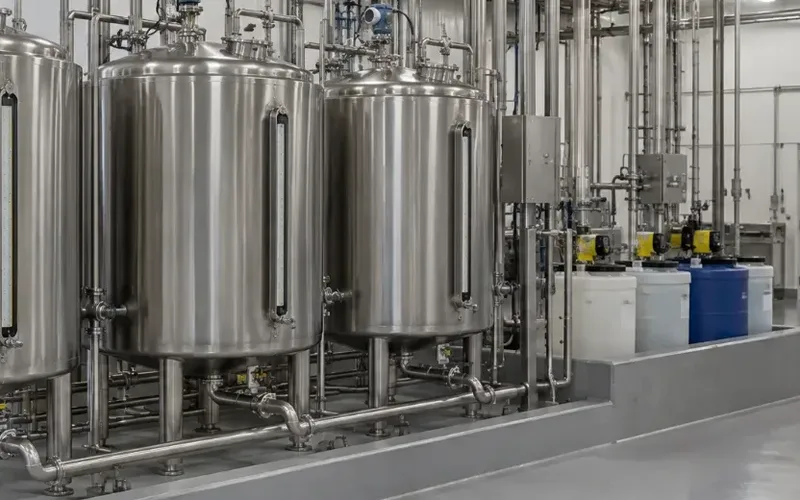
Sizing & Selection
Circuit, Chemical & Concentration
Caustic, acid, rinse or recovery, which chemical and at what strength. Why those three answers decide the metal and the gasket before a single Btu is counted.
+ Learn More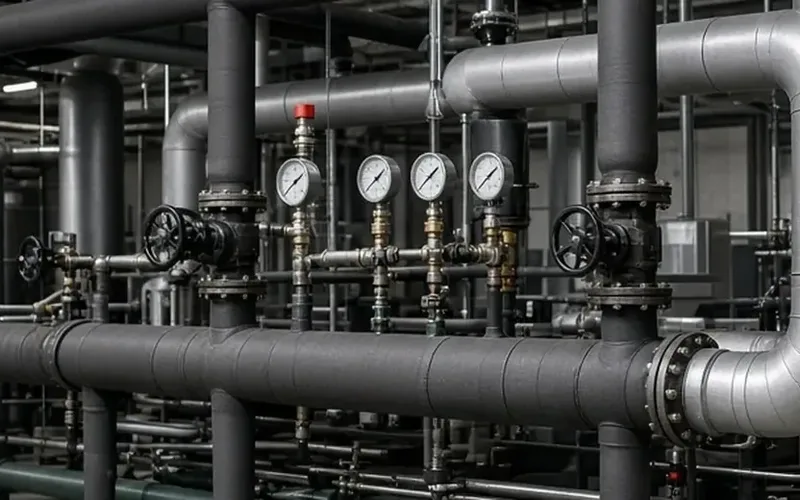
Sizing & Selection
Tank Recirculation or Once-Through
A tank loop is sized in gallons and minutes, an inline heater in gpm and degrees. How to tell which circuit you are heating and why the answer can triple the duty.
+ Learn More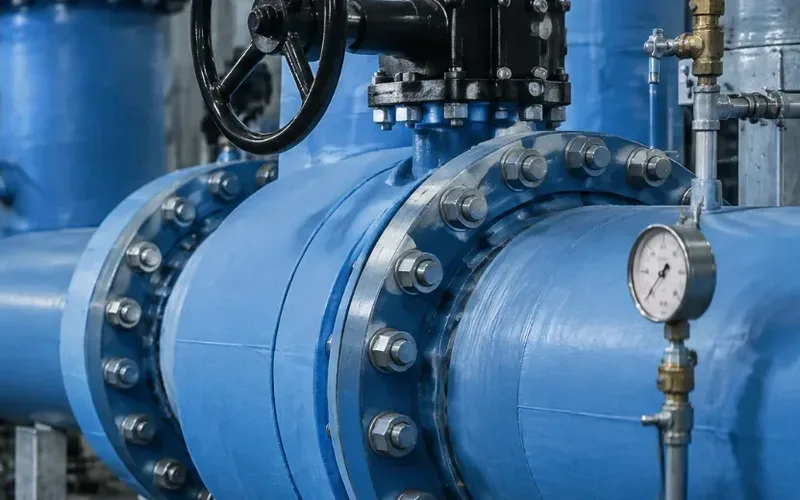
Sizing & Selection
Duty Point & Steam Pressure
Flow, inlet, target and steam pressure at the heater make the duty point. How Btu/h and steam lb/h fall out of them, and why the boiler gauge is the wrong figure.
+ Learn More
