
1-805-484-2992
Quotes - Engineering - SalesClean first
Heating the CIP steps ahead of tank sterilization
Sterilization kills what is on a surface; it does not remove it. A process tank in a pharmaceutical or biotech plant is therefore cleaned in place first, with the CIP program the site has validated, and only then sterilized. If the caustic step runs short on temperature, the protein film stays, the sterilization step bakes it on, and the next batch inherits a surface that is sterile, stained and harder to clean every time around. This is why plants that sterilize their tanks tend to be stricter about the CIP heater than plants that do not: the heater is the one piece of equipment that decides whether the caustic reaches 165°F before the timer starts.
The tank circuit here is a conventional one. A spray device in the tank top passes 50–100 gpm, the return pump sends it back to the CIP supply tank, and the heater sits on the recirculation loop or on the supply line to the tank. The steps are a warm pre-rinse, caustic at 1–1.5% and 165°F for 30 minutes, a phosphoric acid pass at 130°F when mineral haze builds, and a final rinse in purified water that many sites run at 180°F so the tank enters the sterilization step already hot and dry. Our heater handles the caustic, the acid and the rinse; the sterilization utility that follows is outside the CIP loop.
Reach the caustic set point before the step clock starts
A 2,000-gallon CIP supply tank taken from 70 to 165°F in 20 minutes needs about 4.75 MBtu/h. Stretch the warm-up to 60 minutes and the heater drops to 1.6 MBtu/h, but every batch behind it waits that much longer for a clean tank.
The circuit a sterilized tank is cleaned on
Process tanks that are later sterilized hold media, buffer, bulk drug substance or product intermediate, and the soil is almost always protein and salts rather than fat. Caustic at 1–1.5% and 165°F lifts it in a 30-minute recirculation; the tank wall is 316L and the spray pattern, not the chemistry, decides whether the upper head and the agitator shaft get wet. The acid step is phosphoric, 0.5–1% at 130°F, scheduled rather than run every cycle, because buffer salts leave a haze that caustic alone does not clear.
The final rinse is where the sterilization step reaches back into the CIP program. Purified water at 180°F for 5 minutes at the coldest return point rinses the acid, leaves the tank wall hot, and shortens the heat-up the sterilization utility has to do afterward. It also means the heater is checked at the rinse condition, a 110°F rise from makeup at the spray flow, as well as at the caustic tank warm-up that usually sizes it.
A steam heater built for the tank loop
A U-tube shell-and-tube with steam in the tubes and solution in a 316L shell is what we put on a tank circuit like this. Sized on the CIP supply tank rather than the circuit flow, a 2,000-gallon tank brought from 70 to 165°F in 20 minutes needs about 4.75 MBtu/h, which at 50 psig steam, condensing at 298°F, is a compact bundle with an approach above 130°F. The same tank warmed over 60 minutes needs 1.6 MBtu/h, and most sites choose a heater between those two figures based on how long the tank can wait.
The solution side fouls with protein and carbonate; the steam side stays clean. We add a fouling allowance of 0.001–0.002 on the shell side, build the heater drainable with tri-clamp ends to 4 inches, and leave the bundle removable so the surface can be inspected at requalification. Shell-side rating is 150 psig at 250°F, which covers the 180°F rinse hold and the pressure from the supply pump.
What decides the tank-circuit heater
The warm-up time you can afford is the number that moves the heater size most. Send it with the rest and we return a construction and a duty, not a questionnaire.
- CIP supply tank volume in gallons
- Minutes allowed to bring it to caustic temperature
- Spray device gpm and the amount of tanks on the circuit
- Caustic and acid set points from the validated program
- Final rinse temperature and hold time at the return
- Steam pressure available at the heater
- Sanitary finish, drainability and connection style
Call and talk it through with an engineer: 1-805-484-2992
Tank sterilization questions
No. The CIP heater lifts caustic, acid and purified-water rinse on the cleaning circuit. Sterilization is a separate step run on its own utility after the tank is clean and drained. What the CIP heater does for sterilization is indirect: a tank that is rinsed at 180°F enters the step hot and clean, so the sterilization hold starts sooner and the surface it treats is bare metal.
Usually the heater was sized for the circuit flow and not for the tank warm-up. A 2,000-gallon tank at 1.6 MBtu/h takes an hour to climb 95°F; if the program allows 20 minutes, the heater is three times too small. Check the steam pressure at the heater inlet as well: a heater sized at 50 psig that only sees 15 psig has lost a third of its temperature difference.
Two reasons that sanitation groups give. A hot purified-water rinse at 180°F for 5 minutes removes the last of the acid and the dissolved soil far faster than an ambient rinse, and it leaves the tank wall at a temperature where it drains and dries instead of holding droplets. The sterilization step then starts from a warm, dry tank, which shortens it and gives a cleaner record.
Yes. The standard 150 psig at 250°F covers nearly every CIP loop, but where the supply pump deadheads against a closed tank valve at a higher pressure, we rate the shell to match. The steam side is 150 psig at 400°F as standard. Tell us the pump shutoff head and whether the circuit can be isolated with the pump running.
Related
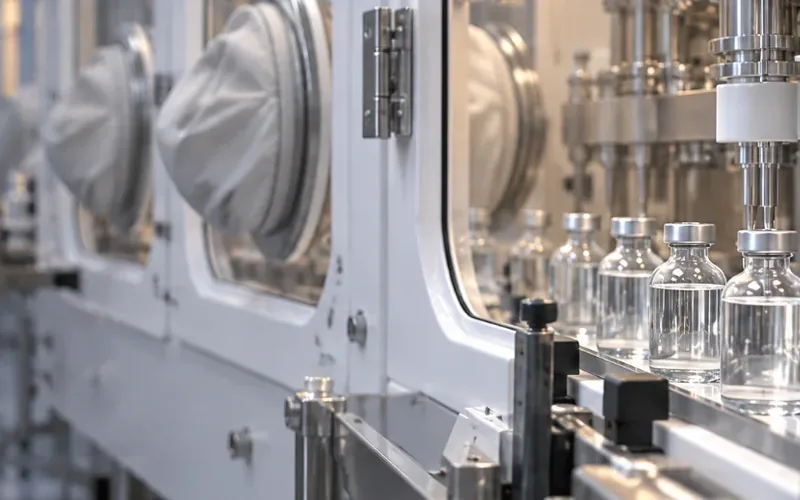
Applications
Vaccine Production Equipment CIP
Bioreactors, media and buffer vessels in a vaccine suite are cleaned often. The heater that gets each vessel's caustic and hot rinse to set point, on record.
+ Learn More
Applications
Antibiotic Fluid Lines CIP
Lines carrying fermentation broth and antibiotic concentrate are washed as a line circuit at 5 ft/s. The once-through heater that holds temperature over the run.
+ Learn More
Applications
Purified Water Loop CIP
A purified water loop is kept clean with heat, not chemicals. The steam-to-water exchanger that lifts the whole ring to 180°F and holds it for the sanitize step.
+ Learn More